
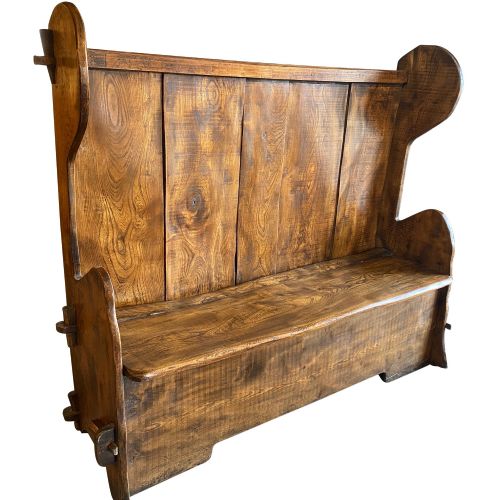
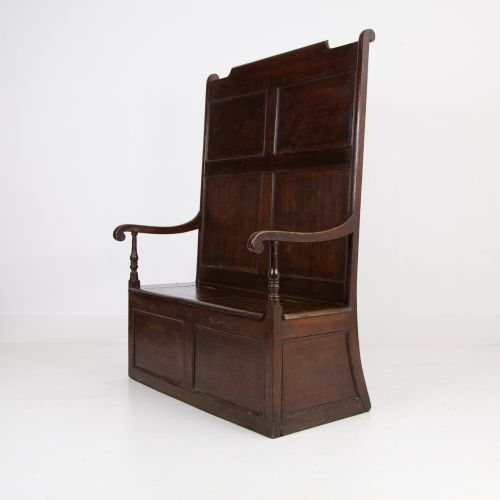
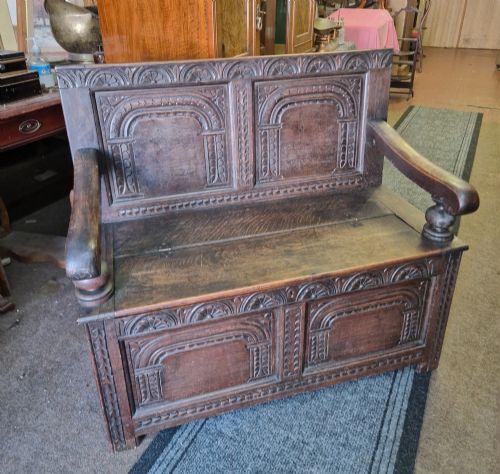
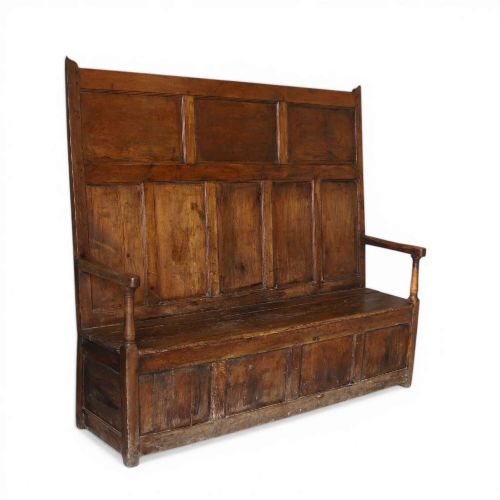

Oak Box Settle Bench
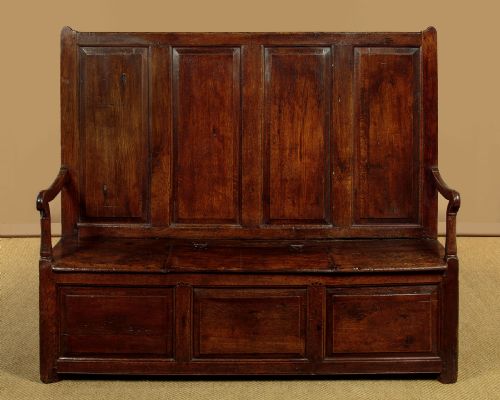
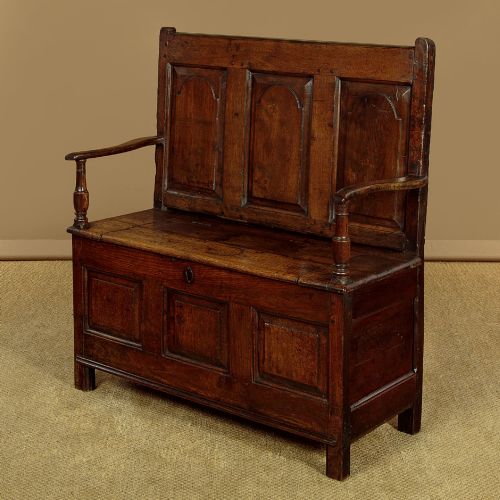
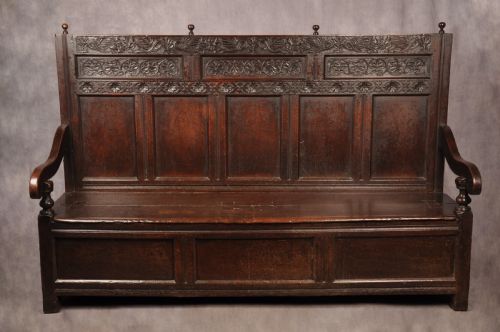
When you search for an oak box settle bench, you seek a traditional seat that combines timber storage with high-backed draught protection.
Oak Box Settle Bench
An oak box settle bench functions as both a heavy wooden seat and a lidded chest, often placed in halls or kitchens to keep rooms warm and belongings stored.
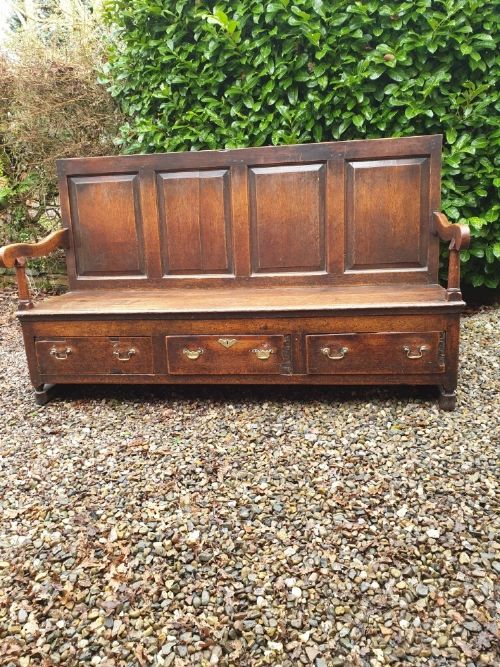
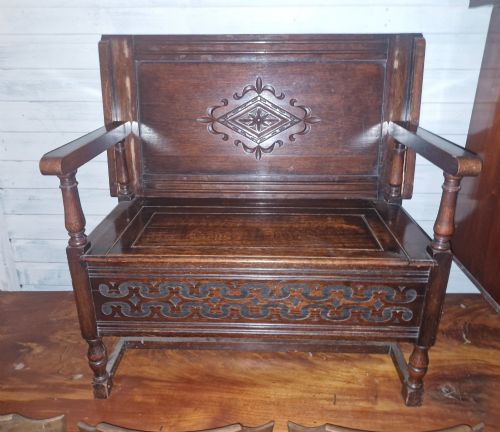
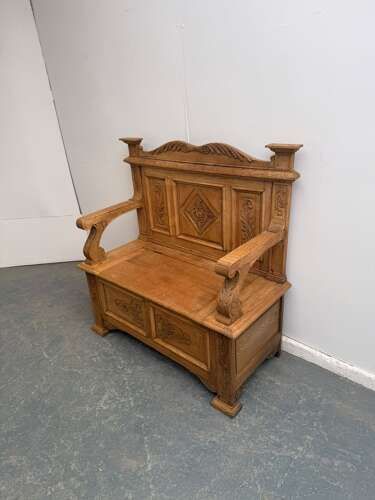
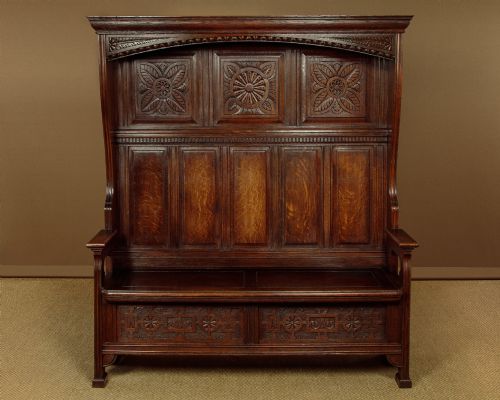
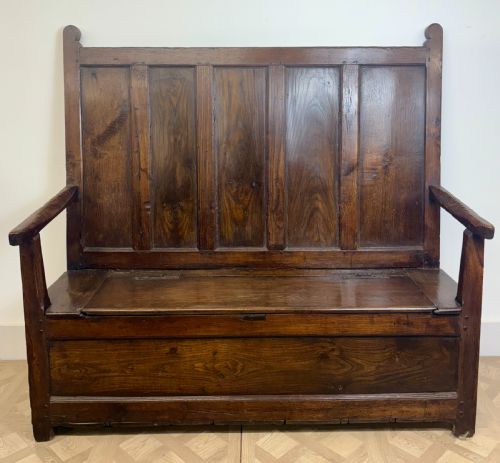
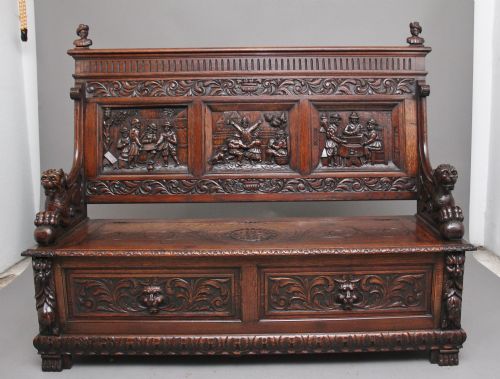
The pieces seen here range from seventeenth-century provincial high-back forms to later Victorian, Edwardian, and twentieth-century revival designs.
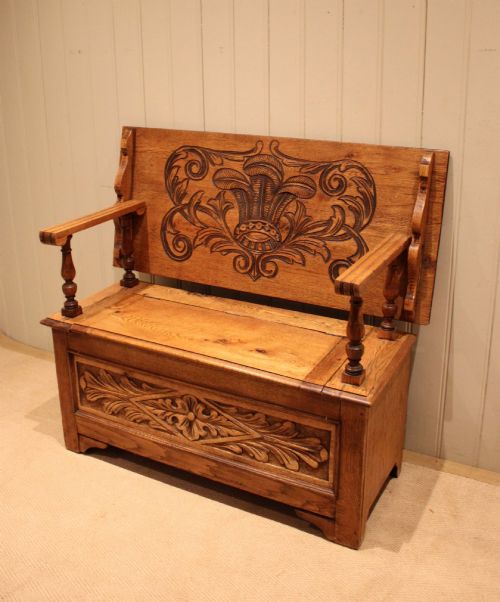
Regional variations include Welsh, North Country, and French examples, alongside multi-functional pieces that convert into tables.
How they were made
Joiners built these seats primarily from solid oak, sometimes combining elm, ash, or walnut for panels and secondary framing.
Construction relied on pegged mortise and tenon joints to secure the heavy box bases and high panelled backs, supplemented by iron hinges or brass fittings on the lift-up lids.
Listings feature oak alongside elm, ash, and walnut, spanning periods from the seventeenth century through the Edwardian era.
What varies in quality
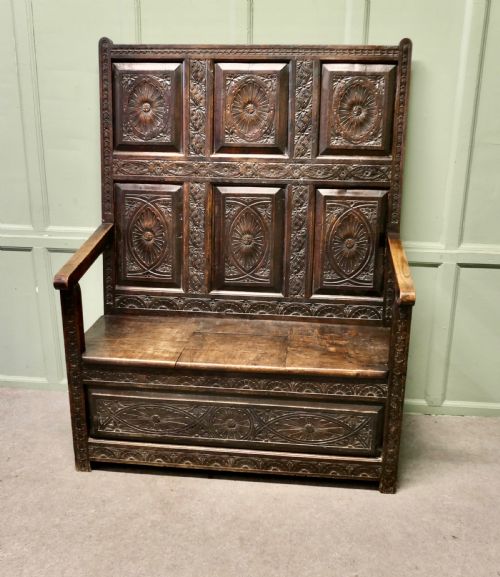
Quality rests in the architectural depth of the carving, the proportion of the high back, and the integrity of the original joined timber box base.
Early seventeenth and eighteenth-century examples display hand-planed surfaces and pegged construction, whereas later revival pieces often exhibit machine-cut detailing and applied mouldings.
The Oak Box Settle Bench Glossary
- Settle
- A wooden bench with a high back, solid arms, and a closed base designed to shield the sitter from draughts. These seats were essential furniture in early domestic halls and kitchens.
- Monks bench
- A convertible form of settle featuring a hinged back that folds down flat over the arms to form a table. This dual-purpose design gained popularity in later revival periods.
- Panel-back
- A method of construction where flat wooden boards are fitted within grooved uprights and rails to form the backrest. This technique accommodates seasonal wood movement without splitting.
- Cofer
- A large wooden chest with a lid used for storing household valuables, which frequently forms the base compartment of these benches.
- Vernacular
- Regional furniture built by local country joiners using accessible native timbers rather than following strict metropolitan design rules.
Oak Box Settle Bench: Frequently Asked Questions
What is an oak box settle bench?
An oak box settle bench is a high-backed wooden seat featuring a built-in storage compartment beneath the hinged lid of the base. These pieces provided dual utility as seating and chest storage in historic homes.
They appear in various forms, from early joined country pieces to later revival versions incorporating carved panels and canopy tops.
Where were these benches placed?
Historically, these benches stood in draughty entrance halls, farmhouse kitchens, and taverns to keep occupants warm. The high solid back deflected cold air currents away from the seated person.
Today, buyers place them in large hallways, boot rooms, and living spaces where the enclosed seat offers practical concealed storage.
How do you date an oak box settle?
Dating relies on examining the construction methods, timber patination, and stylistic motifs present in the woodwork. Early pieces from the seventeenth and eighteenth centuries show hand-tooled surfaces and pegged joined framing.
Later Victorian, Edwardian, and 1920s examples often feature machine-cut elements, heavy applied carvings, and revival styles such as Jacobean or Art Nouveau.
How do you use a monks bench?
A monks bench operates by swinging the high panelled backrest forward on pivot joints until it rests flat across the armrests. This action transforms the tall seat into a functional table top.
Lifting the seat reveals the box compartment below, maintaining the dual storage and seating function of the traditional settle.