
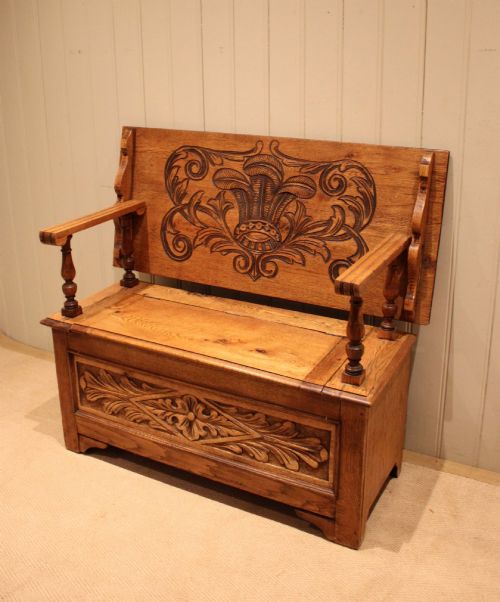
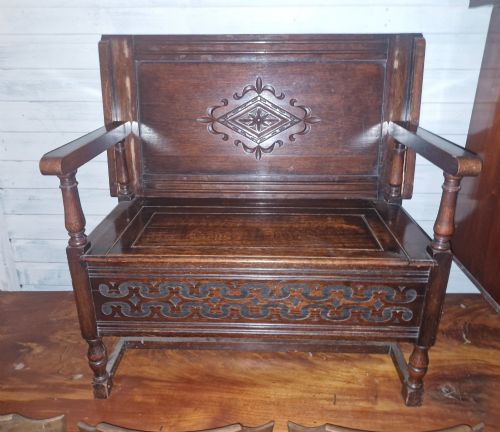
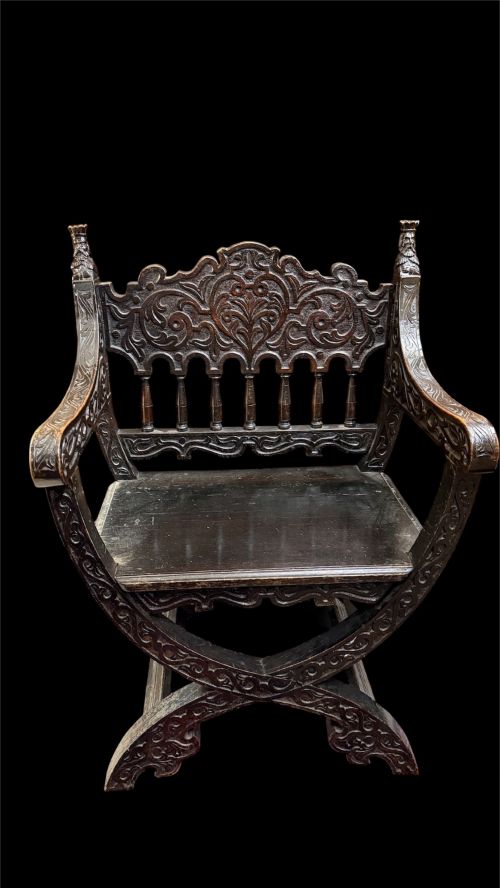


Carved Oak Monk Chair
A carved oak monk chair brings heavy timber character and clever dual-function seating into a hallway or living space.
Carved Oak Monk Chair
A carved oak monk chair combines heavy timber construction with a versatile design featuring a fold-over top or lift-up seat. These dual-purpose forms function as both a comfortable seat and a small table.
The pieces appearing on this page span from the seventeenth century through the Victorian era into the nineteen-twenties and nineteen-thirties. Revival movements such as Jacobean, Gothic, and Renaissance styles heavily influence the heavy carving and panelled woodwork.
Buyers encounter various related forms including hall seats, settles, and benches with storage beneath the seat. Solid oak predominates across the selection, often accompanied by iron hardware or fabric elements.
How they were made
Craftsmen built these pieces from solid oak, utilising heavy timber boards joined to withstand daily use. Joinery techniques include panelled construction and sturdy framing to support the transformable mechanism of the backrest.
Carving adorns the woodwork, featuring motifs drawn from Renaissance and Gothic traditions. Iron fixtures occasionally secure moving parts or reinforce structural joints on the benches and armchairs.
Recorded object types include benches, monks benches, hall seats, armchairs, and settles reflecting Jacobean and Gothic revival styles.
What varies in quality
The depth and crispness of the carved ornamentation define the visual distinction between standard production and superior examples. Finer pieces display confident hand-carved panels rather than shallow or mechanical decoration.
Age and original construction integrity dictate the standing of individual items, with seventeenth-century pieces offering entirely different timber patina compared to nineteenth-century revivals. The smoothness of the fold-over top mechanism also indicates the care taken during initial manufacture.
The Carved Oak Monk Chair Glossary
- Monks Bench
- A dual-purpose seat featuring a backrest that folds down to create a table surface. This form provides compact utility for hallways and smaller rooms.
- Jacobean Revival
- A nineteenth-century and early twentieth-century style imitating the geometric panels and dark finishes of seventeenth-century English furniture. It frequently appears on carved oak seating.
- Settle
- A wooden bench with high back and solid arms, designed to block draughts in older interiors. Some examples incorporate storage boxes beneath the seat.
- Gothic Revival
- An architectural and decorative style drawing on medieval pointed arches and tracery. Pieces in this idiom display dramatic pointed motifs and heavy proportions.
Carved Oak Monk Chair: Frequently Asked Questions
How does a monk chair turn into a table?
The upper backrest pivots forward on hinges or pivots, resting across the armrests to form a flat wooden surface. This ingenious transformation allows a single piece of furniture to serve as both chair and table.
In daily use, the top stays upright as a supportive backrest until conversion is required. The mechanism relies on sturdy wooden pivots or iron pins.
Where should I put a carved oak monk chair?
These sturdy oak pieces suit narrow hallways, entrance lobbies, or living rooms where space demands versatile furniture. Their flat tabletops and storage compartments offer practical utility in high-traffic areas.
Placing the chair away from direct heat sources protects the solid oak timber and historic finishes from splitting. The substantial presence grounds an interior scheme rooted in traditional or revival aesthetics.
How do I date an antique monk chair?
Examining the joinery, timber patination, and stylistic revival influences helps establish the period of manufacture. Seventeenth-century examples display distinct hand-tool marks and joined panel construction, while Victorian and twentieth-century pieces often reflect historical revivalism.
Hardware elements such as iron hinges and fixings also provide clues regarding the manufacturing era. Comparing carved motifs against known design periods refines the dating further.