
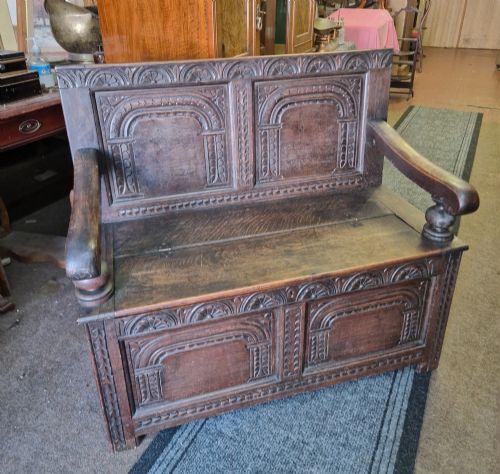


Traditional Carved Monks Bench
A traditional carved monks bench brings sturdy oak, clever folding tables and historic country character directly into your hallway.
Traditional Carved Monks Bench
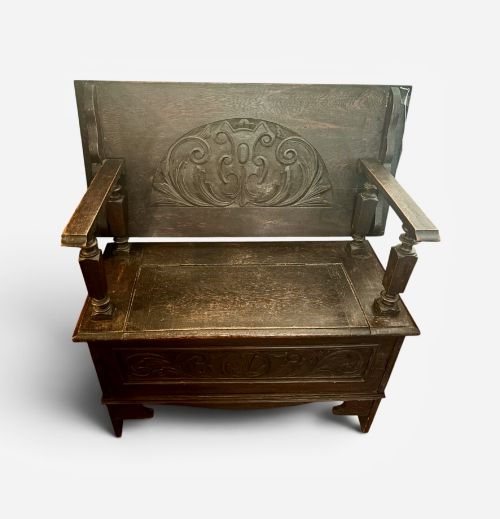
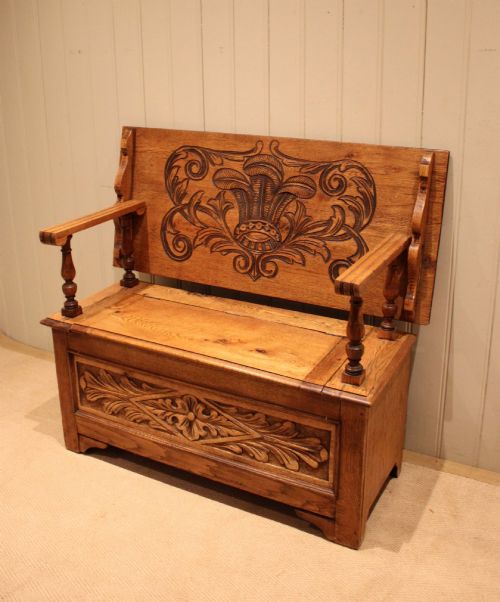
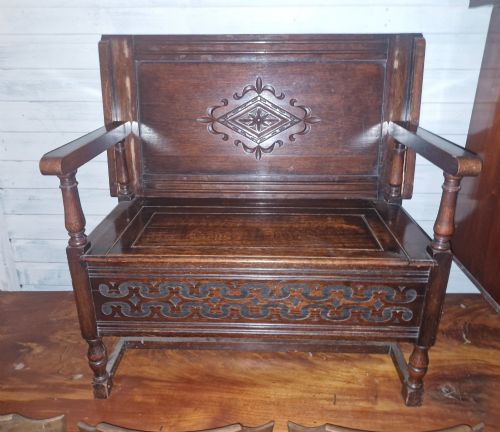
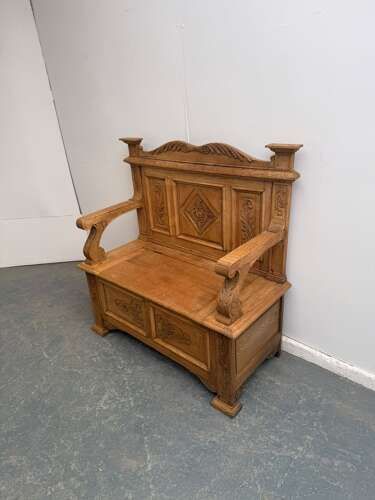
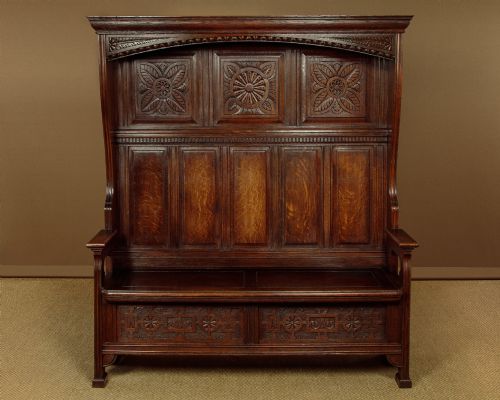
When you search for a traditional carved monks bench, you are looking at heavy timber seating designed for the hall, often featuring a convertible top that folds forward to form a table or surface. The most common versions you will meet on this page date from the Victorian, Edwardian and early twentieth century periods, heavily styled in a Jacobean revival taste with elaborate panel work.
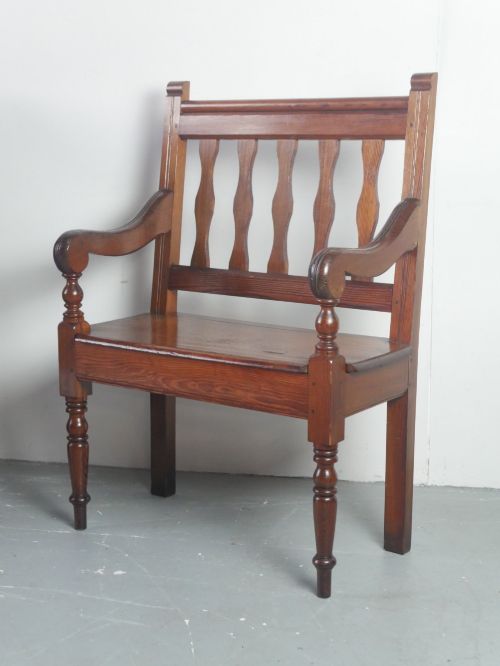
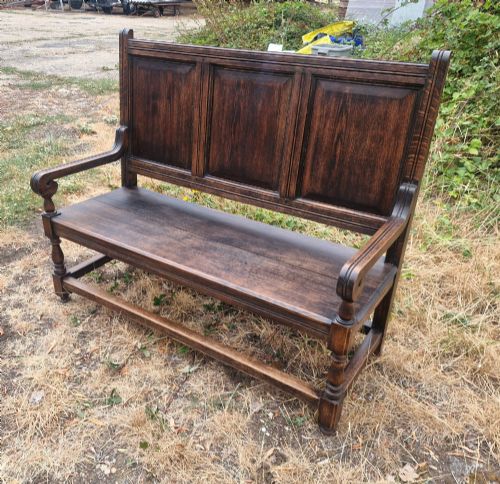
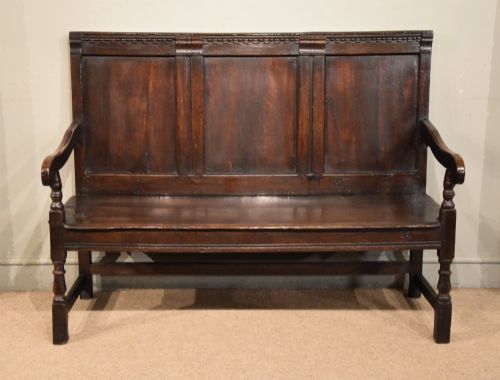
Alongside dedicated monks benches, the listings include related forms such as high back settles, box settles and hall seats with lift up storage lids. These pieces originate from various eras spanning the eighteenth century through to the nineteen thirties, though solid oak remains the dominant material across nearly all examples.
The practical dual purpose of these seats made them useful in draughty hallways and smaller rooms where furniture needed to serve more than one function. You will find compact half seat variants alongside large panelled settles built to accommodate several people by the hearth.
What varies in quality
The depth and crispness of the hand carving separates standard production items from finer workshop pieces. Crisp relief work on the back panels and arms indicates superior artisan skill during the revival periods.
Timber selection and structural integrity define the higher tier of these benches, particularly the weight of the solid oak and the smooth operation of the folding top mechanism. Well executed joinery ensures the heavy convertible top remains stable in both chair and table positions.
Listings feature oak predominantly, alongside occasional examples in pitch pine, mahogany and ironwork.
The Traditional Carved Monks Bench Glossary
- Monks bench
- A multifunctional seat with a hinged back that folds down over the arms to create a flat table surface. This ingenious design allowed one item of furniture to serve both dining and seating needs in restricted spaces.
- Settle
- A wooden bench with a high back, solid arms and enclosed storage beneath the seat. Historically placed near firesides to block draughts, they often feature detailed panel work.
- Box settle
- A heavy wooden bench incorporating a large storage compartment accessed by lifting the seat lid. These sturdy pieces kept blankets and household goods safe from damp and pests.
- Jacobean Revival
- A nineteenth and twentieth century decorative style copying the geometric mouldings, strapwork and deep carving of seventeenth century English furniture. Cabinet makers used this style extensively on oak hall furniture.
- Pitch pine
- A durable, resinous softwood utilised in regional furniture making. It provides a distinctive grain pattern that contrasts with traditional domestic oak.
Traditional Carved Monks Bench: Frequently Asked Questions
How do you use a monks bench table?
You tilt the heavy panelled backrest forward until it rests flat upon the wooden arms, creating a convenient table surface.
Lift the backrest upright again to return the piece to a standard armchair or bench configuration for your hallway.
Where should a hall bench be placed?
These pieces suit entrance halls, boot rooms and landings where their narrow profile and built-in storage provide practical utility.
Ensure you measure the clearance space carefully if you plan to flip the top over into table position.
Are these benches genuinely old?
The selection spans genuine eighteenth century country settles alongside later revival pieces made during the Victorian and Edwardian eras.
Examine the timber shrinkage, tool marks and joint construction to understand the exact period of manufacture.