







White Twist Stem Glass
A white twist stem glass brings eighteenth-century drinking traditions straight to your table with its delicate opaque interior threads.
White Twist Stem Glass
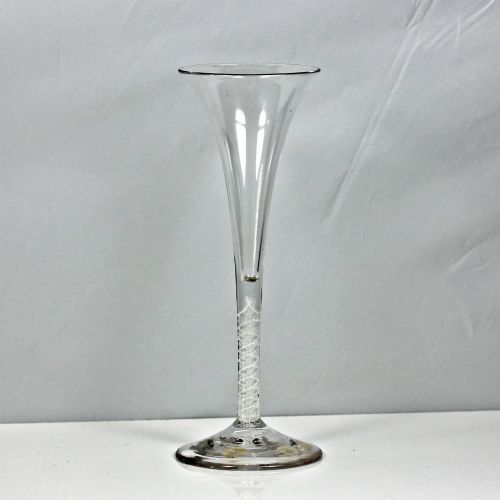
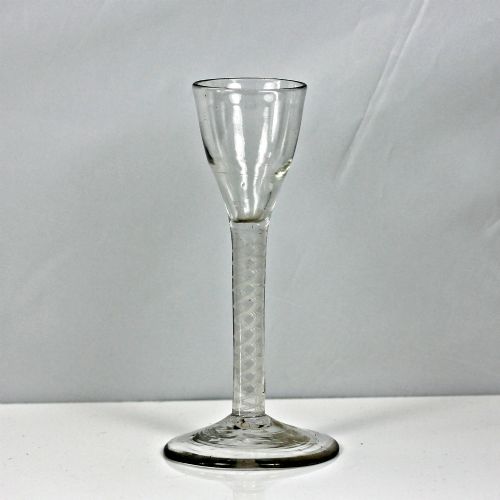
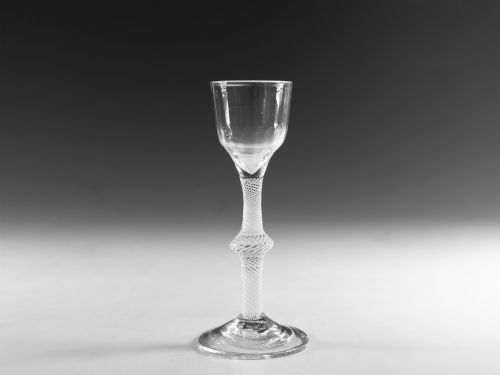
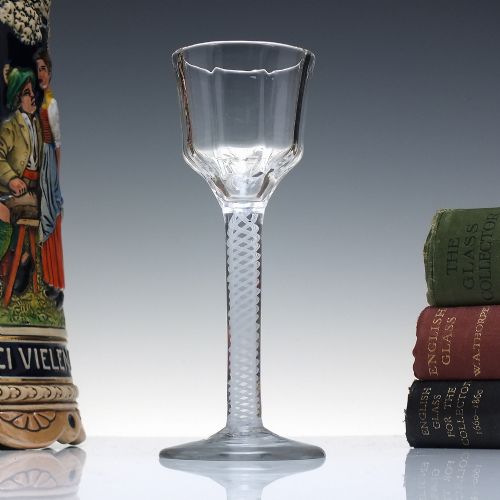
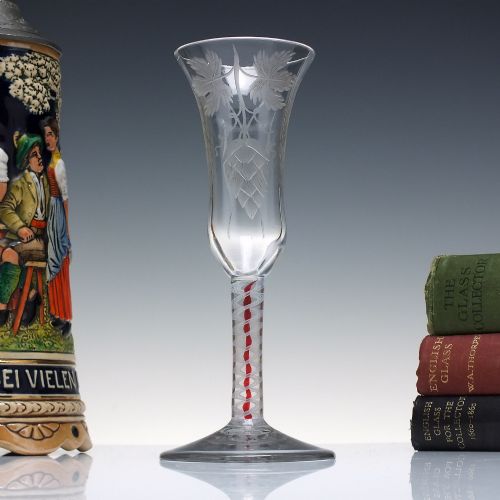
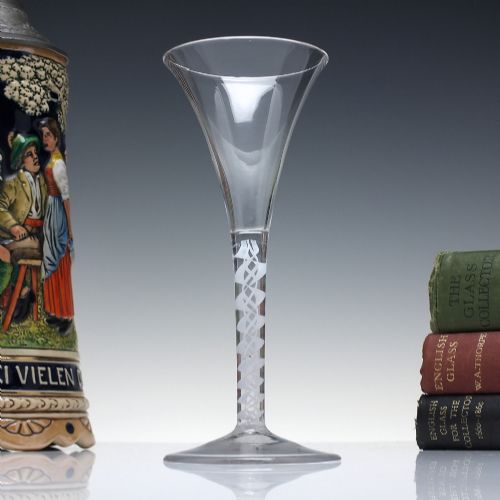
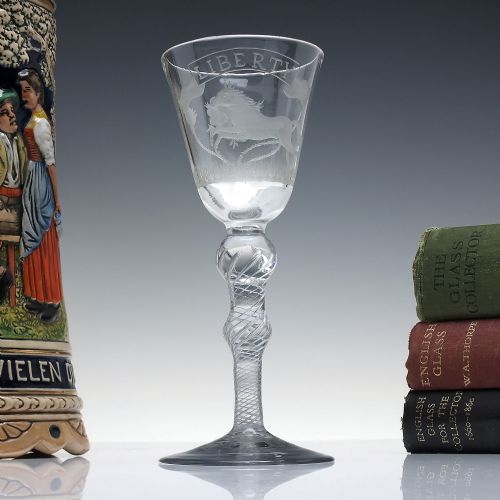
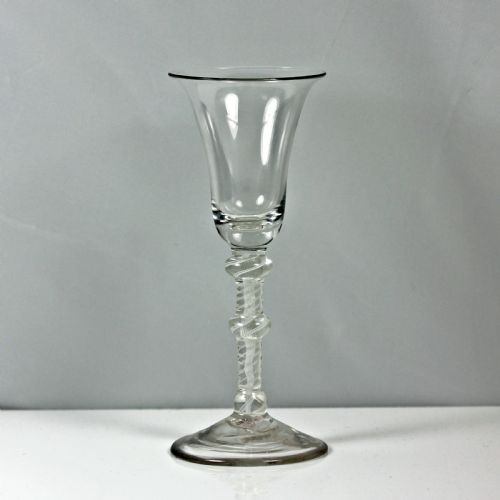
When you search for a white twist stem glass, you are looking at drinking vessels primarily originating from the eighteenth century and the Georgian period. The pieces on this page mostly take the form of wine glasses, cordial glasses, and ale glasses featuring distinctive white enamel threads pulled through the stem.
Beyond traditional drinking vessels, the listings also extend into twentieth-century lighting forms including Art Deco chrome table lamps and Edwardian Pullman lamps. These later pieces adapt the concept of twisted stems into functional domestic illumination rather than table glass.
How they were made
Glassmakers utilised lead glass, lead crystal, and flint glass to form the bowls and feet of these drinking vessels, ensuring clarity and weight. White enamel threads were then incorporated directly into the molten metal of the stem to create single series, double series, and multi-spiral patterns.
Specialised techniques such as flute-moulding and ribbed ogee shaping were applied to the bowls during formation. Later pieces shifted materials entirely, combining chrome and brass fittings with opaline glass to construct decorative lamps.
Listings span the eighteenth century up through Edwardian and 1930s Art Deco periods, uniting lead glass drinking vessels with chrome and brass table lamps.
What varies in quality
The sophistication of the internal twist dictates much of the visual distinction, ranging from simple single strands to complex multi-spiral and triple-ply configurations. Finer examples display precise control over the enamel threads without distortion or trapped air bubbles within the clear metal.
Bowl form and decorative touches such as triple knops or engraved detailing further separate standard drinking vessels from more ambitious productions. The crispness of flute-moulding on ogee bowls and the symmetry of the conical foot indicate the skill of the original glasshouse.
The White Twist Stem Glass Glossary
- Opaque twist
- A stem containing white enamel threads rather than air twists or solid lead. These opaque white elements create the defining visual pattern seen inside eighteenth-century drinking glasses.
- Ogee bowl
- A bell-shaped drinking vessel bowl with an "S" shaped profile that curves outward at the rim. This form appears frequently on Georgian wine glasses.
- Double series
- A stem construction featuring two distinct pairs or sets of internal twist elements. Typically this combines an outer cable of fine threads with an inner gauze or core.
- Knop
- A prominent swelling or bulbous decorative node on the stem of a glass. Multiple knops provide both grip and visual division along the height of the piece.
- Cordial glass
- A smaller drinking vessel designed for strong liqueurs or fortified wines. They possess narrower bowls and often sturdier proportions than standard wine glasses.
White Twist Stem Glass: Frequently Asked Questions
What is an opaque twist glass?
An opaque twist glass is a drinking vessel featuring white enamel threads encased within the clear glass stem. These threads are arranged in various spiral patterns formed during manufacture.
Such glasses date principally to the Georgian period and were used for serving wine, ale, or cordials.
How do I date a twist stem glass?
Dating relies on examining the bowl shape, foot formation, and the complexity of the internal stem twists. Eighteenth-century examples typically feature hand-blown lead glass with distinct pontil marks on the base.
Later lighting pieces incorporate twentieth-century materials like chrome and brass alongside glass elements.
What is the difference between single and double series twists?
A single series twist contains one set of enamel threads running through the stem, often forming a simple spiral. A double series twist incorporates two distinct patterns, such as an outer corkscrew around an inner column of gauze.
Double series stems require greater technical skill from the glassmaker.
Are all these items drinking glasses?
While the majority of eighteenth-century pieces function as wine, ale, or cordial glasses, the selection also includes domestic lighting. Table lamps from the Art Deco and Edwardian eras utilise twisted stem designs in chrome and opaline.
This broadens the category from dining tableware to interior illumination.