
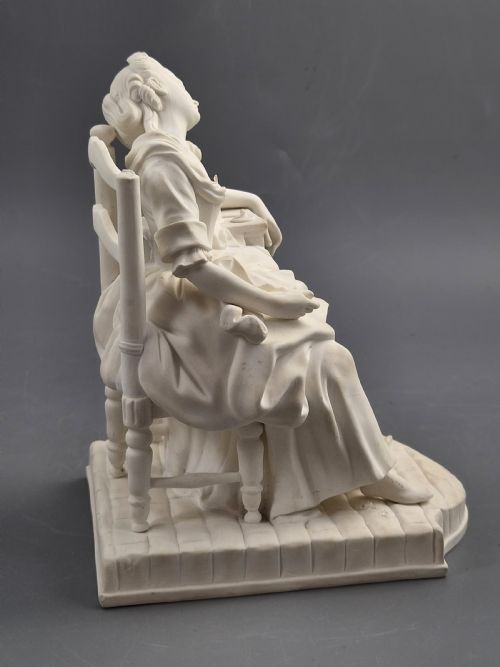

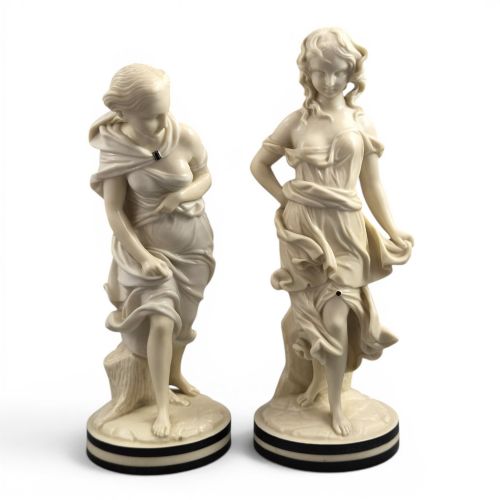


White Parian Porcelain Sculpture
White parian porcelain sculpture captures the smooth, marble-like finish of Victorian figures, bringing classical subjects and literary characters into the nineteenth-century home.
White Parian Porcelain Sculpture
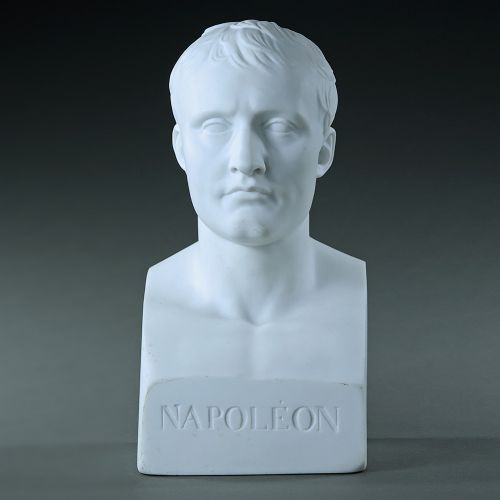
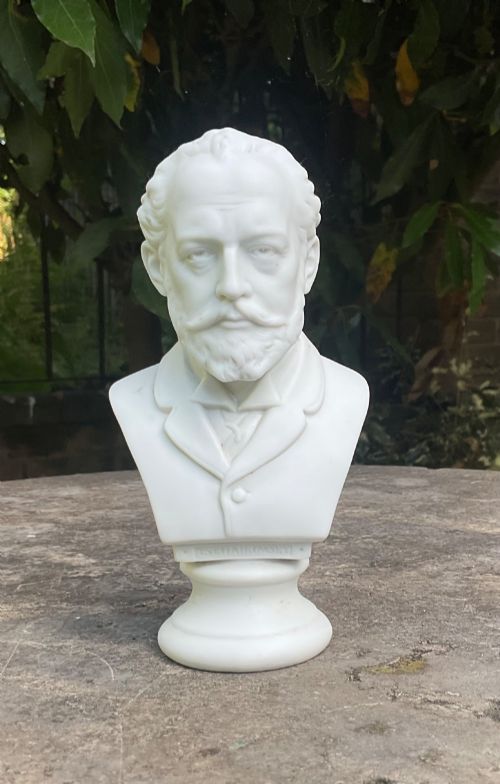
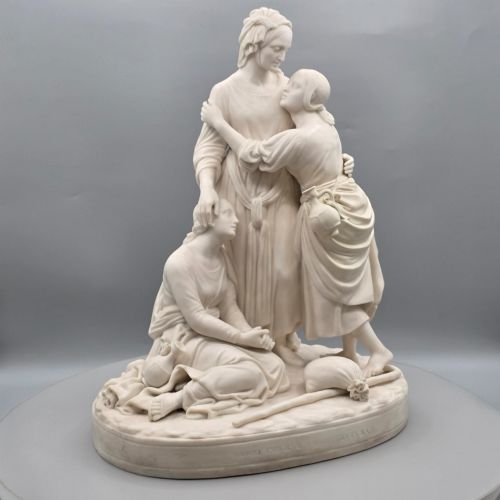
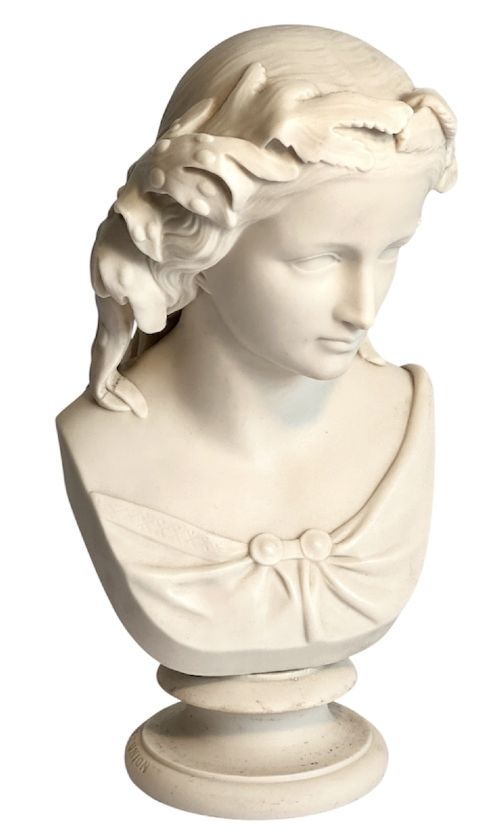
White parian porcelain sculpture comprises nineteenth-century figural works, busts, and groups that emulate carved marble without the accompanying weight or cost. These pieces frequently draw upon classical mythology, literary heroines, and contemporary portraiture as their primary subjects.
The objects on this page span the Victorian period, including specific decades from the mid-nineteenth century through to nineteen hundred. Collectors encounter standalone statuettes, sculptural pairs, portrait busts of historical figures, and elaborate centrepiece dishes.
English and continental factories produced these works in varied scales, ranging from intimate cabinet figures to larger studies. Stylistic influences lean heavily toward neoclassical and neo-rococo traditions, reflecting the aesthetic preferences of the period.
How white parian porcelain sculpture was made
Potteries utilised specially formulated porcelain slip poured into intricate moulds, allowing makers to capture minute facial expressions and elaborate drapery. This unglazed body, often termed biscuit or bisque porcelain, achieved a matte surface texture that distinguished it from traditional glossy wares.
Listings feature works from the nineteenth century, spanning the Victorian era and specific decades between eighteen forty-five and nineteen hundred.
What varies in quality in white parian porcelain sculpture
The crispness of the modelling dictates the visual success of the piece, separating works with sharp anatomical definition and delicate drapery from softer, blunter casts. Finer examples retain the precise intent of the original sculptor, whereas lesser castings lose detail during the mould-making process.
Scale and ambition also differentiate the range, with multi-figure groups and large-scale literary or mythological studies requiring greater technical mastery than standard single-figure statuettes. The presence of a recognised factory mark or a named modeler elevates the standing of the work.
Sèvres·Minton·Copeland·Royal Worcester·Triebner Ens And Co
The White Parian Porcelain Sculpture Glossary
- Parian Ware
- A fine-grained unglazed porcelain developed in the nineteenth century to imitate carved marble. It fires to a smooth, matte white finish.
- Biscuit Porcelain
- Fired ceramic ware that has not undergone a glaze firing. It presents a porous, matte surface texture.
- Neoclassical
- An artistic style drawing inspiration from the art and culture of classical antiquity. It emphasises restraint, proportion, and classical subject matter.
- Neo-rococo
- A nineteenth-century revival style characterised by asymmetrical scrolls, naturalistic floral motifs, and flowing curves.
- Bust
- A sculpture depicting a person's head, shoulders, and chest. It frequently serves to portray historical figures, literary characters, or commissioners.
White Parian Porcelain Sculpture: Frequently Asked Questions
What is parian porcelain?
Parian porcelain is a specific type of unglazed ceramic developed during the nineteenth century to imitate carved marble. Its matte, fine-grained surface allowed nineteenth-century potteries to produce detailed figures that resembled classical statuary.
Factories used this material extensively for portrait busts, literary heroines, and mythological groups. The absence of glaze highlights the subtle contours and textures modelled by the sculptor.
How do I clean parian porcelain?
Cleaning parian porcelain requires care because the unglazed surface can absorb dirt and oils from handling. Gentle dusting with a soft brush usually suffices for routine maintenance.
If washing is necessary, use warm water and mild soap with a soft sponge, avoiding harsh abrasives that might damage the matte texture. Ensure the piece dries thoroughly after cleaning.
Are these figures marked?
Many nineteenth-century pieces feature impressed factory marks, titles, or registry numbers on the base or reverse. These stamps help identify the producing pottery and occasionally provide a specific year of registration.
Unmarked examples still occur frequently, attributed through stylistic comparison, standard body composition, and known modeller designs. Collectors rely on the quality of the casting and weight of the porcelain when marks are absent.
Where were these sculptures made?
Production centred primarily in England, where major potteries developed and refined the parian body during the Victorian era. Prominent English manufactories produced large quantities of figural and bust sculpture for the domestic market.
Continental European factories also contributed to this output, creating similar bisque porcelain figures and groups. French and German workshops frequently drew upon classical and neoclassical models for their output.