


Victorian Decorative Porcelain Figurine
These Victorian decorative porcelain figurine pieces bring nineteenth-century character to a room through modelled figures and modelled scenes.
Victorian Decorative Porcelain Figurine
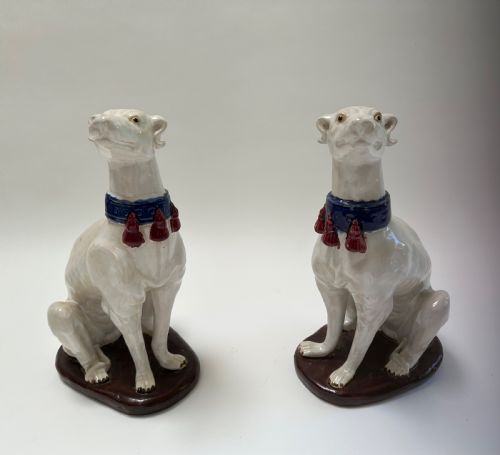
A victorian decorative porcelain figurine represents people, animals, and mythological subjects modelled in clay and fired for display. The pieces met here span nineteenth-century periods, showing figures such as flower sellers, musicians, and water carriers alongside animal groups.
Makers shaped these objects into various forms, including posy holders, small sculptures, and figures mounted on rustic bases. English and continental potteries produced both glazed porcelain and unglazed bisque versions during this era.
How they were made
Potters used porcelain, earthenware, and bisque porcelain, applying enamel colours, glaze, and gold leaf highlights to the fired clay. Many items combined hand-modelled details with cast elements to achieve intricate drapery and facial expressions.
Moulds allowed workshops to produce matching pairs and multi-figure groups, which workers then finished by hand before a second firing.
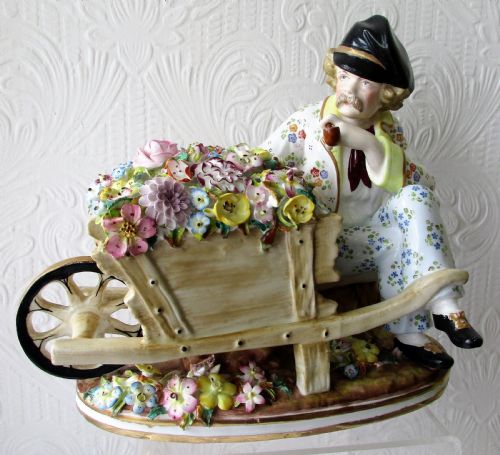
Several figures push wheelbarrows or carry water jugs, reminding us that Victorian interiors had a distinct fondness for miniature domestic labour.
What varies in quality
Larger scale and original paired sets command attention, whilst the preservation of fragile applied elements like flowers or baskets sets finer examples apart.
John Bevington·Royal Worcester·James Hadley·Royal Dux·Meissen·Krister KPM Waldenburg·C. G. Schierholz·KPM Berlin·Sitzendorf
The Victorian Decorative Porcelain Figurine Glossary
- Bisque porcelain
- Unglazed white porcelain that has undergone a single firing, valued for its matte surface and fine detail. It resembles marble and was widely used for nineteenth-century portraiture and figures.
- Parian
- A type of fine white bisque porcelain developed in Victorian Britain to imitate carved marble. Copeland and other potteries utilised it for classical and figural sculptures.
- Majolica
- Coloured lead-glazed earthenware characterised by rich, vibrant tones applied over an opaque tin glaze. It enjoyed great popularity in the nineteenth century for figural and decorative pieces.
- Posy holder
- A small vessel incorporated into a figure or basket designed to hold fresh cut flowers. These dual-purpose items combined sculpture with functional table or mantel decoration.
Victorian Decorative Porcelain Figurine: Frequently Asked Questions
What is a bisque figure?
A bisque figure is made from unglazed porcelain that leaves a smooth, matte finish resembling marble. Potters favoured this medium for capturing subtle facial expressions and fine drapery.
These pieces were left without glossy glaze to highlight the crispness of the modelling.
How were figural posy holders used?
Figural posy holders combined decorative sculpture with a small receptacle for fresh flowers. Victorian households placed them on tables and mantelpieces to bring natural scents and colour indoors.
The figures themselves often depicted rustic characters or children holding the vessel.
What subjects do these figures show?
The subjects range from allegorical figures and musicians to everyday characters like flower sellers and water carriers. Animal studies and classical groupings also appear across continental and English workshops.
Pairs of figures designed to sit symmetrically on either side of a fireplace or mirror were common.
How do I distinguish English and continental pieces?
English makers such as Royal Worcester and Staffordshire often utilised local clay bodies and distinct factory marks, while continental houses like Meissen, Sitzendorf, and Royal Dux employed different paste formulas and registration systems.
Stylistic cues in the painting and modelling also point toward specific regional traditions.