



19th Century Parian Ware
19th century parian ware pieces are unglazed ceramic sculptures and decorative objects that bring classical form and crisp detail to a room.
19th Century Parian Ware
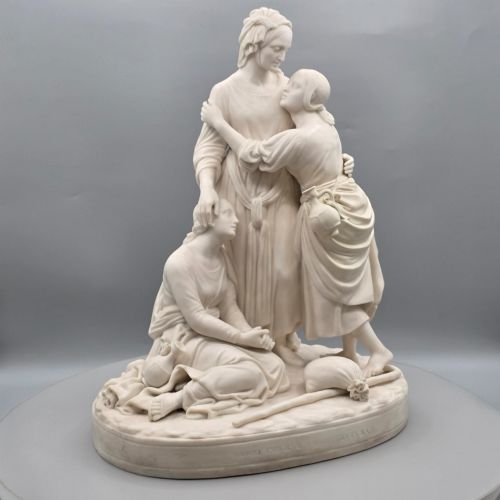
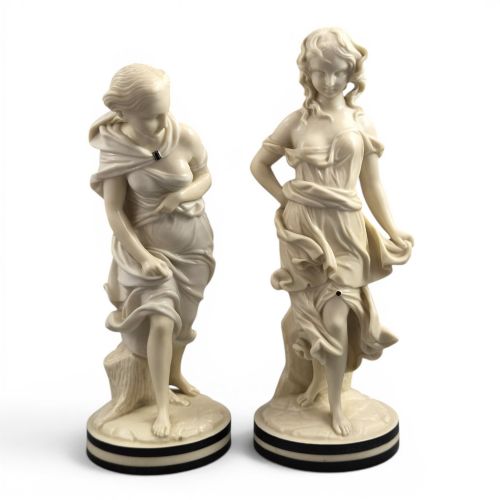
When you search for 19th century parian ware, you encounter sculptural porcelain items developed to mimic carved marble. The most common examples on this page are Victorian figurines, statuettes, and figural groups depicting classical figures, literary scenes, and animals.
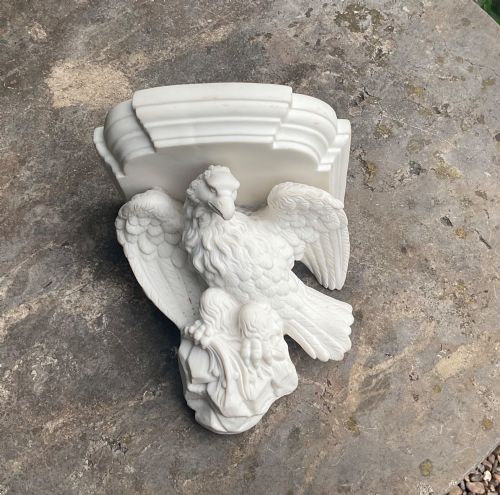
These works bridge domestic decoration and high art from the Victorian period. You will frequently find figures of women, children, dogs, and mythological subjects, alongside utilitarian items like jugs, wall brackets, and scent bottles.
The objects originate primarily from English factories during the nineteenth century. Makers adopted the material to supply households with affordable yet dignified classical sculpture.
How they were made
Makers produced parian ware using a specialised liquid porcelain slip poured into multi-piece plaster moulds. This slip contained a high proportion of feldspar, which melted during firing to create a fine-grained, marble-like texture without a glossy glaze.
Some pieces incorporate gilding or gilt highlights to accent drapery, bases, or decorative borders. Factories often finished the biscuit porcelain surfaces with acid-biting or hand-chasing to sharpen the details after removal from the moulds.
19th Century Parian Ware Retail Price Guide 2026
Typical asking prices for 19th century parian ware among the pieces listed under this phrase on Sellingantiques today, from the lower quarter to the upper quarter. They describe what is for sale here now, not the wider market.
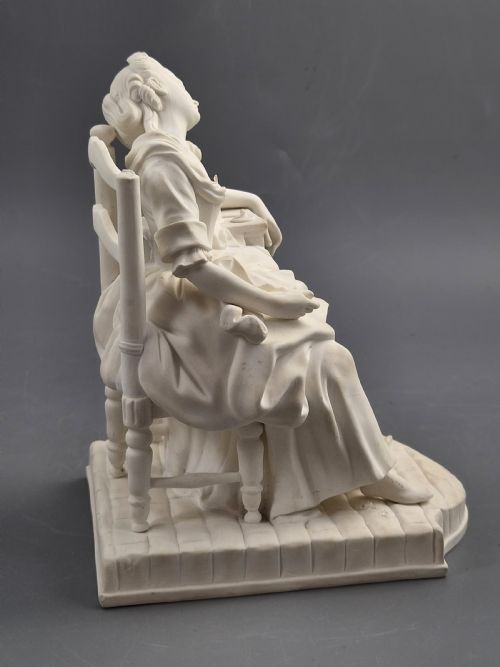
Victorian households displayed figures named 'Fast Sleep Wide Awake' side by side on the mantelpiece to mark the boundary of bedtime.
What varies in quality
The distinction between ordinary and superior pieces rests on the crispness of the modelling and the depth of the relief. Top-tier works capture subtle facial expressions, fine drapery folds, and hair texture derived from well-executed sculptural models.
Scale and ambition also set pieces apart. Large figural groups or complex compositions modelled by known sculptors demand greater technical skill in firing to prevent warping than simple single-figure statuettes.
Minton·Royal Worcester·Copeland·Kerr and Binns·H Bourne
The 19th Century Parian Ware Glossary
- Parian Ware
- A type of unglazed hard-paste porcelain developed in England to resemble white statuary marble. It fires at a high temperature to achieve a matte, granular finish.
- Biscuit Porcelain
- Unglazed ceramic ware that has undergone a single firing. Parian ware falls into this broad category.
- Neoclassical
- A style drawing inspiration from the classical art and culture of ancient Greece and Rome. Many parian figures adopt this aesthetic.
- Figurine
- A small carved or moulded statuette representing a human or animal. These form the core of parian production.
19th Century Parian Ware: Frequently Asked Questions
What is parian ware?
Parian ware is a type of unglazed biscuit porcelain developed in the nineteenth century to imitate carved white marble. It earned its name from Paros, the Greek island famed for its classical white marble.
Factories used a high-feldspar porcelain body that vitrified at a lower temperature, creating a smooth, matte finish ideal for capturing fine sculptural details.
How do I clean parian ware?
Because parian porcelain is unglazed and porous, it easily absorbs dirt and oils from handling. Gentle dusting with a soft brush is the safest routine for regular maintenance.
For stubborn marks, warm water with a mild soap and a soft toothbrush can be applied carefully, followed by thorough rinsing and air drying.
Are all pieces marked?
Not all parian objects bear a factory mark or maker's stamp. Many smaller figures, wall brackets, and decorative items left the kilns unmarked.
When marks do appear, they are usually impressed into the base, sometimes accompanied by registration diamonds or titles of the specific sculptural group.
Who modelled the figures?
Major factories commissioned leading sculptors of the day to model their parian lines. Artists such as John Durham and James Hadley created original works for reproduction.
In other instances, factories adapted famous classical statues or works by continental sculptors like Michel Victor Acier for production in parian porcelain.