

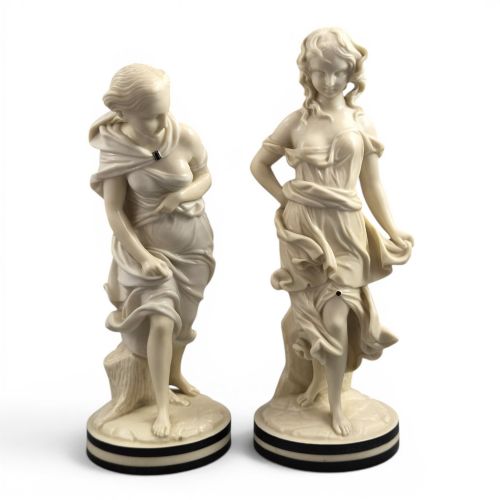


Victorian Parian Sculpture
Victorian parian sculpture captures classical form and literary portraiture in unglazed porcelain, offering a matte, marble-like finish that suits refined nineteenth-century interiors.
Victorian Parian Sculpture
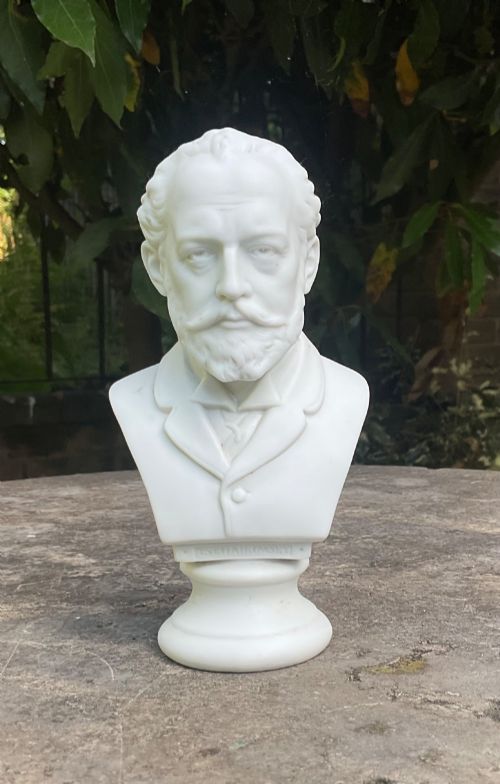
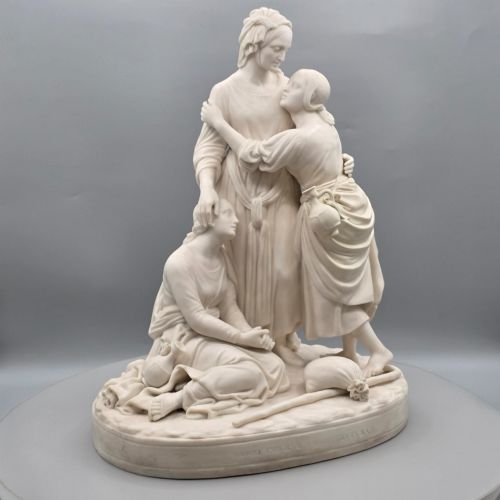
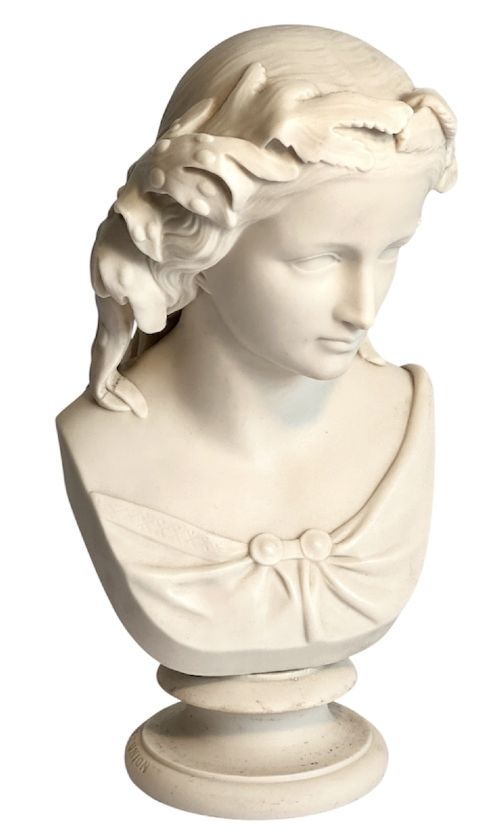
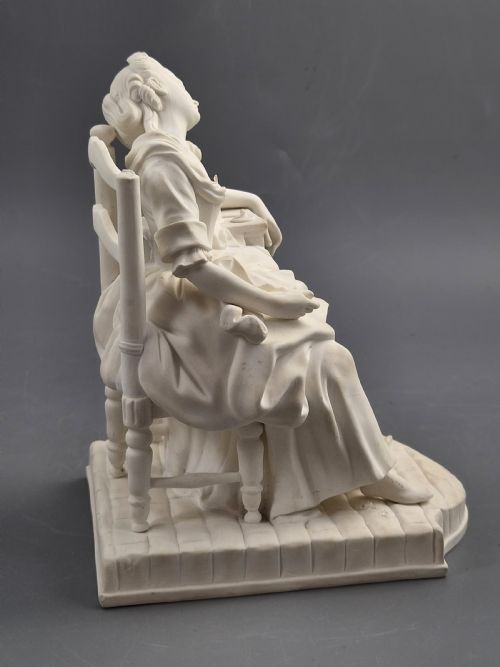
Victorian parian sculpture comprises figures, busts, and groups modelled after classical antiquities and contemporary subjects. These pieces emerge predominantly from the nineteenth century, capturing subjects ranging from mythological figures and literary heroines to notable political figures and musicians.
The objects take the form of standing statuettes, dramatic figure groups, and portrait busts resting on integral plinths. Makers utilise this medium to replicate monumental marble carvings in a domestic scale, making classical aesthetics accessible to nineteenth-century collectors.
Materials and Techniques
Craftsmen cast these works using parian porcelain, a specialised ceramic body developed to imitate the texture and appearance of carved marble. Unlike standard glazed pottery, this material is fired in an unglazed biscuit state to retain a dry, matte surface with a subtle grain.
Some works incorporate additional detail through enamel decoration, adding colour to select elements while preserving the characteristic white body. Individual components are slip-cast in multiple moulds before assembly and a single firing at high temperatures.
Current listings feature nineteenth-century parian pieces spanning neoclassical figures, literary subjects, and portrait busts in unglazed porcelain.
Factors of Quality
The ambition of the subject and the reputation of the modeller dictate the standing of a piece. Works modelled by recognised sculptors and produced by prominent factories demonstrate superior anatomical proportions and compositional balance.
Minton·Copeland·Royal Worcester·Triebner Ens And Co
The Victorian Parian Sculpture Glossary
- Parian ware
- A fine-grained, unglazed porcelain developed in the nineteenth century to simulate carved white marble. It derives its name from Paros, the Greek island renowned for its ancient white marble.
- Biscuit porcelain
- Unglazed ceramic fired once to create a porous, matte finish that absorbs light softly. It is synonymous with the term bisque used in many nineteenth-century pieces.
- Neo-classical
- An artistic style drawing inspiration from the art and culture of classical antiquity. It manifests in these sculptures through draped garments, mythological themes, and balanced, restrained compositions.
- Slip-cast
- A manufacturing method where liquid clay is poured into a plaster mould to form hollow shapes. This technique allows for the reproduction of complex sculptural undercut details.
Victorian Parian Sculpture: Frequently Asked Questions
What is parian porcelain?
Parian porcelain is an unglazed ceramic body formulated during the nineteenth century to mimic the appearance of carved white marble. It achieves a matte, stone-like texture without requiring a glossy surface glaze.
This material allowed factories to produce affordable yet sophisticated statuary that brought classical sculpture into Victorian homes.
How do I clean parian sculpture?
Cleaning unglazed ceramic requires care because the porous surface readily absorbs dirt and oils from hands. Use a soft, dry brush to remove dust from crevices and intricate details.
A slightly damp cloth with mild soap can address stubborn marks, avoiding harsh chemical cleaners that might stain the unglazed body.
Are these pieces marked?
Many examples bear impressed factory marks, model numbers, or titles on the base or reverse. Prominent potteries often stamped their names alongside registry diamond marks indicating the exact year of design.
Unmarked pieces also exist, requiring attribution through stylistic comparison and knowledge of period modellers.
Why are some figures coloured?
While the majority of these sculptures remain entirely white to emulate marble, certain examples incorporate enamel decoration. Makers occasionally tinted garments, flowers, or flesh tones to enhance realism.
Coloured parian pieces represent a specialised variation within nineteenth-century ceramic production.