
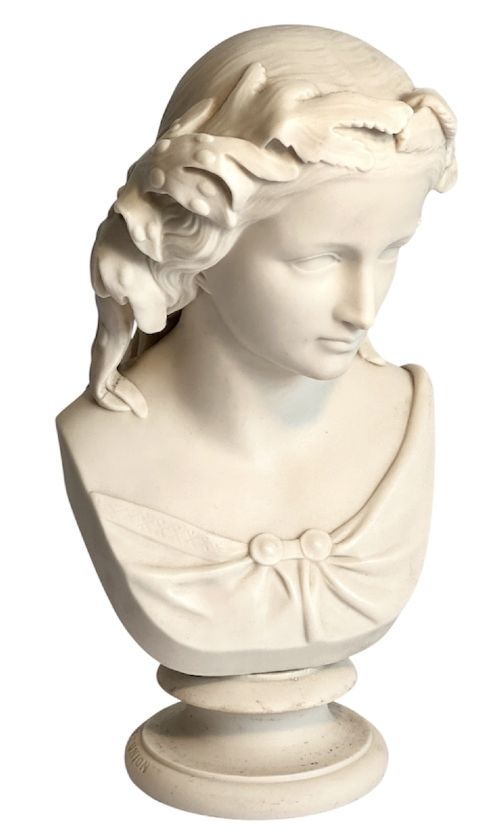


English Parian Porcelain
English parian porcelain brings classical sculpture into the Victorian parlour through fine unglazed ceramic figures and busts modelled on marble.
English Parian Porcelain
When you search for english parian porcelain, you encounter nineteenth-century ornamental figures, portrait busts, and centrepieces designed to mimic carved marble without the prohibitive cost. These white ceramic objects draw heavily on Victorian neoclassical taste, depicting literary characters, historical figures, and allegorical subjects.
The pieces on this page span the mid to late nineteenth century, including works from the 1850s up to 1900. You will regularly find sculptural groups, jugs with relief decoration, and single statuettes reflecting the era's fascination with classical antiquity and high-minded narrative art.
Makers of the period utilised this medium to reproduce famous sculptures for middle-class homes, making high art accessible. The forms range from modest portrait busts of statesmen like William Ewart Gladstone to elaborate narrative groups such as Rebekah at the well.
How They Were Made
These items rely on a specialist unglazed ceramic body known as parian ware or bisque porcelain, fired to achieve a dense, matte finish that resembles carved statuary marble. Manufacturers sometimes incorporated subtle gilding, enamel, or gold leaf to highlight specific details on figures and centrepieces.
Moulds captured intricate details from original clay models, allowing potteries to produce complex undercuts and flowing drapery without losing definition. Skilled modellers such as Owen Hale supplied the artistic direction for figures like Adversity, while firms executed the delicate casting process.
The listings here exclusively feature nineteenth-century items made from parian porcelain, bisque porcelain, and ceramic, often enhanced with gilding.
What Varies in Quality
Quality rests entirely on the crispness of the modelling and the subtlety of the finish across the unglazed surface. Superior examples retain sharp facial expressions, clean hands, and crisp folds in drapery, whereas lesser pieces suffer from softened details caused by worn moulds.
The reputation of the producing pottery and the documented hand of a named modeller elevate certain pieces above standard factory output. Coloured parian or additions of enamel and gold leaf require precise control during firing to succeed.
Copeland·Royal Worcester·Kerr and Binns·Owen Hale
The English Parian Porcelain Glossary
- Parian ware
- A fine white ceramic developed in the nineteenth century to imitate carved marble. It is left unglazed to showcase its matte texture.
- Bisque porcelain
- Unglazed ceramic fired at high temperatures to create a durable, porous surface with a smooth, stony feel. It forms the foundation of these sculptures.
- Neoclassical
- A style rooted in the art and culture of classical antiquity. It dominated Victorian sculpture and architectural ornament.
- Centrepiece
- A decorative vessel or sculptural dish placed in the middle of a dining table or sideboard. Examples often feature naturalistic motifs like foxes and rabbits.
English Parian Porcelain: Frequently Asked Questions
What is parian porcelain?
Parian porcelain is a specific type of unglazed ceramic developed during the nineteenth century to imitate carved marble. It allowed Victorian potteries to produce affordable, highly detailed statuary and portrait busts for domestic display.
The material fires to a smooth, matte finish that captures fine lines and delicate facial expressions exceptionally well.
How do I clean parian porcelain?
Because the surface is unglazed and slightly porous, parian porcelain absorbs dust and stains easily. Gentle dusting with a soft brush is usually sufficient for routine maintenance.
Avoid using harsh chemical cleaners or soaking the ceramic in water, as moisture can penetrate the unglazed body and trap dirt inside the pores.
Are all parian figures white?
While the vast majority of pieces are finished in plain white to resemble marble, some examples incorporate colour. Certain figures feature tinted bodies, enamel highlights, or touches of gold leaf.
Coloured parian required expert kiln control to ensure the pigments bonded properly with the unglazed ceramic base during firing.
How do I identify the maker?
Makers often marked their parian pieces with impressed stamps, initials, or specific model names on the underside or base. Researching these factory marks helps pinpoint the exact decade of production.
Some notable works also bear the signature of the individual sculptor who modelled the original piece.