
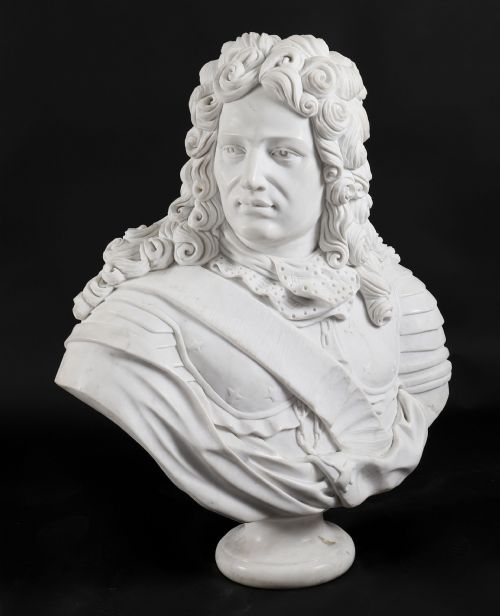
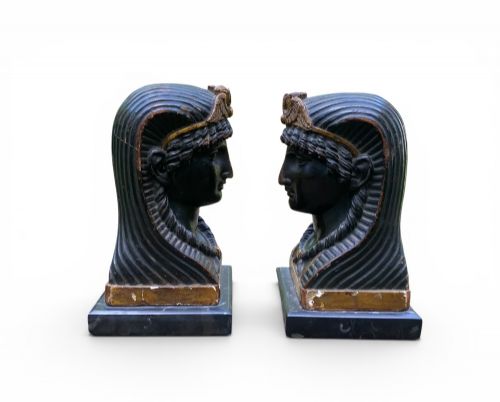


Antique Marble Style Bust
These antique marble style bust pieces bring classical presence into a room, offering carved stone forms that collectors choose for their sculptural weight.
Antique Marble Style Bust
An antique marble style bust brings classical antiquity and historical portraiture into domestic spaces, drawing on centuries of sculptural tradition. When you search for an antique marble style bust, you encounter carved stone and alabaster pieces that recall classical Greek and Roman likenesses.
The selections on this page span the eighteenth and nineteenth centuries, taking forms such as carved Carrara marble portraits, profile wall plaques, and Parian ware likenesses. These sculptures range from youthful subjects after Greuze to historical figures like Dante and Virgil.
Alongside direct head and shoulders portraits, the material takes the shape of pedestals, columns, and plant stands made from onyx and variegated green marble. These supporting forms share the sculptural vocabulary of the busts they elevate.
How these sculptures and supports were made
Sculptors carved these pieces from solid blocks of marble and alabaster, utilising chisels and rasps to model flesh, hair, and drapery. Other works employ Parian ware, a fine-grained porcelain developed in the nineteenth century to imitate carved marble without the weight of stone.
Mounts and structural elements incorporate gilt bronze, ormolu, and carved wood such as mahogany, combining different media to enhance the visual impact. Stonemasons turned columns and pedestals on lathes before hand-finishing the fluting and capitals.
The furniture forms include Gueridon tables, mahogany sphinxes, and pedestals in onyx and green marble.
What distinguishes the finest examples
Quality rests in the sensitivity of the carving, particularly in the rendering of facial expressions, hair strands, and the subtle fall of fabric across the shoulders. A superior marble sculpture displays crisp undercut details and a polished surface that captures light naturally.
The choice of material also dictates distinction, as flawless Carrara marble or rich variegated green stone elevates an object above simpler alabaster or terracotta pieces. Original mounts in gilt bronze or ormolu display refined chiselling that complements the main stone body.
Thomas Hope·Mieczyslaw Leon Zawiejski
The Antique Marble Style Bust Glossary
- Carrara marble
- A white or blue-grey marble quarried in the city of Carrara in Tuscany, prized since classical antiquity for its use in sculpture.
- Parian ware
- A type of bisquit porcelain resembling white marble, introduced in the nineteenth century for statuary and portrait busts.
- Alabaster
- A fine-grained, translucent stone often used for soft-hued nineteenth-century sculptures and decorative objects.
- Ormolu
- Gilt bronze ornamentation applied to furniture, pedestals, and clocks, popular in French Empire and neoclassical design.
- Relief sculpture
- A sculptural technique where figures project from a flat background, seen in profile plaques and wall panels.
Antique Marble Style Bust: Frequently Asked Questions
How do I clean marble?
Dust the surface regularly with a soft, dry cloth to prevent grit from scratching the polished stone.
Avoid acidic cleaners and excess water, which can etch the marble or stain vulnerable alabaster sections.
Where should I place a bust?
Position the sculpture on a sturdy pedestal, column, or side table at eye level to appreciate the carved details.
Ensure the support can bear the substantial weight of solid stone without risk of tipping.
How do I date a marble bust?
Examine the tooling marks, the style of the clothing or hair, and the treatment of the base.
Nineteenth-century pieces often reflect revival styles such as Neoclassical, French Empire, or Victorian classical tastes.