


Bisque Porcelain Group
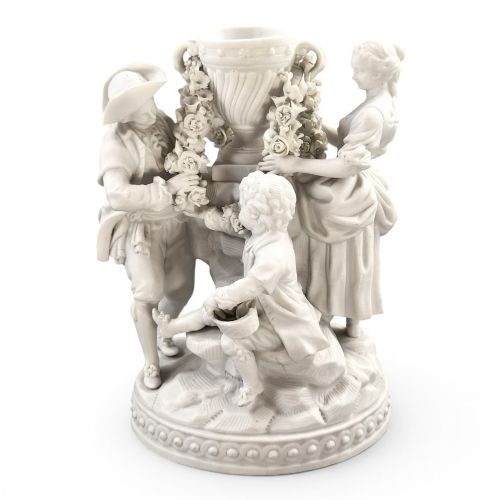
A bisque porcelain group is an unglazed sculptural composition capturing classical figures or domestic scenes, prized for its matte finish and fine detail.
Bisque Porcelain Group
When you search for a bisque porcelain group, you are looking at multi-figure ceramic sculptures left unglazed to showcase the crispness of the modelled form. These pieces range from Georgian mythological subjects to Victorian figural scenes and later Art Deco interpretations.
The versions you are most likely to meet on this page span the nineteenth century, including French works, English manufactory pieces, and Bohemian figures. They appear as decorative sculptures and figurines depicting classical figures, children, and narrative groups.
Makers from various European centres produced these works, utilising different paste compositions such as parianware or traditional biscuit porcelain. Each piece relies entirely on surface texture and modelling rather than colourful glazes to convey expression and form.
How they were made
Moulding and slip-casting techniques permit complex multi-figure compositions, such as fishing boat scenes or classical groupings, to be assembled from multiple fired parts. Some examples incorporate subtle enamel touches or gilt highlights applied over the matte porcelain body to accent specific elements.
Fishermen navigating porcelain waves and fortune-tellers sharing secrets prove that Victorian sculptors found drama in unexpected places.
What varies in quality
The distinction between standard commercial output and superior work lies in the crispness of the modelling and the depth of undercut details in the porcelain. Finer pieces retain sharp definition in hair, hands, and facial expressions, whereas weaker examples show softened contours from worn production moulds.
Compositional ambition also separates the range, with multi-figure groups demonstrating greater sculptural skill in balance and interaction than simple paired figures. The choice of paste affects the visual weight, with specialised parian bodies offering a warmer, marble-like translucence compared to standard ceramic bisque.
Luca Madrassi·Triebner Ens And Co·Copeland·Vion Et Baury·Royal Dux Bohemia
The Bisque Porcelain Group Glossary
- Bisque porcelain
- Unglazed ceramic ware fired once to vitrify the body and leave a matte, porous surface resembling marble. It is also known as biscuit porcelain.
- Parian ware
- A fine-grained type of biscuit porcelain developed in the nineteenth century to imitate white marble. Copeland and other potteries utilised it extensively for sculptural groups.
- Vieux Paris
- A term applied to porcelain produced by various independent workshops in and around Paris during the eighteenth and nineteenth centuries. These factories often produced biscuit sculptural groups.
- Neoclassical
- A style inspired by the classical art and architecture of ancient Greece and Rome. It frequently influences the subject matter of early figural groups.
- Slip-casting
- A manufacturing method where liquid clay slip is poured into a plaster mould to create hollow ceramic sculptures with complex undercuts.
Bisque Porcelain Group: Frequently Asked Questions
How do I clean an unglazed figure group?
The porous matte surface of unglazed porcelain absorbs dust and oils easily, meaning harsh liquid cleaners should be avoided. A soft, dry artist brush or compressed air works best for removing dust from deep crevices without damaging delicate fingers or floral garlands.
For stubborn marks, a dry natural rubber sponge can lift grime from the biscuit surface safely. Water and detergents should be used with extreme caution, as moisture can soak into the unglazed ceramic body and cause staining.
Were these pieces meant for display?
Nineteenth-century households placed these figural groups on mantelpieces, parlor tables, and within glass cabinets as conversation pieces. Their matte, marble-like finish suited formal interior decoration by mimicking expensive sculpture at a smaller scale.
Unlike utilitarian tableware, these sculptural compositions served an entirely decorative purpose. They reflected the owner's cultural interests through classical mythology, romantic narratives, or domestic sentiment.
How can I tell parian from standard bisque?
Parian porcelain contains a higher proportion of feldspathic flux, which vitrifies during firing to create a denser, slightly translucent body with a warm sheen. Standard ceramic bisque tends to be more opaque and chalky in appearance.
When held to a strong light, true parian ware often reveals a subtle translucency unlike the flat opacity of ordinary biscuit porcelain. The surface of parian also feels smoother and closer to carved marble.
Why do some groups feature painted details?
While most compositions rely entirely on the white matte porcelain body, select pieces incorporate minimal enamel painting or gilding to highlight garments or accessories. This decorative choice draws the eye to specific focal points like floral garlands or facial expressions.
Makers added these subtle touches to enhance the narrative elements of the sculpture without overwhelming the purity of the unglazed surface. Such additions are typically fired on over the initial bisque body.