
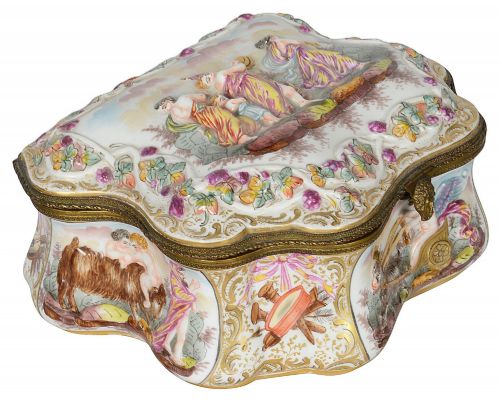


Late Nineteenth Century Porcelain
Late nineteenth century porcelain gathers diverse global output from the Victorian era, offering makers and collectors refined forms like vases, figures, and jardinières.
Late Nineteenth Century Porcelain
Late nineteenth century porcelain encompasses a broad international range of ceramic production from the 1880s to the turn of the century, spanning European factories and Asian export wares. Buyers searching for late nineteenth century porcelain encounter various forms such as large floor vases, delicate miniatures, garden seats, and mantel clock garnitures.
Continental European workshops contribute classical figures, parian ware, and decorative vessels styled after earlier epochs like the Rococo Revival. British potteries such as Royal Worcester and Doulton Burslem produce handled vases and figural works during the Victorian period, reflecting contemporary aesthetic movements.
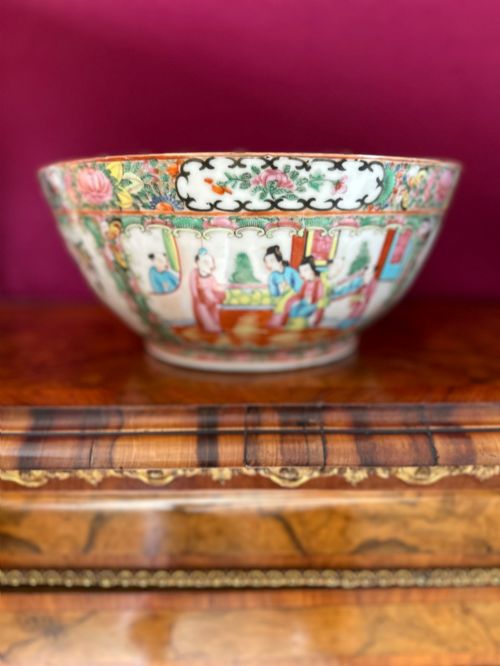
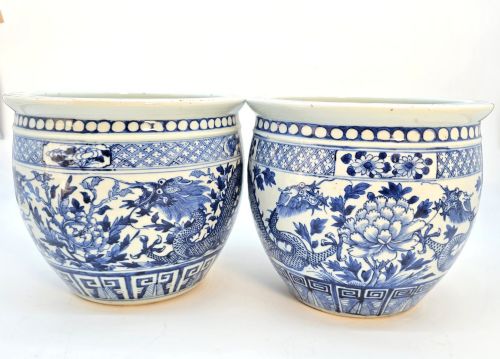
Asian traditions are prominently represented by Chinese Canton, blue and white, and Famille Rose pieces alongside Japanese Satsuma, Kutani, and Imari wares. These items reflect distinct cultural aesthetics of the Meiji period and the Qing Dynasty, often featuring intricate hand-painted decoration and lacquer panels.
How they were made
Makers utilised ceramic bodies ranging from fine porcelain and biscuit parian to earthenware and ceramic, shaped into functional vessels, jardinieres, and figurines. Surface decoration frequently incorporated vibrant enamel, delicate gold leaf, and gilt details.
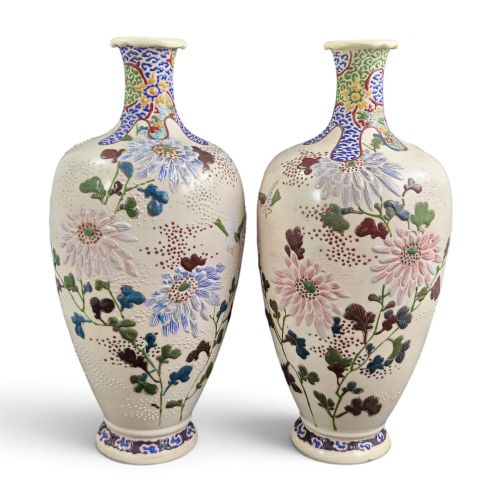
Japanese workshops employed specialised techniques such as raised moriage decoration on cobalt grounds, while European factories utilised detailed moulding and hand-painting. Certain pieces integrated mixed materials, combining ceramic bodies with brass mounts or lacquer panels.
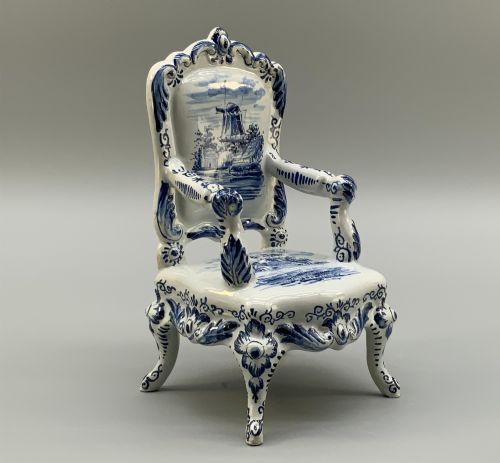
A miniature porcelain armchair proves that even Victorian mantelpieces required proper miniature seating.
What varies in quality
The standard of late nineteenth century porcelain depends heavily on the precision of the modelling and the finesse of the hand-painted details. Finer examples display crisp definition in figural work, careful registration of enamel colours, and skilful application of gold leaf or gilt.
Pieces originating from established workshops or identified by specific maker marks often exhibit superior craftsmanship compared to mass-produced decorative items. The harmony between the ceramic form and its applied surface ornamentation ultimately defines the better examples.
Tunnicliffe·Nanzan mark·Kinrin Workshop·Sitzendorf·Royal Worcester·Ernst Whaliss·Triebner Ens And Co
The Late Nineteenth Century Porcelain Glossary
- Parian ware
- A fine unglazed biscuit porcelain resembling marble, developed in the nineteenth century for classical figures and busts.
- Moriage
- A Japanese decorating technique where slip is piped onto the ceramic surface to create raised patterns, often highlighted with gold.
- Garniture
- A set of matching vases or ornamental objects designed to be displayed together on a mantelpiece or cabinet.
- Famille Rose
- A Chinese porcelain palette characterised by opaque pink enamels, introduced during the Qing Dynasty and continued into later periods.
- Imari
- Japanese export porcelain decorated in underglaze blue and contrasting iron red and gold.
Late Nineteenth Century Porcelain: Frequently Asked Questions
What defines late nineteenth century porcelain?
These items comprise decorative and functional ceramic pieces created roughly between 1880 and 1900, capturing both Victorian European tastes and Meiji or Qing Asian aesthetics.
They include diverse objects such as mantle clock garnitures, jardinières, cabinet plates, and sculptural figures made from porcelain, parian, and earthenware.
How were these decorative pieces used?
Many items served as prominent interior ornaments within Victorian homes, displayed on mantelpieces, tables, or within specialised cabinets.
Larger vessels like jardinières, garden seats, and floor vases functioned as architectural elements for interior plant display and room decoration.
How do I identify Japanese Satsuma ware?
Satsuma ceramics typically feature a characteristic ivory-coloured craquelure glaze decorated with detailed court figures and floral motifs.
Many pieces incorporate raised moriage work and rich gilt highlights, sometimes bearing specific studio signatures such as the Nanzan mark.
What is Parian ware?
Parian is a type of dense, unglazed biscuit porcelain formulated to imitate white marble, popular for nineteenth-century classical figures and busts.
It was cast in moulds to capture fine sculptural detail, representing allegorical subjects, literary characters, and mythological figures.
How do European and Asian styles differ?
European pieces from this era frequently draw on historical revival styles, such as Rococo Revival or classical forms produced by factories like Royal Worcester and Sitzendorf.
Asian works from the same decades focus on traditional export styles, including Chinese blue and white brush pots and Japanese Imari plates.