
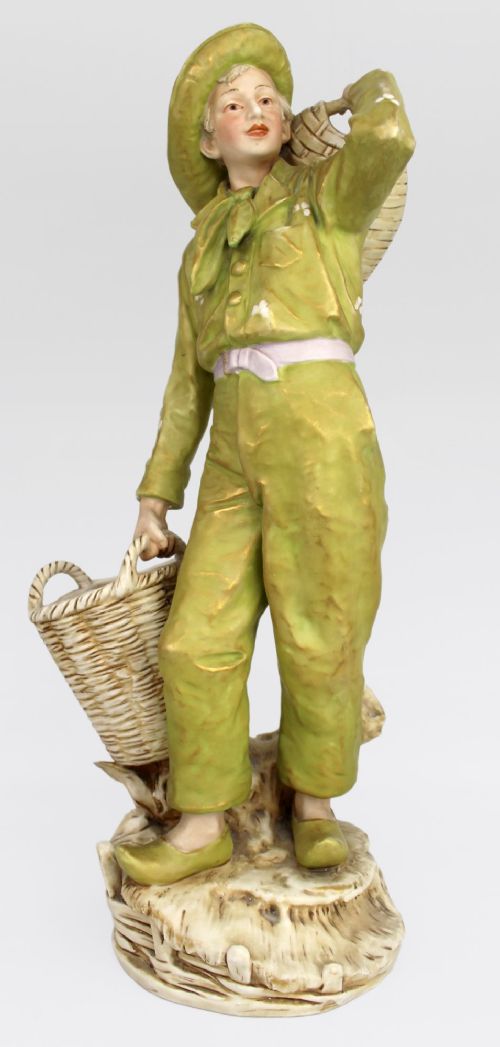
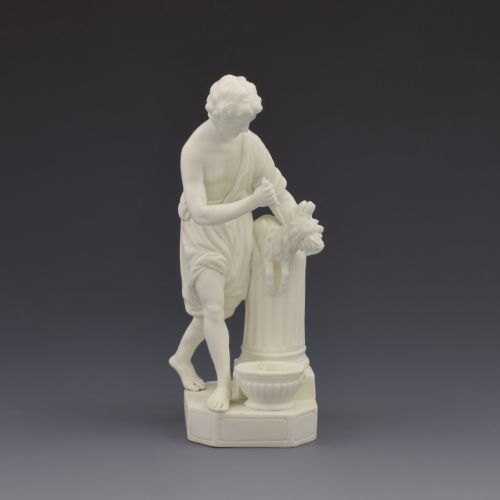


Bisque Porcelain Statuette
A bisque porcelain statuette brings unglazed, matte elegance to a room, capturing classical form and quiet detail through fired clay.
Bisque Porcelain Statuette
When you search for a bisque porcelain statuette, you are looking at unglazed ceramic sculpture shaped into human figures, mythological groups, and classical subjects. The pieces on this page span several eras, crossing the eighteenth, nineteenth, and early twentieth centuries from English and continental makers.
The most common forms you will meet here are single figures and pairs depicting young girls, classical women with doves, children, and allegorical scenes. They range from small tabletop ornaments to larger sculptural groups created in England, France, and Germany.
The style follows the aesthetic tastes of the Victorian, Georgian, and Art Nouveau periods, often drawing heavily on Neoclassical and French Rococo Revival designs. Makers turned to these historical precedents to produce decorative objects intended for nineteenth-century drawing rooms and mantelpieces.
How they were made
These pieces are made from fine white paste fired without a traditional glossy glaze, leaving a tactile, matte surface that resembles marble. This unglazed ceramic body is known variously as bisque, biscuit, or parian porcelain.
Listings span the eighteenth, nineteenth, and early twentieth centuries, incorporating materials such as parian porcelain, enamel, gilt, and paint.
What varies in quality
Quality rests primarily in the crispness of the modelling and the depth of the casting, which determines whether fingers, drapery folds, and facial expressions remain sharp or soften into the clay body. Superior examples show careful hand-finishing after removal from the mould, removing seams and refining small details.
The choice of paste also shifts the character of the object, as denser parian wares possess a heavy, marble-like density while lighter biscuit porcelains retain a chalky, delicate opacity. The distinction between a standard commercial figurine and a superior sculptural group lies entirely in the ambition of the original model and the skill of the factory's technicians.
Royal Dux Bohemia·Derby·Chantilly·Copeland·Triebner Ens and Co
The Bisque Porcelain Statuette Glossary
- Bisque porcelain
- Unglazed ceramic ware fired once to vitrify the body and left with a matte, porous finish. It is also frequently referred to as biscuit porcelain.
- Parian ware
- A type of fine white porcelain developed in the nineteenth century to imitate carved marble. It contains a high feldspar content that melts during firing to give the material a semi-translucent quality.
- Neoclassical
- A style drawing inspiration from the classical art and architecture of ancient Greece and Rome. It appears frequently in nineteenth-century figures depicting classical women and mythological subjects.
- Figurine
- A small carved or moulded statuette representing a human or animal form. These objects were designed primarily for interior display on mantelpieces and side tables.
Bisque Porcelain Statuette: Frequently Asked Questions
What is the difference between bisque and parian porcelain?
Bisque porcelain is any ceramic piece fired without a glaze, leaving a matte, porous white surface. Parian ware is a specific nineteenth-century development designed to look like carved marble.
Parian porcelain contains a higher proportion of feldspar, which melts during the high-temperature kiln firing to create a denser, slightly translucent body. Both share the lack of glaze, but parian generally has a heavier, smoother feel.
How should I clean my antique statuette?
Because unglazed porcelain has a slightly porous and matte surface, it easily attracts dust and absorbs oils from human hands. Avoid using water or liquid cleaners, which can penetrate the unglazed clay and leave permanent stains.
Instead, use a very soft, dry artist's paintbrush or a dry microfibre cloth to gently sweep away surface dust. Take particular care around delicate protruding elements such as fingers, baskets, and flower petals.
Were these figures meant to be functional?
These statuettes were created purely as decorative ornaments for the home rather than for any utilitarian purpose. They served as conversation pieces displayed on drawing-room mantelpieces, sideboards, and occasional tables.
Their presence in a nineteenth-century interior signalled cultural literacy and refined taste through their engagement with classical mythology and allegorical themes.
How do I date a nineteenth-century figure?
Dating relies on factory marks stamped or impressed into the base, stylistic clues, and the specific formulation of the ceramic body. Many nineteenth-century English and continental factories used registration numbers or specific impressed ciphers that correspond to active production years.
The subject matter also offers guidance, as strict Neoclassical revival pieces often point to the mid-nineteenth century, while softer pastel touches or flowing lines indicate later periods.