

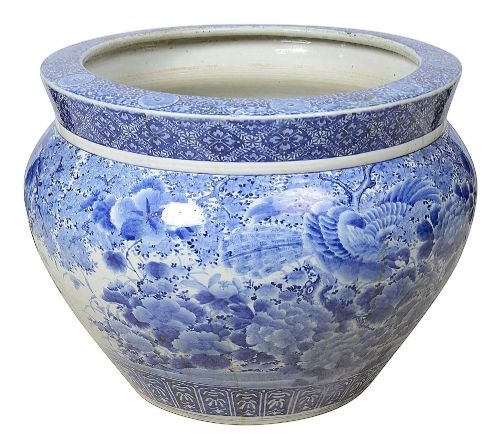
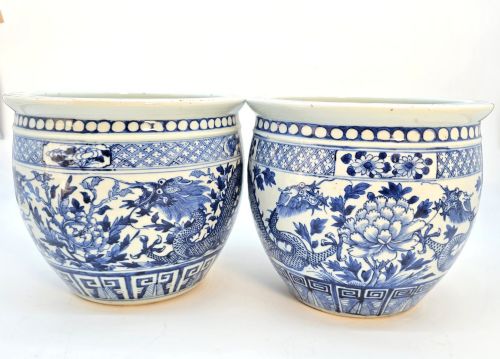


Blue White Porcelain Planter
These blue white porcelain planter examples bring crisp cobalt and white decoration to interiors, offering enduring style for greenery.
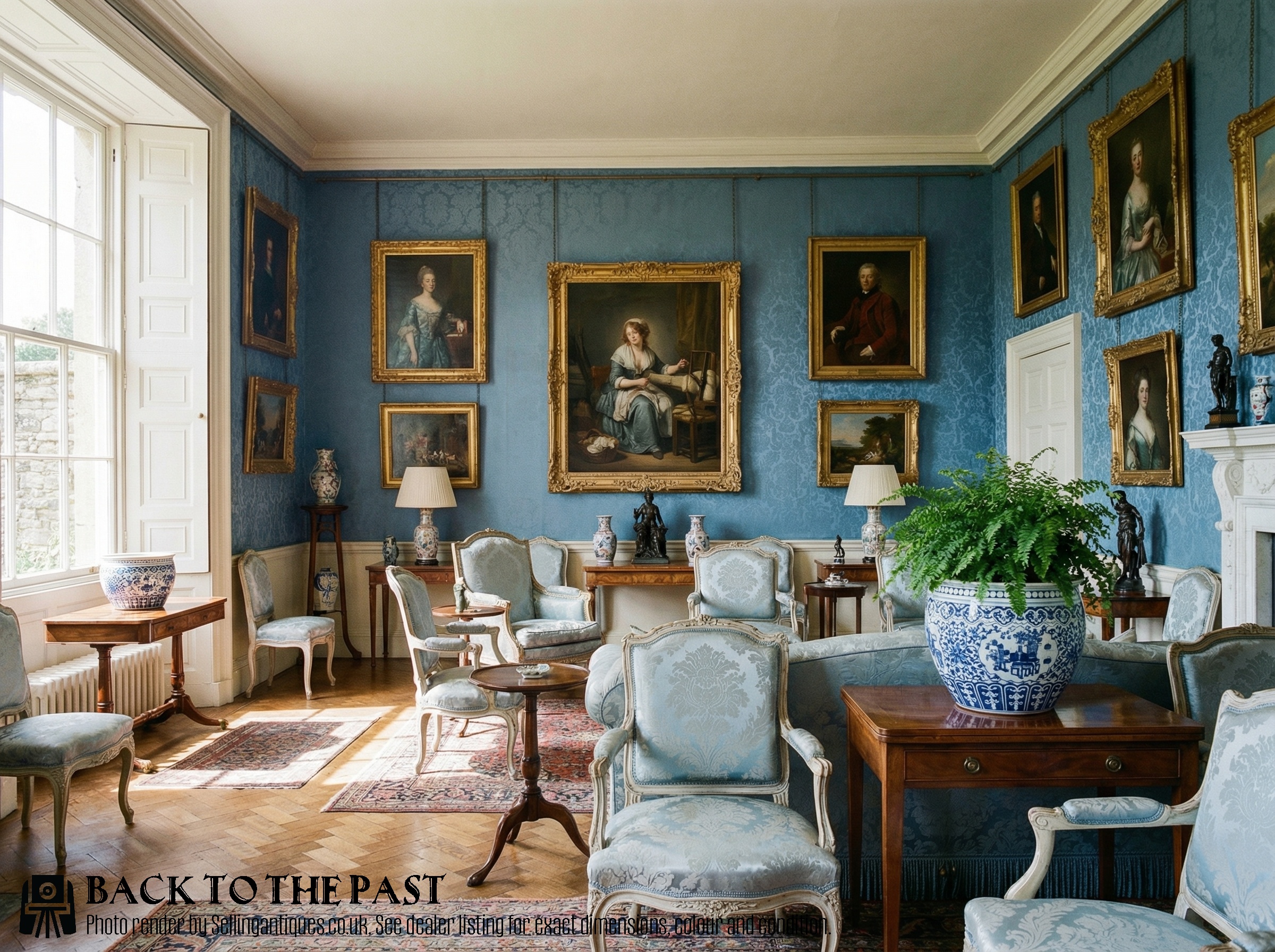
Blue White Porcelain Planter
A blue white porcelain planter serves as a vessel for housing plants, taking the form of jardinieres, fish bowls, and footbaths. These vessels often appear in substantial sizes, designed to sit on floors or associated hardwood stands.
The selections span from eighteenth century Chinese export pieces and Japanese Arita Imari wares to nineteenth century Victorian and Regency items. Buyers most frequently encounter nineteenth century Chinese and Japanese iterations featuring classic botanical or aquatic motifs.
Materials and construction
Potters shaped these objects from ceramic, porcelain, earthenware, and pearlware, applying cobalt pigment beneath a transparent glaze. Cobalt underglaze painting required steady brushwork before the high-temperature firing locked the deep blue tones into the surface.
Certain pieces incorporate enamel additions over the initial glaze, creating tactile contrast on the body. Manufacturers like Staffordshire Adams utilised refined clay bodies to produce durable vessels suited for holding substantial quantities of earth and water.
Listings span multiple materials including ceramic, porcelain, pearlware, and earthenware, alongside cobalt underglaze and enamel.
Factors of quality
Quality rests upon the crispness of the cobalt pigment application and the purity of the porcelain or ceramic body. Finer examples display meticulous hand-painted details with sharp outlines, whereas lesser items show blurred pigment diffusion.
The balance of the form and the preservation of the glaze during high-temperature firing dictate the upper tier of these pieces. Smooth glaze finishes without excessive pitting distinguish superior jardinieres from more utilitarian vessels.
The Blue White Porcelain Planter Glossary
- Cobalt Underglaze
- Pigment applied to the ceramic body before glazing and firing, yielding a permanent blue hue. This technique prevents the design from wearing away with handling.
- Jardiniere
- An ornamental pot or stand designed to hold a live plant or flower arrangement. These vessels frequently lack drainage holes, requiring an inner pot.
- Imari
- A style of Japanese export porcelain characterised by cobalt blue, iron red, and gilt detailing. The aesthetic became widely imitated across Europe during later periods.
- Pearlware
- A fine earthenware developed in the late eighteenth century featuring a bluish glaze that pooled in recesses. It bridged the gap between creamware and true porcelain.
- Chinoiserie
- European artistic interpretations of Chinese and East Asian decorative styles. This aesthetic influenced ceramics, furniture, and architecture throughout the eighteenth century.
Blue White Porcelain Planter: Frequently Asked Questions
How do I care for my planter?
Line the interior with a suitable plastic pot and saucer to prevent moisture sitting directly against the porous ceramic body. Avoid harsh chemical cleaners that might dull the historic glaze over time.
Place the vessel away from areas prone to sudden temperature fluctuations to protect the antique material. Clean the exterior gently using a soft, damp cloth.
Were these always used for plants?
Many large vessels served as fish bowls or footbaths rather than strictly holding potted plants. Their deep walls made them versatile containers for water-based displays or washing.
Over subsequent generations, collectors adapted these functional household items into decorative indoor planters. Their robust construction accommodated heavy soil and water with ease.
How do I date a blue and white piece?
Examine the characteristics of the ceramic body, the shade of the cobalt pigment, and any underlying foot rim construction. Eighteenth-century pieces often exhibit distinct potting traits compared to nineteenth-century Japanese Meiji exports.
Style motifs such as Chinoiserie or specific kiln marks provide further chronological clues. Comparing the glaze texture against known period examples helps confirm the era of manufacture.
Can these be displayed outside?
Historic ceramic and earthenware vessels are generally susceptible to frost damage during freezing winter weather. Bringing them indoors protects the glaze and body from cracking.
Displaying them inside ensures the longevity of both the porcelain structure and the painted decoration. Conservators recommend keeping them in stable indoor environments.