




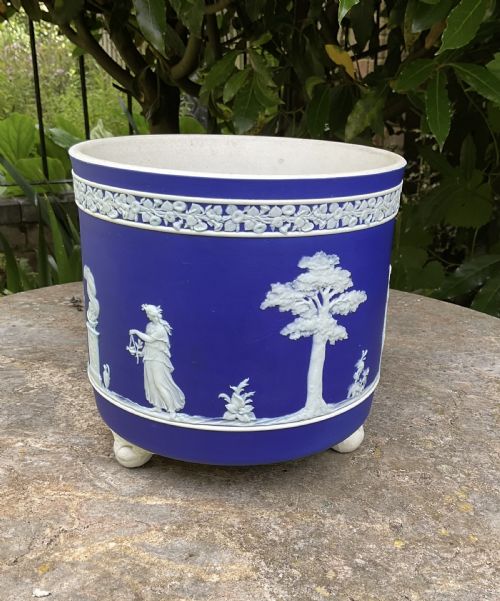
Blue White Ceramic Cachepot
A blue white ceramic cachepot brings colour and structure to a room, holding potted plants in traditional styles ranging from English earthenware to Chinese export porcelain.
Blue White Ceramic Cachepot
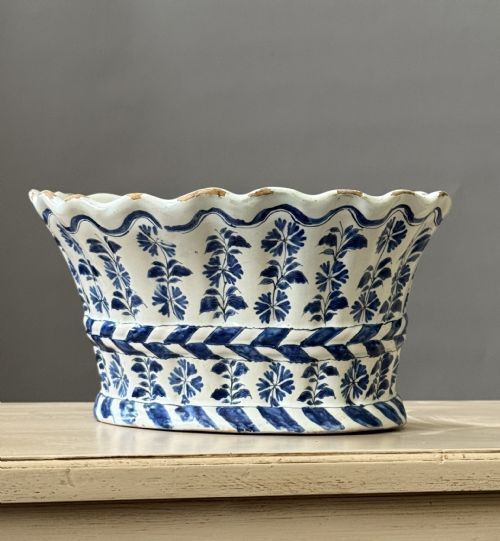
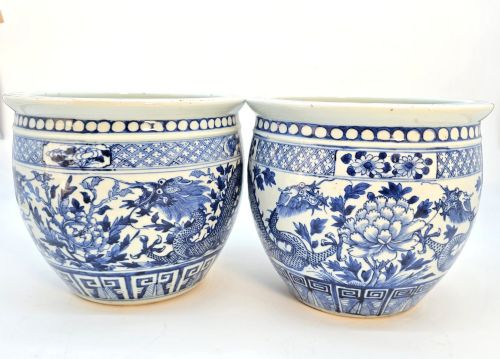
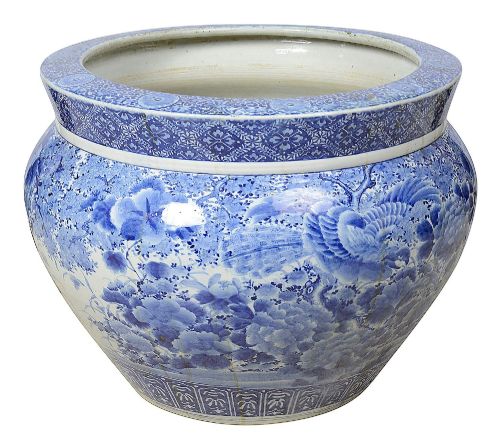
A blue white ceramic cachepot takes several forms across this selection, appearing as jardinières, planters, bough pots, and orange pots. These vessels house growing plants inside decorative containers, protecting furniture while adding a distinct pattern to interiors.
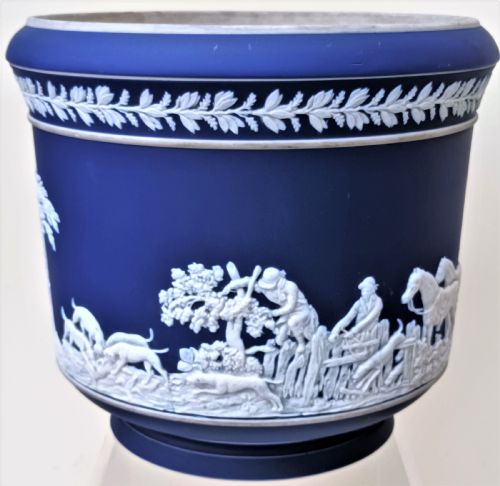
The objects span multiple centuries and regions, including 18th-century European faience, Delftware, and English jasperware alongside Chinese export porcelain and Japanese Arita wares. English Victorian examples sit alongside earlier continental pieces and Asian imports.
Buyers meet vessels shaped for specific botanical uses, from large floor-standing jardinières to smaller table planters. Many pieces arrive paired with associated hardwood stands or resting on three feet, reflecting the domestic habits of their respective periods.
Materials and construction methods
Potters shaped these vessels using porcelain, ceramic, stoneware, tin-glazed earthenware, and jasperware. Cobalt underglaze provided the primary blue pigment on porcelain and ceramic surfaces, frequently enhanced by enamel detailing.
Firing techniques varied by origin, from the high-temperature kilns producing Chinese and Japanese export porcelain to the lower-temperature tin-glazing processes used for European Delftware and Nevers faience. Stoneware and jasperware relied on dense body compositions moulded into relief designs.
Blue White Ceramic Cachepot Retail Price Guide 2026
Typical asking prices for blue white ceramic cachepot among the pieces listed under this phrase on Sellingantiques today, from the lower quarter to the upper quarter. They describe what is for sale here now, not the wider market.
Listings feature pieces spanning the 17th, 18th, and 19th centuries, utilising porcelain, tin-glazed earthenware, and jasperware.
Distinctions in quality and execution
Quality rests in the crispness of the cobalt painting and the stability of the glaze across the ceramic body. Finer pieces display confident brushwork in the underglaze decoration and precise control during high-temperature firing.
The subtlety of moulded relief on jasperware or the purity of the white ground beneath the blue pigment distinguishes superior examples. Potter control over kiln temperature prevents warping in large forms like jardinières and bough pots.
William Adams and Sons·Wedgwood
The Blue White Ceramic Cachepot Glossary
- Cachepot
- A decorative container used to hold a flowerpot and catch drainage water. These vessels conceal utilitarian pots within ornamental ceramics.
- Jardiniere
- A large ornamental pot or stand for plants or flowers. They often take centre stage in a room or hallway.
- Tin-Glazed Earthenware
- Pottery covered with a glaze containing tin oxide, producing an opaque white surface suitable for painted decoration. This technique defines European faience and Delftware.
- Cobalt Underglaze
- Pigment applied to the ceramic body before glazing and firing, capable of withstanding extreme kiln temperatures. It creates the permanent blue decoration seen on porcelain.
- Jasperware
- A type of fine stoneware developed in England, characterised by a matte unglazed surface and contrasting white moulded reliefs. William Adams and Wedgwood produced notable examples.
- Bough Pot
- A vessel designed to hold cut tree branches or flowers for interior decoration. Early forms frequently feature multiple apertures on the lid.
Blue White Ceramic Cachepot: Frequently Asked Questions
What is the difference between a cachepot and a jardiniere?
A cachepot generally acts as an indoor cover pot designed to hide a plain growing container underneath. A jardiniere often serves as a larger, more substantial standalone planter.
Both types share similar decorative treatments, but jardinieres frequently accommodate larger indoor plants or display arrangements directly within their glazed interiors.
How do I care for antique ceramic planters?
Antique ceramics require gentle cleaning with a soft cloth and mild soap to protect the glaze and painted decoration. Avoid harsh scrubbing or abrasive materials that might scratch the surface.
Place a modern plastic liner inside the antique vessel when holding live plants to prevent moisture from seeping into porous earthenware or unglazed foot rims.
How do I date a blue and white ceramic pot?
Dating relies on examining the clay body, glaze characteristics, and painting style relative to known manufacturing periods. Tin-glazed earthenware and export porcelain exhibit distinct paste and pigment qualities tied to specific centuries.
Base marks, where present, offer clues to the pottery or region of origin. Stylistic cues such as Victorian neoclassical motifs or Meiji period influences further narrow the timeline.
Were these vessels used outdoors?
Most antique ceramic planters of these types were designed for interior domestic use on tables, sideboards, or plant stands. Their fine glazes and decorative finishes suited sheltered drawing rooms and parlours.
Exposing historic earthenware or porcelain to frost and harsh weather risks cracking the ceramic body or damaging the glaze. Indoor placement remains essential for preserving their condition.