




Blue White Plant Pot
A blue white plant pot brings cobalt decoration and ceramic heft to interiors, spanning centuries of global trade and domestic manufacture.
Blue White Plant Pot
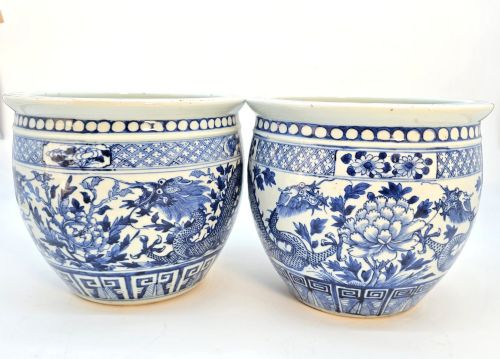
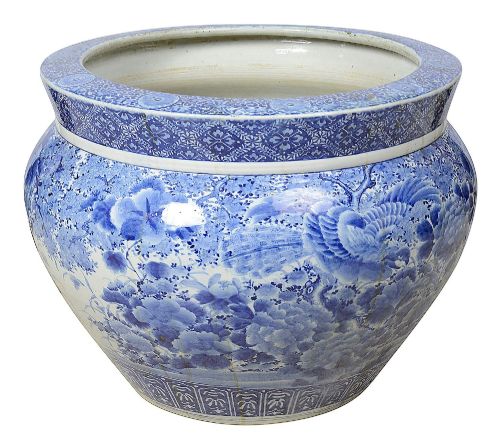
A blue white plant pot encompasses large jardinieres, fish bowls, and cachepots designed to house growing greenery or display floral arrangements. The versions most commonly encountered on this page date from the nineteenth century, alongside earlier eighteenth-century examples originating from China, Japan, and English potteries.
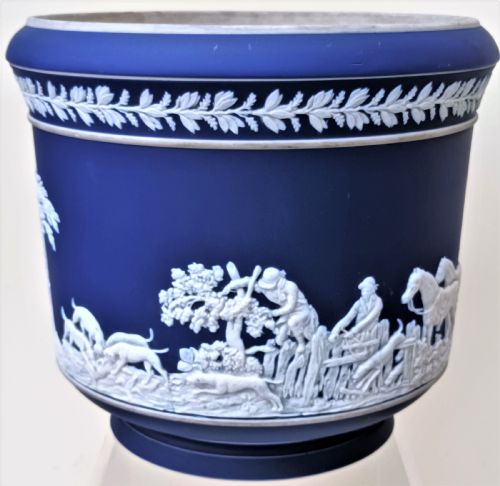
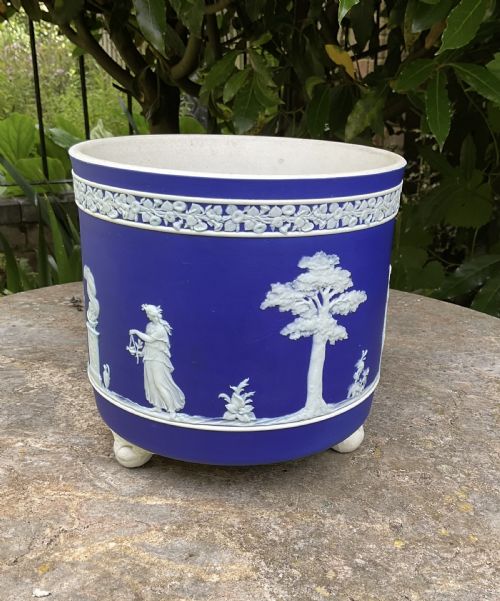
Forms vary from robust ceramic vessels resting on feet to expansive porcelain jardinières accompanied by associated hardwood stands. Makers applied traditional cobalt underglaze decoration, Chinoiserie motifs, and neoclassical relief patterns across stoneware, porcelain, and jasperware bodies.
How they were made
Potters shaped clay and porcelain bodies on the wheel or in moulds before applying cobalt underglaze pigments to create intricate blue designs beneath a clear protective finish. Enamel highlights and jasperware relief mouldings added texture and contrasting colour to specific pieces.
Firing required precise kiln temperatures to fuse the glaze and ceramic substrate, resulting in durable vessels intended to hold damp soil and heavy plants.
Blue White Plant Pot Retail Price Guide 2026
Typical asking prices for blue white plant pot among the pieces listed under this phrase on Sellingantiques today, from the lower quarter to the upper quarter. They describe what is for sale here now, not the wider market.
Several heavy porcelain jardinieres require stout hardwood stands just to keep them off the floor and out of mischief.
What varies in quality
Quality rests upon the crispness of the cobalt underglaze painting, the purity of the porcelain or ceramic body, and the precision of moulded details. Pieces featuring hand-painted Chinoiserie scenes or delicate Japanese Meiji period decoration display greater artistic merit than standard production wares.
The sophistication of the form, whether standing on three feet or paired with carved hardwood stands, separates ordinary utility items from superior decorative works.
William Adams And Sons·Wedgwood
The Blue White Plant Pot Glossary
- Jardiniere
- A large ornamental pot or container designed to hold a plant or flower arrangement. These vessels sit directly on tabletops or floors, frequently displayed on matching stands.
- Cobalt Underglaze
- A blue pigment applied to ceramic pieces before glazing and firing. This technique protects the decoration beneath a glossy surface layer.
- Jasperware
- A type of fine stoneware developed by English potters, featuring matte relief figures applied against a contrasting coloured background. It gained popularity during the Victorian period.
- Chinoiserie
- European decorative motifs inspired by Chinese art and design. This style appears frequently on export porcelain and transfer-printed earthenwares.
- Cachepot
- An ornamental container used to conceal an ordinary flowerpot. The name derives from the French term for hiding a pot.
Blue White Plant Pot: Frequently Asked Questions
What is a jardiniere?
A jardiniere is a decorative ceramic pot designed specifically to house plants or floral displays indoors.
These vessels are larger than standard plant pots and often feature substantial decorative painting or moulded relief work.
How do I care for antique ceramic pots?
These vessels require gentle cleaning with a soft cloth and should be protected from sudden temperature changes.
Using a plastic liner inside the pot prevents moisture from seeping into porous historic clays.
How do I date a blue and white pot?
Dating relies on stylistic clues, ceramic bodies, and any maker marks stamped or painted on the base.
Eighteenth-century examples often display hand-painted export designs, while nineteenth-century pieces frequently include factory marks or neoclassical relief.
Were these pots used outdoors?
Most antique jardinieres were created for indoor display in parlours, conservatories, or drawing rooms.
Historic porcelain and earthenware bodies can crack if exposed to freezing winter temperatures outside.