


Antique Chinese Cachepot
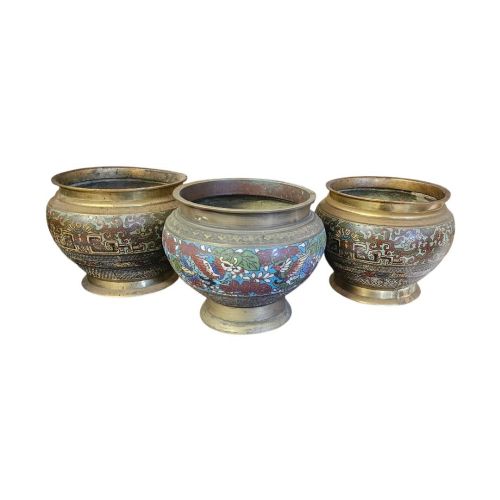
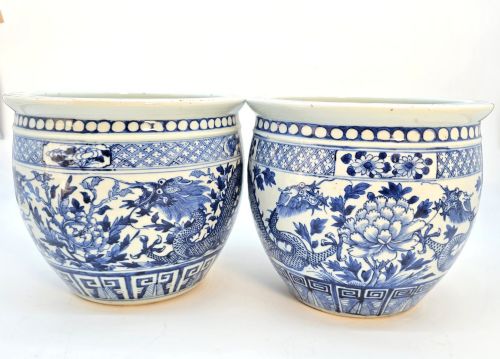
An antique chinese cachepot brings vibrant horticulture indoors through cast bronze, champleve enamel, and blue and white porcelain.
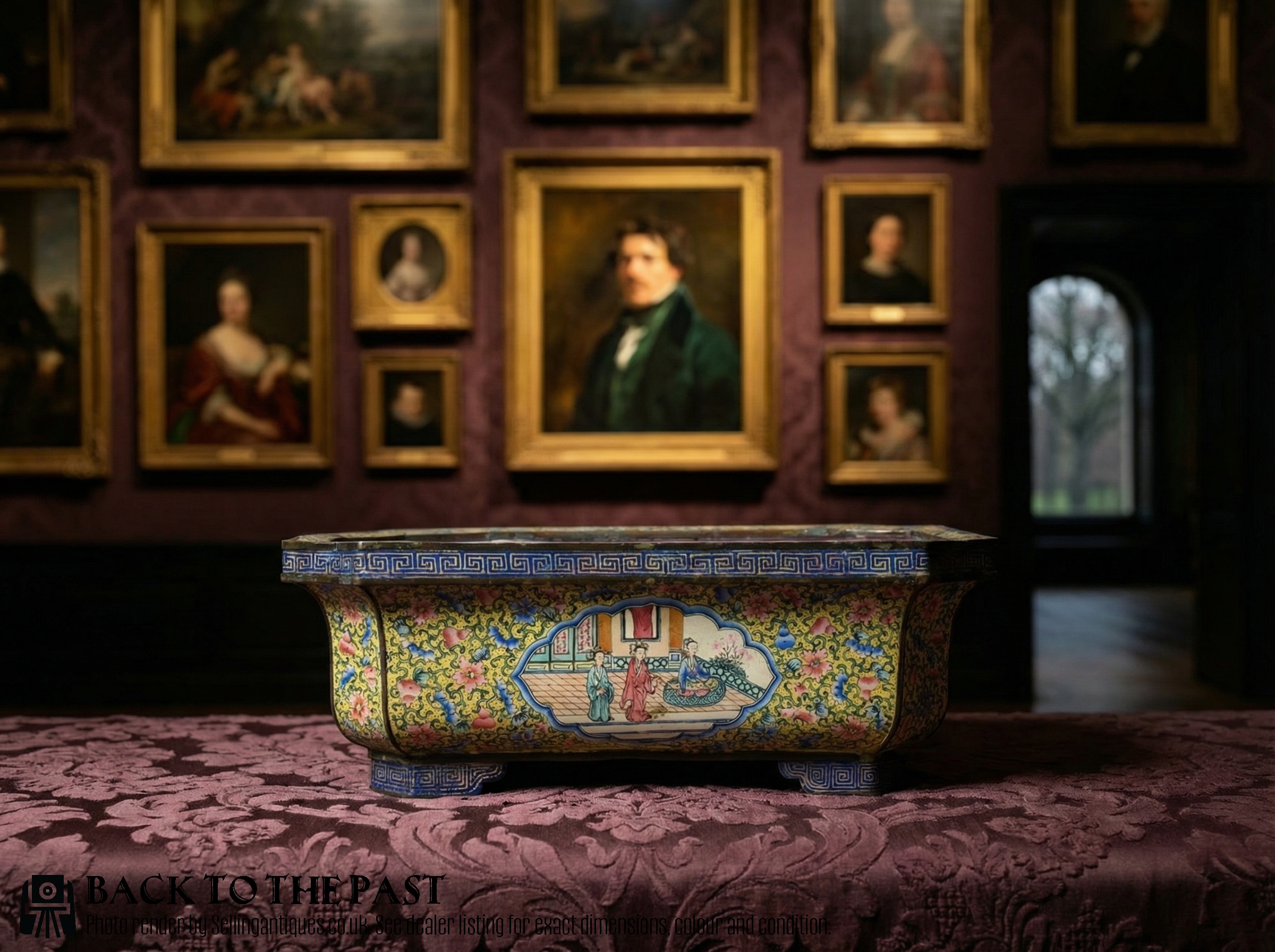
Antique Chinese Cachepot
An antique chinese cachepot functions primarily as a decorative container designed to house potted plants and flowers within domestic interiors. These pieces appear across several forms, including jardinières, planters, and decorative bowls.
The pieces on this page span the eighteenth, nineteenth, and early twentieth centuries, featuring styles such as Qing Dynasty, Late Qing Dynasty, Chinoiserie, and Chinese Export. Buyers most frequently encounter blue and white porcelain vessels alongside heavy bronze and brass planters from the late nineteenth and early twentieth centuries.
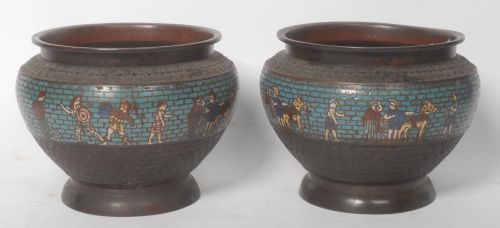
Vessels take various configurations, from small desk pots and pairs of Greco-Roman influenced cachepots to large jardinieres resting on dedicated stands. Makers utilised durable materials suited to holding damp soil and water alongside ornamental display.
How they were made
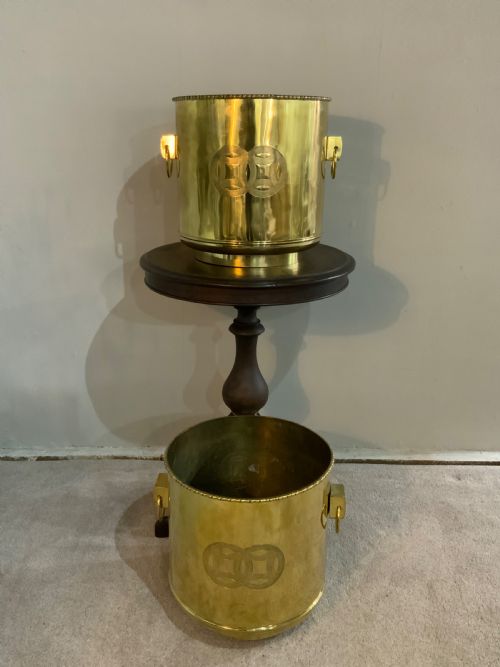
Metalsmiths cast bronze, brass, and copper into heavy vessels, often applying champleve or cloisonne enamel techniques to create intricate surface patterns. Polished brass and cast bronze provide structural weight and longevity.
Potters shaped ceramic and porcelain bodies, decorating them with cobalt underglaze, Imari palettes, or Canton enamel colours before firing. These glazed surfaces protected the clay while delivering vivid visual detail.
Listings feature items spanning the eighteenth century through to the early twentieth century, utilising bronze, brass, porcelain, and enamel.
What varies in quality
The distinction between ordinary and superior pieces rests upon the crispness of metal casting and the precision of enamel work. Elaborate champleve detailing and deeply potted porcelain demonstrate higher levels of workshop execution.
Materials dictate much of the character, where heavy bronze foundations and well-preserved cobalt underglaze pigments elevate a piece above standard brass or simpler ceramic items.
The Antique Chinese Cachepot Glossary
- Cachepot
- A decorative pot used to conceal an ordinary flowerpot, preventing water damage to furniture. These containers have no drainage hole in the base.
- Jardiniere
- A large ornamental pot or stand for holding plants or flowers. They often sit on the floor or dedicated stands rather than desks.
- Champleve
- An enamelling technique where troughs are sunk into a metal surface and filled with vitreous enamel before firing. This creates raised metal lines separating coloured areas.
- Cloisonne
- An ancient technique for decorating metalwork objects with coloured material separated by strips of metal. Artisans solder flat wires to the metal base to form compartments.
- Imari
- A style of porcelain decorated in underglaze blue, iron red, and gold. This palette originated in Japan but heavily influenced Chinese export wares.
Antique Chinese Cachepot: Frequently Asked Questions
What is the difference between a cachepot and a jardiniere?
A cachepot specifically holds a potted plant to catch drainage water, whereas a jardiniere often serves as a larger container for direct planting or display.
Both terms frequently describe similar vessel forms across antique metal and ceramic categories.
How were these pots used historically?
Households placed these vessels in principal rooms to display decorative plants and flowers indoors. Large examples stood upon wooden stands or the floor.
Smaller bronze bowls functioned on desks as decorative receptacles rather than purely botanical containers.
How do I care for an antique metal planter?
Dust surfaces gently with a soft dry cloth and avoid harsh chemical cleaners that damage enamel or bronze patina. Use a plastic liner inside the pot to protect antique metal or ceramic from moisture.
Direct contact with damp soil can corrode interior surfaces over extended periods.
How do I date a porcelain jardiniere?
Dating relies upon examining the ceramic body, cobalt pigment characteristics, and stylistic markers such as Qing dynasty motifs or export patterns. Handle details and glaze consistency provide further chronological clues.
Comparison with documented pieces helps narrow the production window.