




Hand Painted Canton Enamel
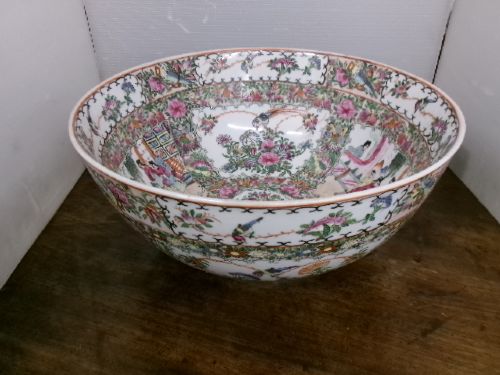
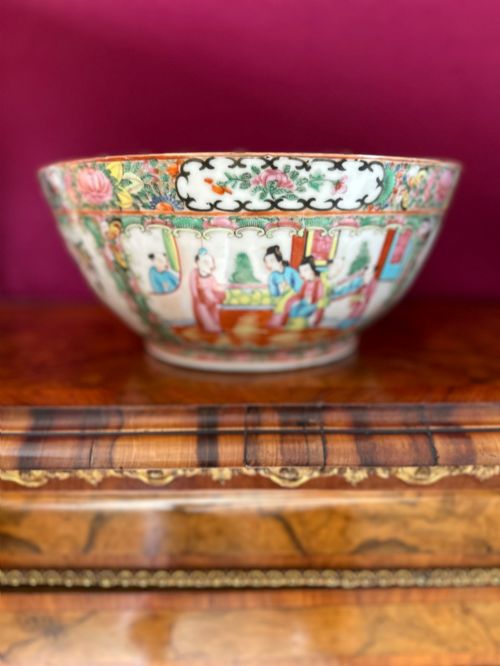
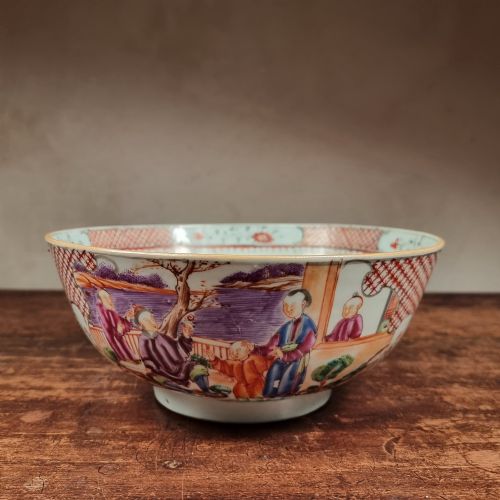
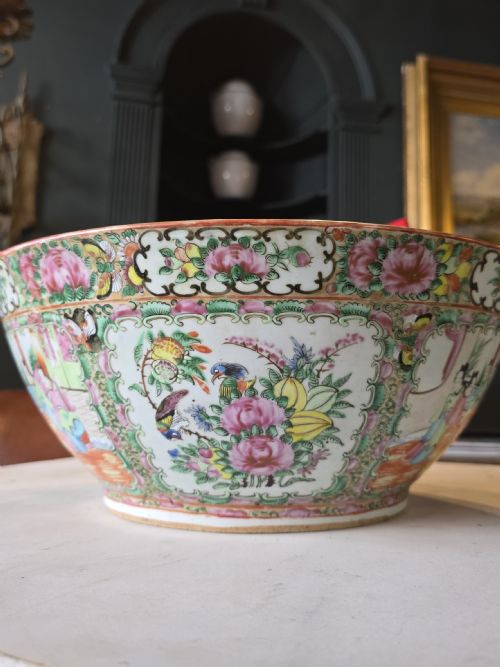
Hand painted canton enamel brings vibrant Chinese export palettes, detailed floral scenes and generous proportions into a room.
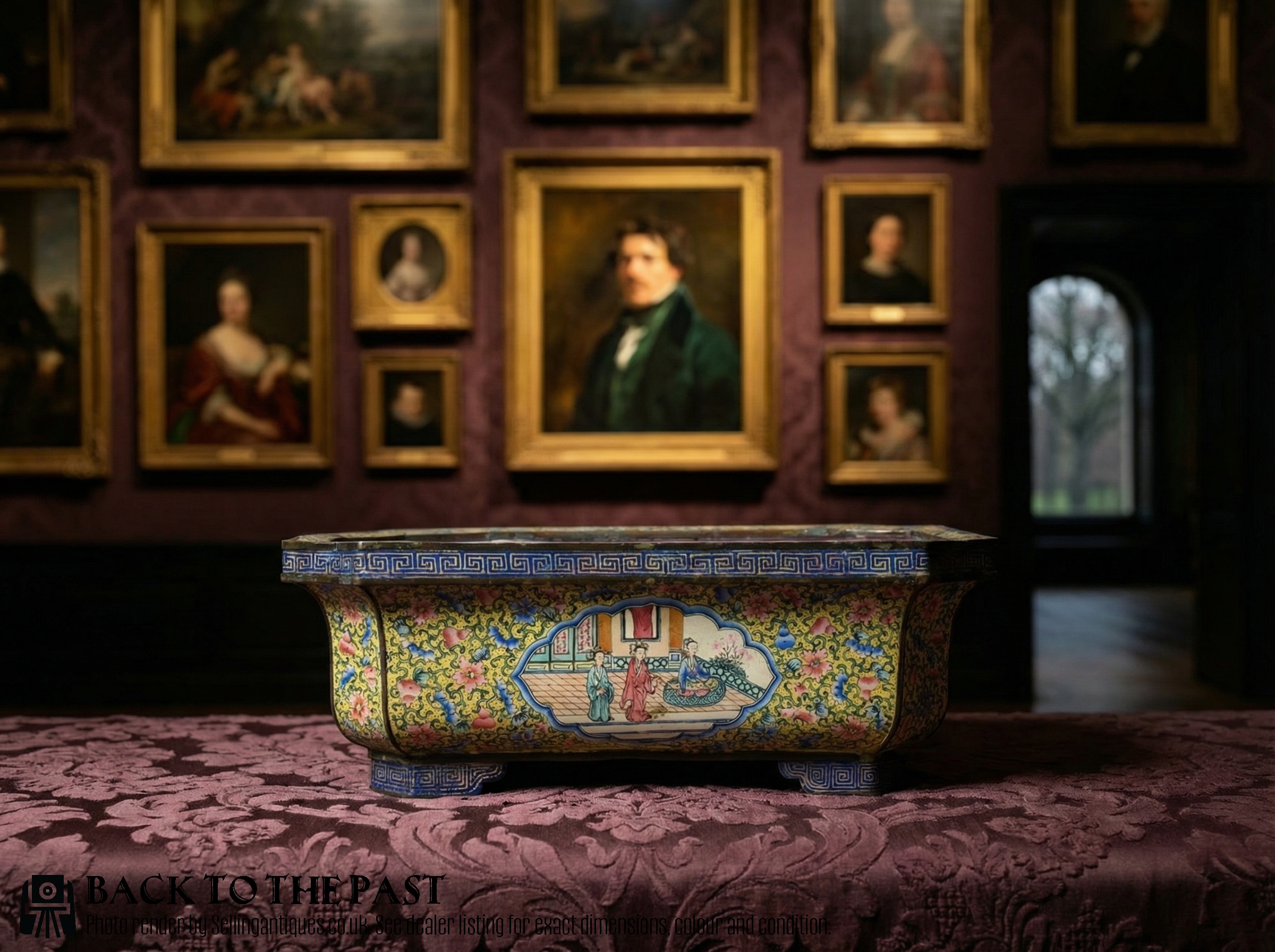
Hand Painted Canton Enamel
When you search for hand painted canton enamel, you encounter decorative porcelain and metal vessels created for export during the eighteenth and nineteenth centuries. These objects range from monumental floor vases and deep punch bowls to jardinieres, lidded boxes and shaped dishes.
The pieces on this page lean heavily towards nineteenth-century production, particularly the Qing dynasty, alongside occasional eighteenth-century examples spanning the Qianlong period. Forms such as the rose medallion bowl, famille rose vases and trefoil trays dominate the selection.
Materials and construction methods
Artisans applied vibrant overglaze enamel pigments directly onto porcelain bodies or vitreous metal surfaces, often incorporating rich gold leaf and gilding to accentuate panel borders and intricate motifs. The firing process fixed these colourful mineral paints above the primary glaze, yielding a tactile, slightly raised finish.
Production combined meticulous hand painting with durable porcelain and enamel substrates, resulting in robust forms designed to withstand long-distance maritime trade while retaining brilliant polychrome details.
Substrates include vitreous enamel and porcelain, decorated with overglaze enamel, gold leaf and gilding across various forms.
Distinctions in craftsmanship
Quality rests upon the precision of the hand painting, where finer pieces display densely populated figural scenes, intricate butterfly borders and crisp enamel work without blurring. The richness and application of the gilding further separate standard export ware from exceptional commissions.
Scale and structural ambition also divide the range, as monumental floor vases and large punch bowls demand greater technical mastery in both throwing and firing than smaller domestic dishes.
The Hand Painted Canton Enamel Glossary
- Famille Rose
- A major palette of Chinese ceramic glazes introduced in the eighteenth century, dominated by opaque pink or rose enamel derived from colloidal gold. This palette allowed for subtle tonal gradations in floral and figural depictions.
- Rose Medallion
- A distinct decorative style characterised by alternating panels of figures, birds, and flowers arranged around a central medallion. It became a staple of nineteenth-century export production.
- Qing Dynasty
- The final imperial dynasty of China, ruling from sixteen forty-four to nineteen twelve, encompassing the principal periods of export porcelain manufacturing seen here.
- Jardiniere
- A large ornamental pot or container designed to hold live plants or flowers. In export ceramics, these vessels often feature robust proportions and heavy enamel decoration.
- Overglaze Enamel
- Mineral colours painted onto a previously fired and glazed ceramic surface before undergoing a second, lower-temperature firing to fuse the pigments.
Hand Painted Canton Enamel: Frequently Asked Questions
How do I date hand painted canton enamel?
Dating relies upon stylistic markers, palette characteristics and potting traits rather than strict labels alone. Eighteenth-century examples often show tighter enamel control and specific Qianlong reign marks, whilst nineteenth-century pieces frequently embrace busier rose medallion patterns.
Examining the base, the weight of the porcelain and the vibrancy of the overglaze pigments helps contextualise the era of manufacture.
Where were these pieces originally made?
These items were produced in China, specifically for the Western export market through the port of Canton. Workshops tailored their decorative schemes to suit European and American tastes.
While manufactured in Asia, the distribution reached global markets via maritime trade routes during the Qing dynasty.
How should I display a large bowl or vase?
Large punch bowls and floor vases require stable, sturdy surfaces capable of supporting substantial porcelain weight. Placing them away from high-traffic areas protects the delicate overglaze enamel and raised gilding from accidental knocks.
Natural light enhances the polychrome palette, making well-lit sideboards or open pedestals ideal locations.
What is the difference between famille rose and rose medallion?
Famille rose is the broader classification of ceramic ware utilising the pink enamel palette across various floral and figural compositions. Rose medallion is a specific subset defined by its segmented panel layout radiating from a central point.
All rose medallion pieces belong to the famille rose family, but not all famille rose items follow the medallion layout.