


Antique Porcelain Figural Group
An antique porcelain figural group captures multi-figure narratives in ceramic, bringing 18th-century theatricality and 19th-century romanticism directly onto a mantelpiece.
Antique Porcelain Figural Group
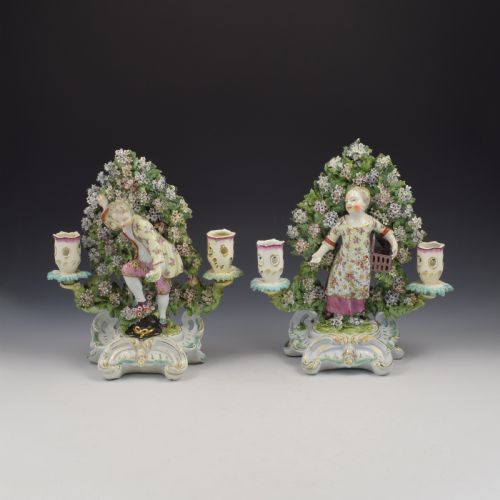
An antique porcelain figural group brings together two or more modelled ceramic figures in a single sculptural arrangement, depicting mythological scenes, domestic moments, musicians, or allegorical figures like the Four Seasons. These sculptural works range from elaborate French bocage candlesticks and grand centrepiece bowls to intimate Victorian pairs and delicate continental table ornaments.
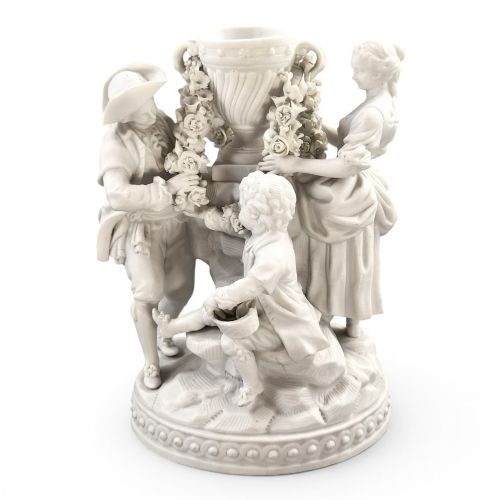
Buyers searching for an antique porcelain figural group will most frequently encounter pieces spanning the 18th century through the Victorian era and into the early 20th century, produced by major European factories such as Meissen, Derby, and Vieux Paris. These works take several forms, including glazed hard-paste porcelain, biscuit porcelain, and parian, frequently accented with enamel, gold leaf, and gilding.
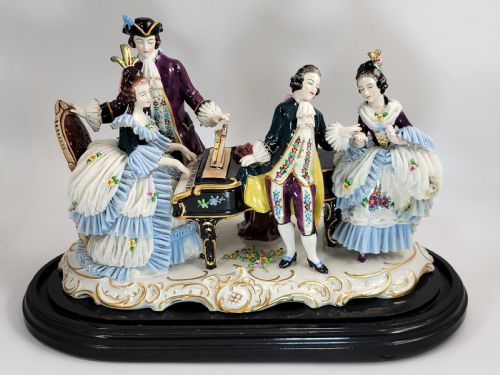
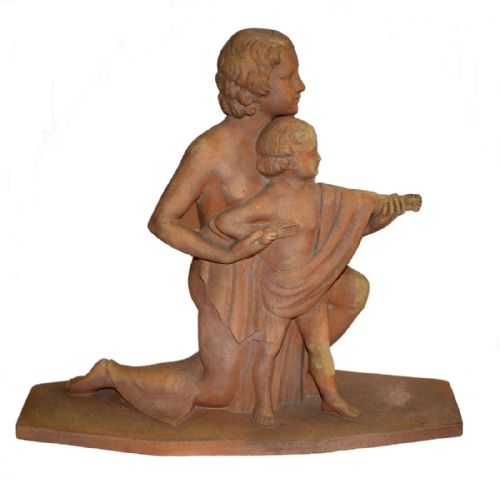
The styles represented across these sculptural groupings trace the evolution of ceramic art from Rococo Revival and Georgian elegance through to Victorian ornamentation, Art Nouveau, and Art Deco. Whether capturing children at play, fortune-tellers, or musicians with a piano, each antique porcelain figural group preserves detailed narratives shaped by European ceramicists across centuries.
How they were made
Makers shaped these sculptural works using hard-paste porcelain and unglazed biscuit porcelain, frequently applying liquid glaze and enamel colours before firing. Many pieces received meticulous hand-painted details in enamel and rich embellishments of gold leaf and gilding.
Complex groupings required multiple mould-pressed or hand-modelled components joined together prior to firing, sometimes incorporating delicate applied elements such as lace or floral garlands. Wooden bases and gilt mounts occasionally complemented the ceramic bodies, particularly in French and continental decorative sculptures.
Listings feature hard-paste porcelain, biscuit porcelain, enamel, gold leaf, and gilding across the 18th, 19th, and early 20th centuries.
What varies in quality
The crispness of intricate applied details, such as delicate porcelain lace, floral garlands, and leafy bocage backgrounds, dictates the refinement of the piece. Preservation of these fragile, high-relief components without loss or heavy restoration maintains the integrity and visual impact of the figural composition.
Ernst Bohne Söhne·Meissen·Eugene Clauss·Vion et Baury·Royal Dux Bohemia·Copeland
The Antique Porcelain Figural Group Glossary
- Biscuit Porcelain
- Unfired or once-fired unglazed porcelain that presents a matte, marble-like white surface prized for its sculptural detail. It is also frequently referred to as bisque.
- Bocage
- An ornamental background of applied ceramic foliage and leaves framing a figural group, common in 18th-century English and continental porcelain. It adds a dense, naturalistic setting behind the main characters.
- Hard-paste Porcelain
- A durable ceramic paste composed of kaolin and petuntse fired at very high temperatures. This formula creates a dense, vitrified body that resists scratching and holds sharp moulded details.
- Gilding
- The application of gold leaf or powdered gold to ceramic surfaces to highlight borders, garments, and decorative motifs. It is often fired onto the glaze to secure a permanent metallic finish.
- Parian
- A fine white biscuit porcelain developed in the 19th century to imitate carved marble. It takes its name from the famed marble quarried on the Greek island of Paros.
Antique Porcelain Figural Group: Frequently Asked Questions
What is a figural group?
A figural group is a single ceramic sculpture featuring two or more human or allegorical figures interacting within a unified scene. These pieces often tell a story, represent an occupation, or symbolise abstract concepts.
Unlike standalone figurines, these complex compositions create a narrative focal point, frequently incorporating architectural elements, musical instruments, or natural backgrounds like bocage.
How do I identify a Meissen group?
Meissen pieces can often be identified by their distinctive underglaze blue crossed swords mark on the base, alongside high-grade modelling and delicate enamel painting. These works typically date from the 18th or 19th centuries and show exceptional refinement in the facial expressions and garment details.
The factories also produced specific thematic series, such as sets representing the Four Seasons or groups of musicians, executed in hard-paste porcelain.
What is biscuit porcelain?
Biscuit porcelain is fired ceramic that has not been covered with a transparent glaze, leaving it with a matte, porous texture resembling white marble. This finish was favoured for its ability to show fine sculptural detail without the softening effect of glaze.
It became especially popular during the 19th century for classical and sentimental figure groups, including parian figures of children.
How do I display these groups?
These ceramic sculptures require stable, secure placement away from high-traffic areas or vibrations due to the fragile nature of projecting limbs, lace, and floral elements. Displaying them in enclosed cabinets protects the fine enamel colours and delicate gilding from dust and accidental impacts.
Sufficient lighting helps highlight the intricate modelling and the contrast between glazed and unglazed biscuit surfaces.