


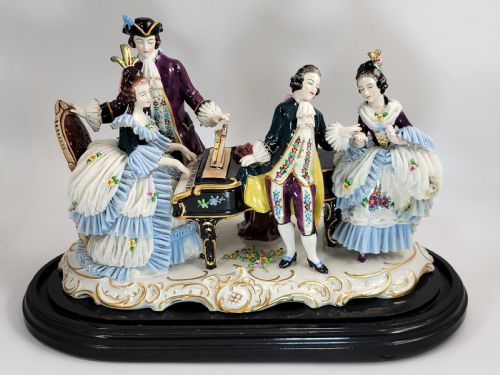
18th Century Style Porcelain
These pieces of 18th century style porcelain span domestic teawares and ornamental figures that bring period craftsmanship to the table.
18th Century Style Porcelain
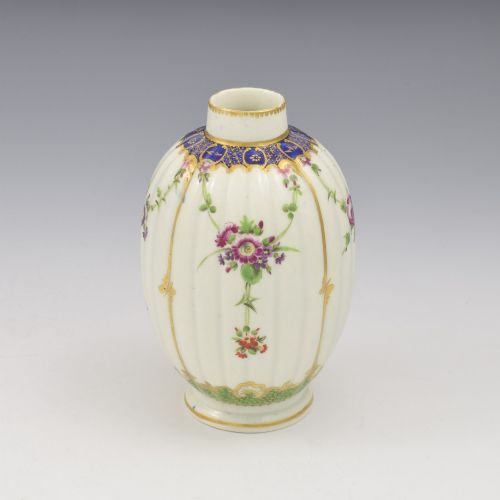
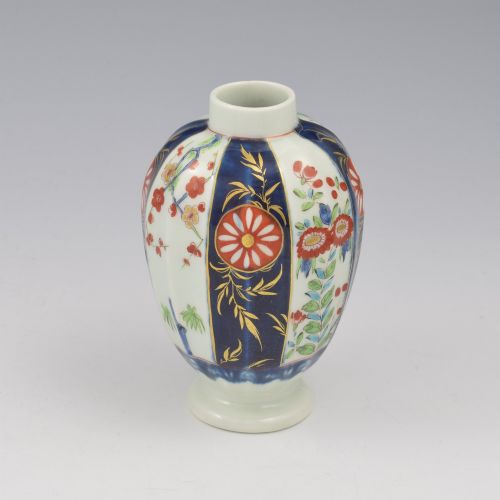
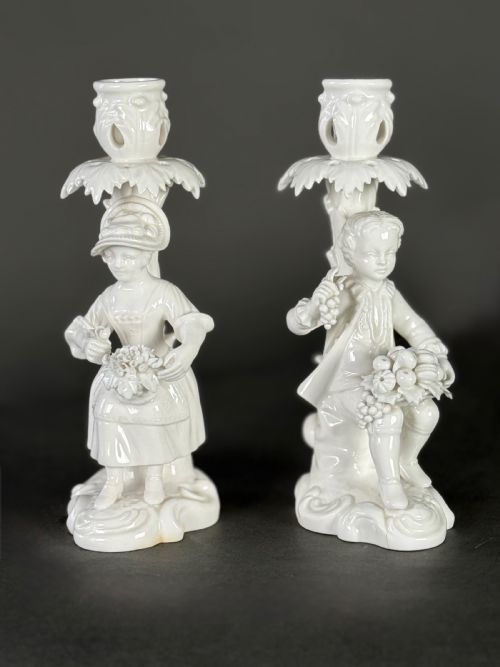
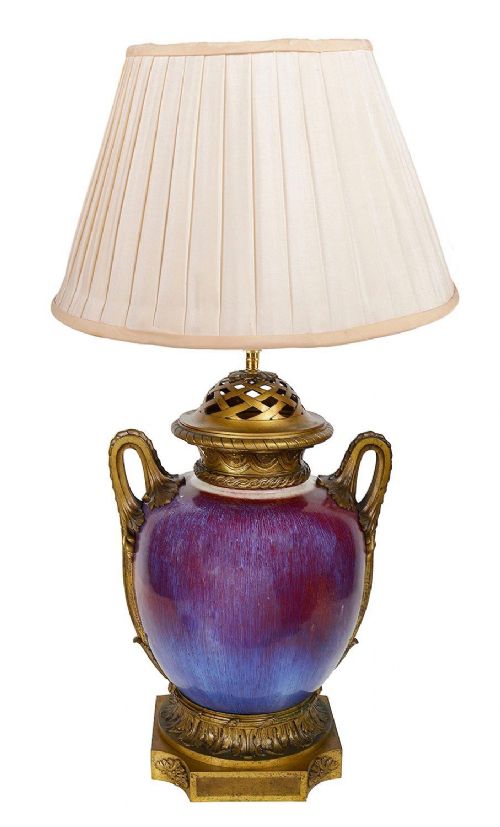
Buyers seeking 18th century style porcelain encounter objects ranging from Georgian English tea canisters and Derby candlesticks to continental figures and Chinese export plates. The selection includes domestic teawares such as teapots, tea bowls, and saucers alongside decorative dishes and table lamps.
Many items date directly from the eighteenth century, including pieces from the Worcester, Meissen, and Chelsea factories, while later nineteenth and early twentieth century examples reflect revivals of these earlier aesthetics.
Forms cross practical and decorative boundaries, encompassing lidded vases, inkstands, jardinières, and figural groups shaped by Rococo and Chinoiserie tastes.
What varies in quality
The refinement of the painted decoration distinguishes different grades of porcelain, particularly in the precision of hand-painted floral, avian, and figural scenes. Superior potting displays crisp moulding in relief work, such as fluted tea canisters or moulded chrysanthemum patterns.
The integration of secondary materials like ormolu mounts or gilt bronze frames dictates the tier of the piece, with heavier, finely chased mounts marking out superior ornamental objects.
Listings feature hard-paste and soft-paste porcelain from the eighteenth, nineteenth, and early twentieth centuries alongside ormolu mounts.
Meissen Porcelain Factory·Derby Porcelain Factory·Ernst Bohne Soehne·Thomas Wolfe Staffordshire·Royal Capodimonte Factory
The 18th Century Style Porcelain Glossary
- Soft-paste porcelain
- An artificial ceramic paste fired at lower temperatures than hard-paste, common in early English factories. It produces a warm, slightly translucent body.
- Hard-paste porcelain
- A true porcelain composed of kaolin and petuntse fired at high temperatures. This formula yields a durable, vitrified body resistant to scratching.
- Ormolu
- Gilded bronze mounts applied to furniture, clocks, and porcelain bodies. It gained widespread use in French and continental decorative arts.
- Chinoiserie
- European artistic styles reflecting Chinese motifs and techniques. Artisans applied these designs to porcelain, textiles, and lacquerware.
- Kakiemon
- A style of Japanese enamelled porcelain exported to Europe, featuring asymmetrical floral and bird motifs. European factories frequently copied these palettes.
18th Century Style Porcelain: Frequently Asked Questions
How do I identify early Worcester porcelain?
Early Worcester pieces often display blue and white underglaze decoration or polychrome enamels on soft-paste bodies. Look for fine fluting and hand-painted motifs derived from Chinese or Japanese ceramics.
Examine the base for characteristic potting traits of the period, as marks can be absent or simulated on later revivals.
What is Chinese export porcelain?
Chinese export porcelain refers to ceramics made in China specifically for Western markets from the seventeenth century onwards. These wares combined traditional Chinese manufacturing with shapes and patterns requested by European buyers.
Designs frequently incorporated Western coats of arms, European prints, or adaptation of Imari and Famille Verte palettes.
How should I care for antique porcelain?
Wash antique porcelain by hand using lukewarm water and a mild detergent when cleaning is necessary. Avoid submerging pieces with metallic mounts or delicate applied details like ceramic lace.
Keep pieces away from direct sunlight and dramatic temperature fluctuations to protect enamel colours and old glazes.
What distinguishes hard-paste from soft-paste?
Hard-paste porcelain feels harder, resists scratching, and has a bright white, vitrified body that rings when tapped. Soft-paste is slightly softer, absorbs light differently, and often shows minor glaze pooling.
English factories relied heavily on soft-paste during the eighteenth century before transitioning to hard-paste formulations.