




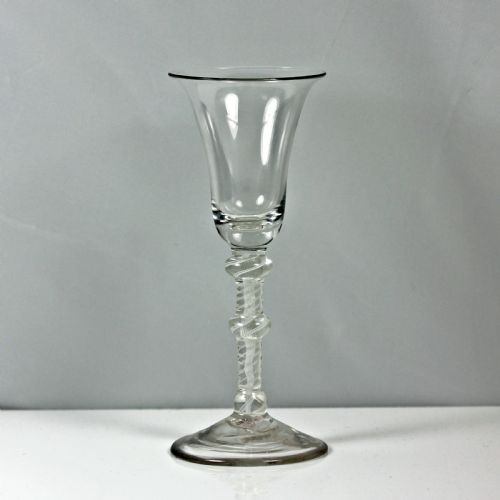


White Opaque Twist Stem
These white opaque twist stem glasses are eighteenth-century English drinking vessels prized for their delicate, milky enamel threads enclosed within clear lead glass.
White Opaque Twist Stem
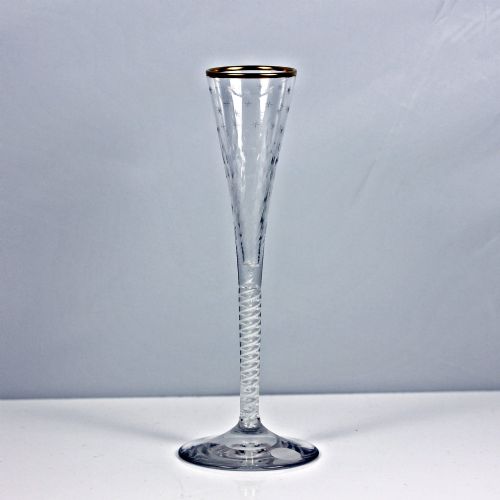
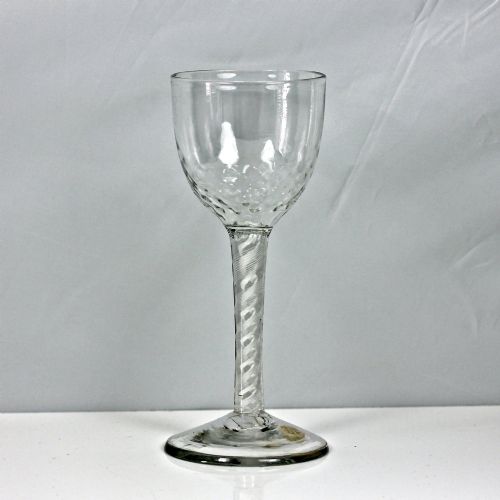
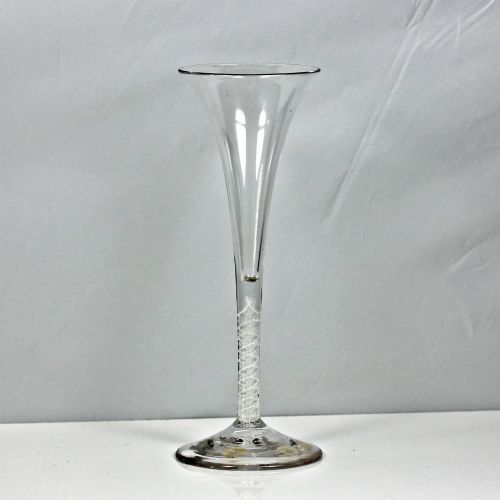
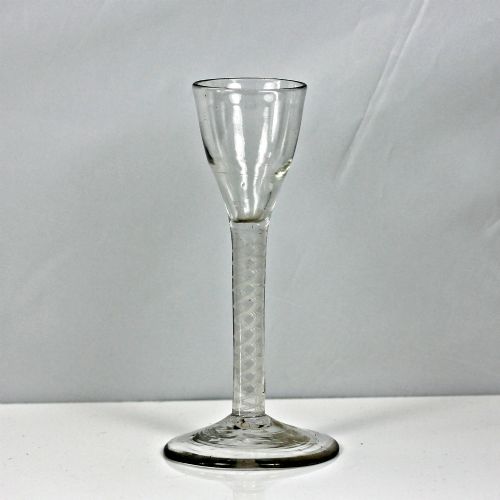
A white opaque twist stem is an eighteenth-century English drinking vessel formed predominantly as a wine glass, ale glass, cordial glass, or champagne and sweetmeat glass. These pieces date from the Georgian period, typically spanning the middle decades of that century.
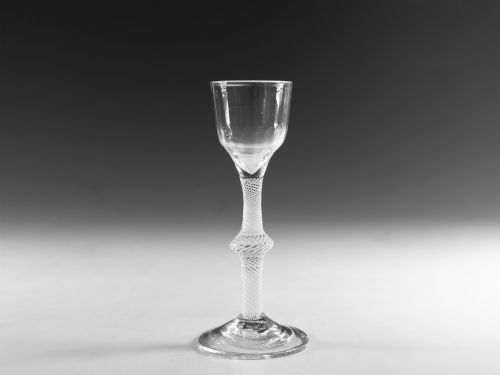
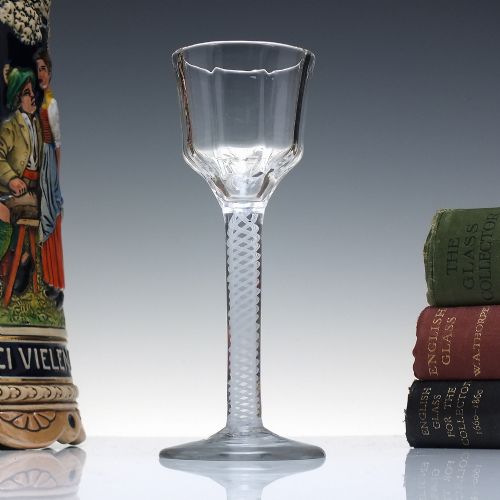
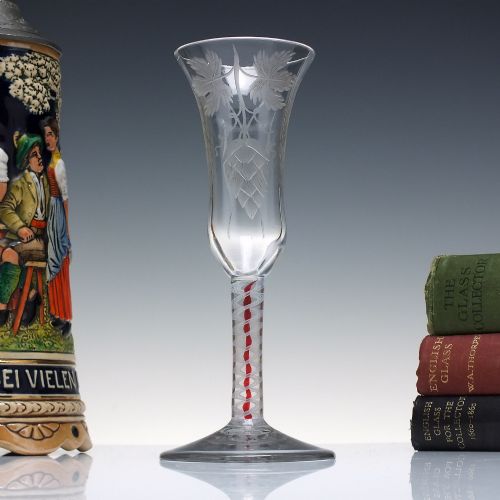
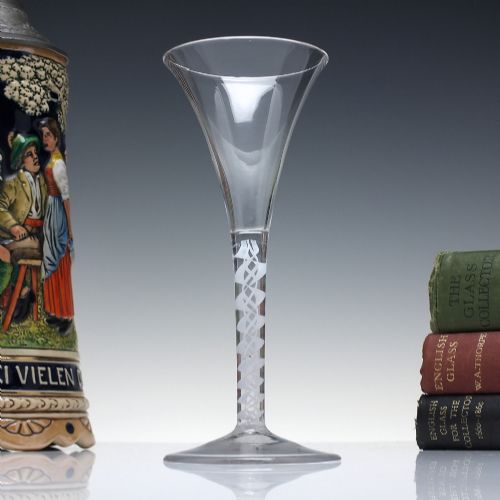
The stems contain fine white enamel twists encased in clear lead glass, supporting various bowl forms including trumpet, ogee, and flute-moulded shapes. Collectors encounter single series, double series, and multi-spiral configurations within these historic table wares.
How they were made
Glassmakers produced these stems using lead glass, lead crystal, or flint glass combined with white enamel. Molten glass was manipulated around rods containing white enamel threads to form complex internal twists before being drawn and shaped by hand.
Vessels feature blown bowls, such as full ribbed ogee or trumpet profiles, joined to the drawn twist stems and finished with conical feet. Certain examples incorporate knops or corkscrew configurations within the stem structure.
Stem configurations across the listed inventory include single series, double series, multi-spiral, and triple twist variations alongside multiple knops.
What varies in quality
Quality rests in the precision and complexity of the internal enamel twist, ranging from simple single series threads to intricate multi-spiral and triple twist formations. The clarity of the surrounding lead glass and the crispness of bowl mouldings also define finer examples.
Proportional harmony between the bowl, the knopped or straight stem, and the foot distinguishes superior pieces. Additional elements like surface engraving or ribbed bowl detailing elevate the visual weight of the glassware.
The White Opaque Twist Stem Glossary
- Opaque twist
- A stem containing white enamel threads enclosed within clear glass. This decorative technique replaced earlier mercury twists and heavy baluster forms during the eighteenth century.
- Double series
- A stem formation featuring two distinct sets of enamel twists, often combining a central gauze with an outer cable. This method creates a denser and more intricate visual pattern inside the lead glass.
- Ogee
- A bell-shaped bowl with an 'S' curve profile curving outward at the rim. This form appears frequently on Georgian drinking vessels.
- Sweetmeat glass
- A wide, shallow vessel used for serving confectionery or small sweet items. These pieces share the characteristic drawn stems of contemporary wine glasses.
- Knop
- A knob or swelling on the stem of a glass. Examples may feature single, triple, or multiple knops interrupting the straight line of the twist.
White Opaque Twist Stem: Frequently Asked Questions
What is an opaque twist glass?
An opaque twist glass is an eighteenth-century drinking vessel featuring a stem formed from white enamel threads encased in clear lead glass.
These pieces were made in England during the Georgian period and include wine glasses, ale glasses, and cordial vessels.
How do I date a Georgian wine glass?
Dating relies on stylistic shifts in bowl shape, foot formation, and stem manufacture across the eighteenth century. Examining the weight of the lead glass and the complexity of the internal twist provides further chronological indicators.
Most surviving examples date from the middle decades of the seventeen-hundreds, particularly around the seventeen-fifties and sixties.
What is the difference between single and double series?
A single series stem contains one set of enamel twists, usually comprising a single pair of opaque white threads rotating through the glass.
A double series stem incorporates an additional set of twists, often surrounding an inner core with an outer cable to create a denser pattern.
How were these glasses used originally?
These vessels served alcoholic beverages such as wine, ale, and cordials at Georgian dining tables and social gatherings. Specific bowl shapes accommodated different drinks, from narrow cordial bowls to generous wine and sweetmeat containers.
They functioned as everyday dining ware for affluent households of the period.
Can I use antique wine glasses today?
Many collectors prefer to display eighteenth-century glassware rather than use it, owing to the fragile nature of lead glass and its historical value. Hand washing in tepid water is essential if the pieces are handled.
Careful placement away from temperature extremes protects the historic material.