





Engraved Glass Flute
These engraved glass flute pieces are delicate vessels spanning the Georgian, Regency, and Edwardian eras, offering a tangible link to historical dining customs.
Engraved Glass Flute
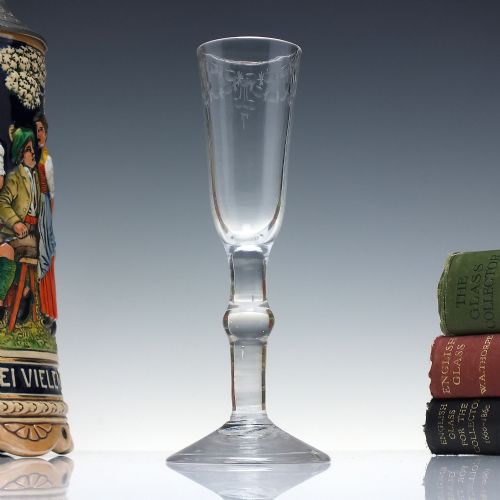
When you search for an engraved glass flute, you encounter slender drinking vessels primarily represented here by Georgian and Edwardian examples. The selection includes tall ale glasses, narrow ratafia glasses, and related glassware designed for specific historical tables.
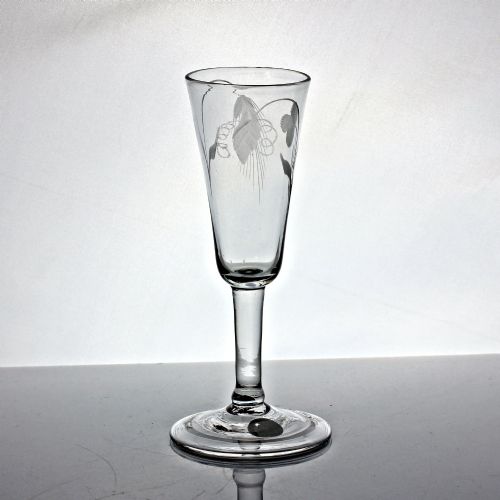
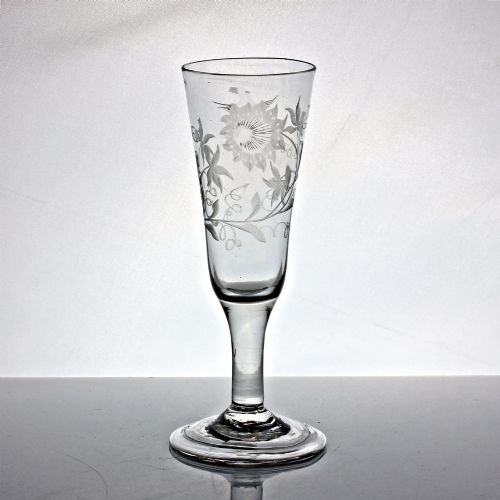
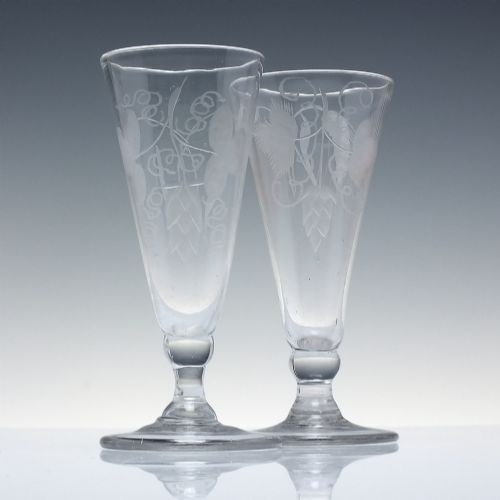
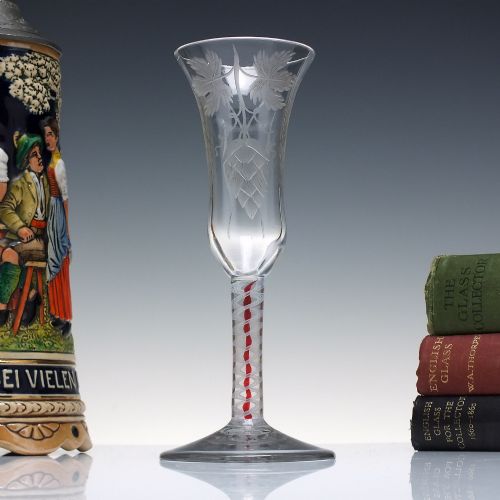
The most frequent forms on this page are Georgian ale glasses and dwarf ale glasses featuring narrow bowls decorated with wheel-engraving. These pieces often display motifs such as passion flowers, hops, and barley upon clear lead glass or twist stems.
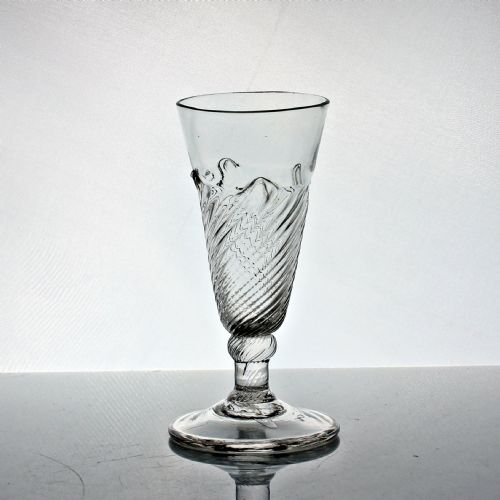
Ratafia glasses also appear amongst the listings, offering an even narrower flute shape suited to sweet liqueurs. Alongside these, larger commemorative ale glasses and later Edwardian interpretations fill out the range available to the collector.
How they were made
Makers utilised lead glass, lead crystal, and flint glass to achieve the clear, resonant material necessary for slender stems and thin walls. These glass bodies were shaped by hand before receiving detailed surface decoration.
Decoration relied on skilled wheel-engraving to carve floral patterns like hops and barley directly into the glass bowl. Some examples also incorporate intricate colour twists within the stem or delicate applications of gold leaf and enamel.
Facet cutting was occasionally applied to the stems or bowls to catch the light, contrasting with the smooth, blown surfaces of plain stem and opaque twist variants.
Some dwarf ale glasses stand surprisingly short, as if designed for a toast taken while sitting very low indeed.
What varies in quality
The distinction between ordinary and exceptional pieces lies in the precision and depth of the wheel-engraving on the bowl. Crisp, deeply cut floral details indicate a master hand, whereas shallow surface scratches suggest hurried production.
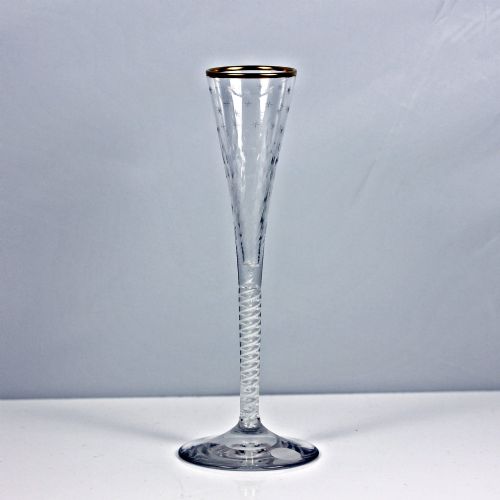
Stem formation significantly influences the character of an engraved glass flute, particularly in complex double series opaque twists and coloured glass filaments. Symmetry and consistency within the twist threads mark the work of a superior glasshouse.
Proportion and balance define the top tier of these drinking vessels, where the height of the slender bowl matches the weight of the folded or conical foot.
The Engraved Glass Flute Glossary
- Ale glass
- A tall drinking vessel designed specifically for consuming ale, typically featuring a narrow bowl that concentrates the aromas. These pieces often display engraved hop and barley motifs.
- Ratafia glass
- A very narrow, fluted glass created for drinking sweet, spiced ratafia cordials. Their slender proportions make them distinct from standard wine or ale vessels.
- Opaque twist
- A stem formation created by enclosing white or coloured enamel glass threads inside a clear stem. This technique requires considerable skill from the glassblower.
- Folded foot
- A base edge turned under while the glass remains hot to form a stronger, thicker rim. This feature provides extra stability to tall, slender drinking vessels.
- Facet cut
- Geometric planes ground and polished onto the surface of the glass. This method adds brilliance and texture to stems or bowls.
Engraved Glass Flute: Frequently Asked Questions
How do I identify a Georgian ale glass?
Georgian ale glasses typically present a tall, narrow bowl atop a plain, facet cut, or twist stem. They frequently rest on a conical or folded foot.
The presence of period-appropriate wheel-engraving and heavy lead glass material helps distinguish these eighteenth-century examples from later reproductions.
What is an opaque twist stem?
An opaque twist stem contains fine threads of white or coloured enamel glass sealed inside the clear glass stem. Glassmakers achieved this by manipulating canes of glass during the blowing process.
Finding a double series opaque twist indicates a more complex internal structure, where multiple sets of threads cross within the stem.
How were these glasses used historically?
These slender vessels served specialised roles at the dining table, particularly for toasting with ale or sipping sweet liqueurs after a meal. Their narrow capacity suited the potency of the drinks.
They were designed to be both functional tableware and decorative objects that displayed the host's refined taste.
Can I use antique glassware today?
While these pieces are robust lead glass, many collectors prefer to display them rather than use them for daily dining. Hand washing in warm water is essential if handled.
Careful placement away from edge surfaces ensures these fragile eighteenth and nineteenth-century forms survive safely.