




White Opaque Twist Glass
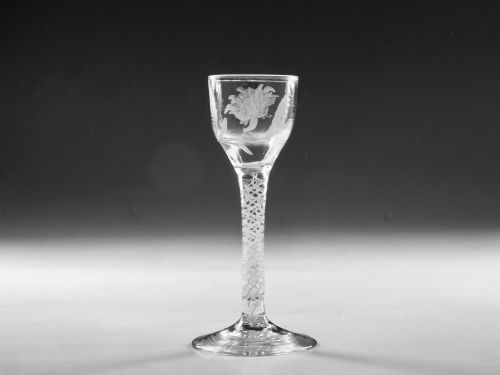
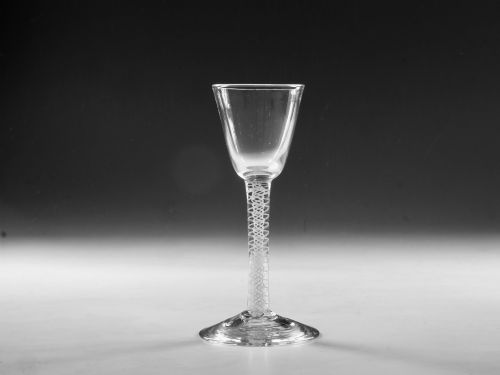
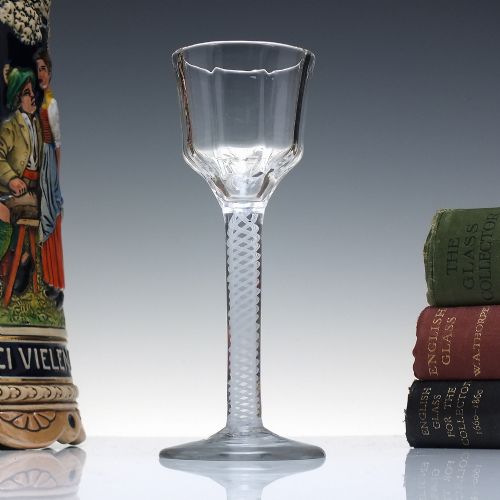
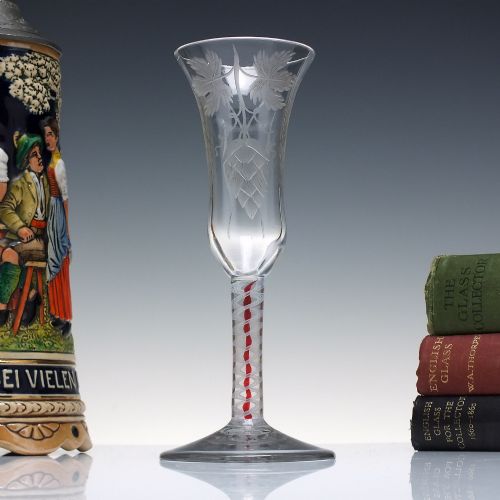
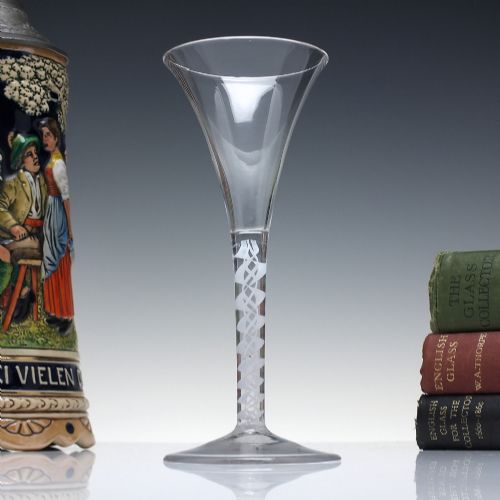
White opaque twist glass drinking vessels are eighteenth-century English drinking glasses featuring milky white enamel threads enclosed within clear lead crystal stems.
White Opaque Twist Glass
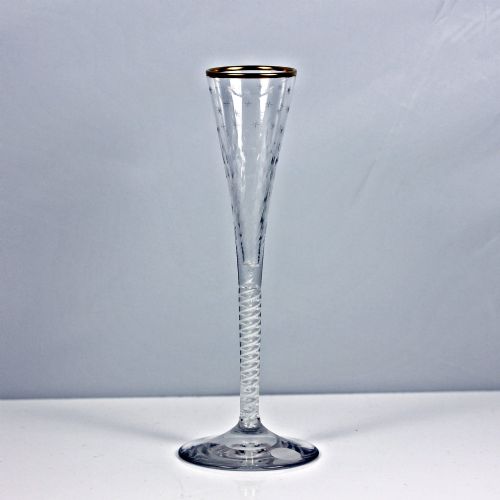
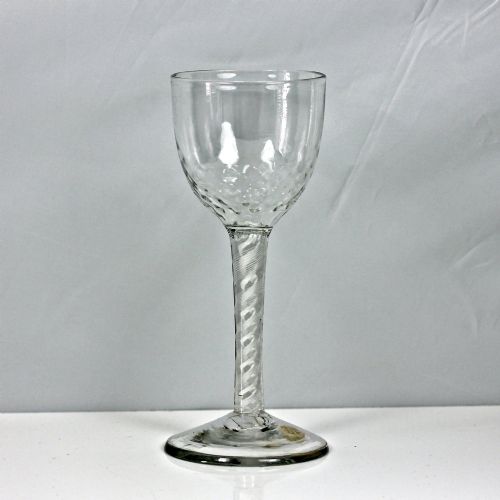
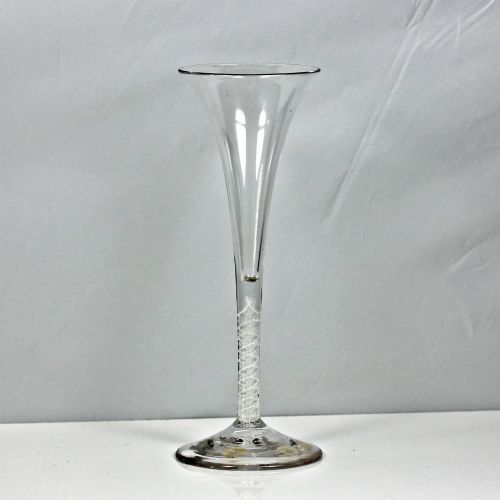
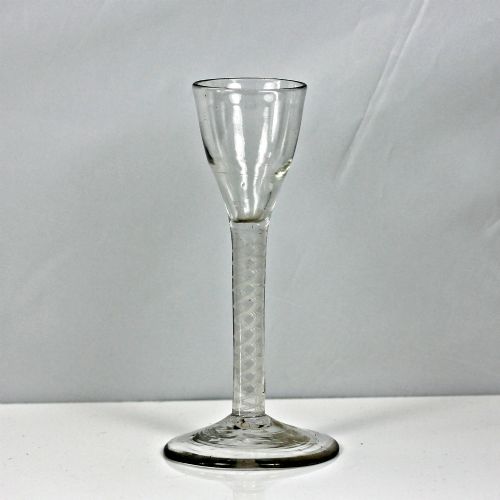
When you search for white opaque twist glass, you encounter drinking vessels originating primarily in the Georgian period, spanning the eighteenth century alongside occasional Victorian pieces. These objects take the form of wine glasses, ale glasses, cordial glasses, champagne or sweetmeat glasses, and ships glasses.
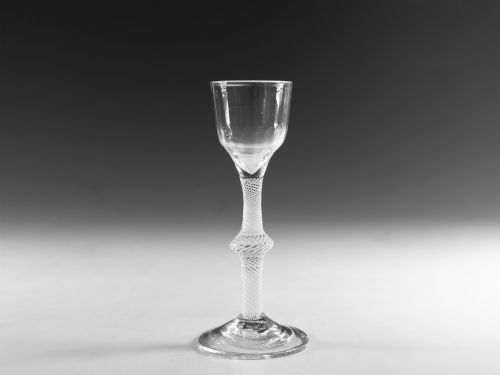
The pieces you meet most frequently on this page are Georgian wine glasses featuring trumpet, ogee, or flute-moulded bowls atop stems enclosing delicate white enamel strands. English glassmakers produced these drinking vessels using lead glass or lead crystal, shaping bowls above complex internal stems.
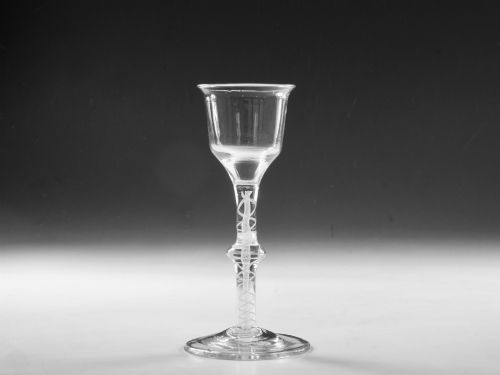
Forms range from simple straight stems to elaborate multi-knpped variants, sometimes incorporating corkscrew or double series twists. Collectors encounter both English and Scottish examples dated between seventeen-fifty and eighteen-fifty.
What varies in quality in white opaque twist glass
Quality in these drinking glasses depends upon the complexity and precision of the internal twist formation within the stem. Single series threads differ from intricate double series and multi-spiral arrangements executed by skilled glassmakers.
The presence of structural additions such as knops, including triple or four knop formations, alters the character and balance of the piece. Bowl shapes, from plain trumpets to rib-moulded ogees, alongside engraved decoration, distinguish standard domestic glassware from more ambitious examples.
Listings feature eighteenth-century Georgian pieces alongside nineteenth-century Victorian examples, utilising lead glass, enamel, and flint glass across wine, ale, and cordial forms.
The White Opaque Twist Glass Glossary
- Opaque twist
- A stem containing white enamel threads enclosed within clear glass. These twists are formed in single or double series configurations.
- Ogee
- A bell-shaped bowl curving outwards at the rim with an S-shaped profile. This form appears frequently on eighteenth-century drinking glasses.
- Knop
- A knob or thickened portion on the stem of a glass. Pieces may feature single, double, triple, or four knops.
- Cordial glass
- A narrow drinking vessel designed for consuming strong sweet liqueurs. These glasses possess smaller bowls than standard wine glasses.
- Lead crystal
- A high-clarity glass containing lead oxide used by English makers. This material allows for heavier vessel construction and brilliant light refraction.
White Opaque Twist Glass: Frequently Asked Questions
What is white opaque twist glass?
White opaque twist glass refers to eighteenth-century and nineteenth-century drinking vessels featuring white enamel threads trapped inside clear glass stems. These pieces were made in England and Scotland during the Georgian and Victorian eras.
Craftsmen produced them using lead glass or flint glass, combining clear material with opaque white enamel rods to create spiral patterns within the stem.
What are single and double series twists?
Single series twists contain one set of enamel threads, often a pair of opaque white spirals running through the stem. Double series twists incorporate an outer pair of enamel strands surrounding an inner core of threads or air bubbles.
Double series stems require greater technical skill from the glassmaker, resulting in intricate interior patterns.
How were these glasses used originally?
These vessels served aristocratic and middle-class households for consuming wine, ale, liqueurs, and sweetmeats during formal dining. Different bowl shapes suited specific beverages, from conical cordial bowls to wide champagne glasses.
Their sturdy lead glass construction allowed them to withstand regular use at the dining table.
How should I display white opaque twist glass?
Display these glasses in well-lit cabinets where light can pass through the clear lead crystal stems and highlight the white enamel twists. Placing them away from direct sunlight protects the historic glass material.
Ensure shelves are stable and provide adequate spacing between fragile eighteenth-century pieces.