


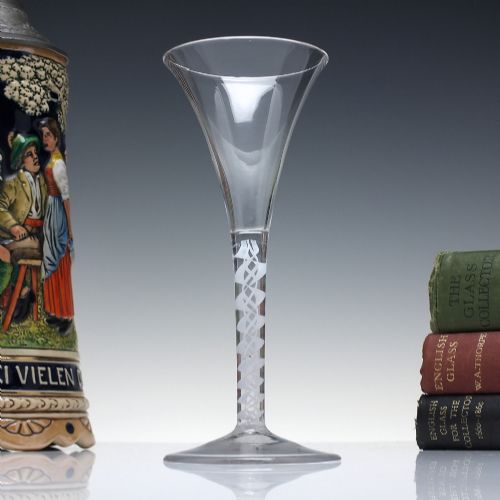
Georgian Opaque Twist Stemware
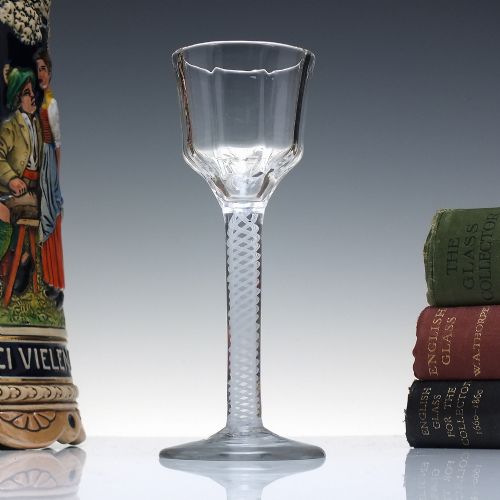
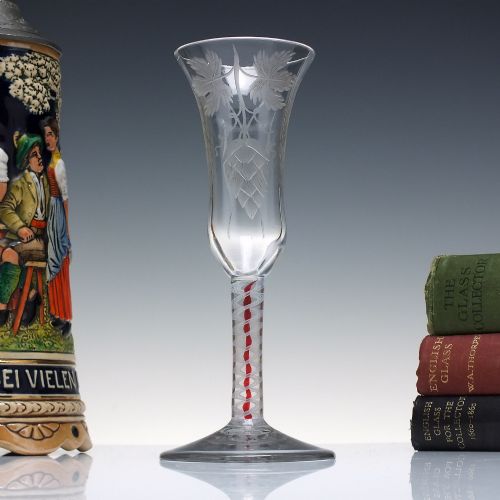
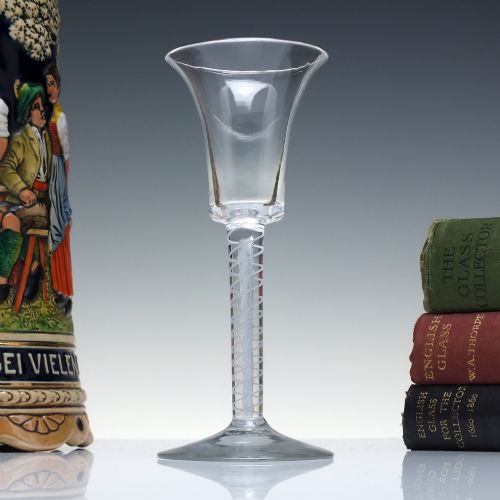
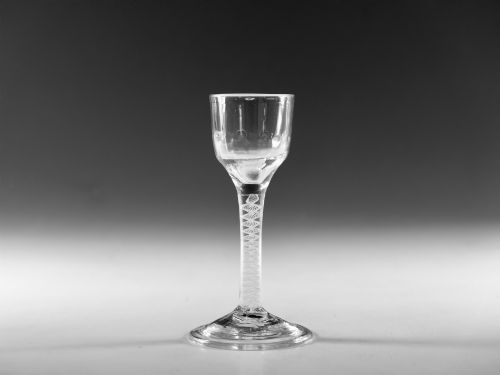
Georgian opaque twist stemware brings drinking glasses from the eighteenth century into focus, prized for slender stems spun with white enamel threads.
Georgian Opaque Twist Stemware
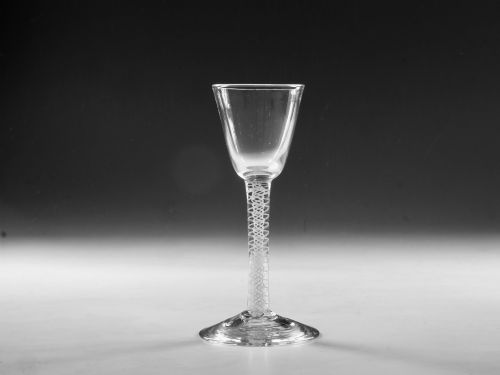
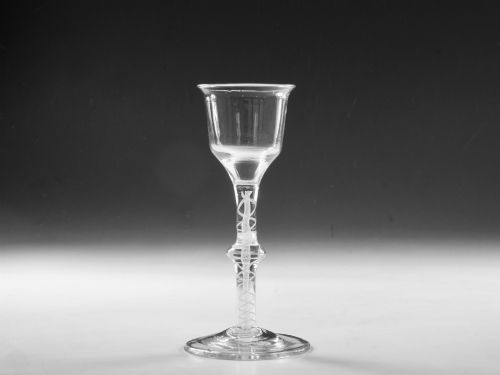
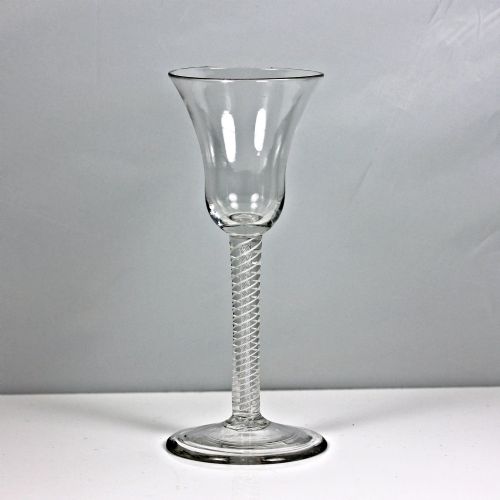
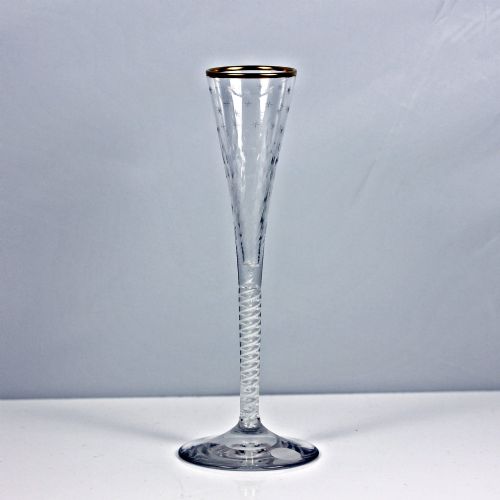
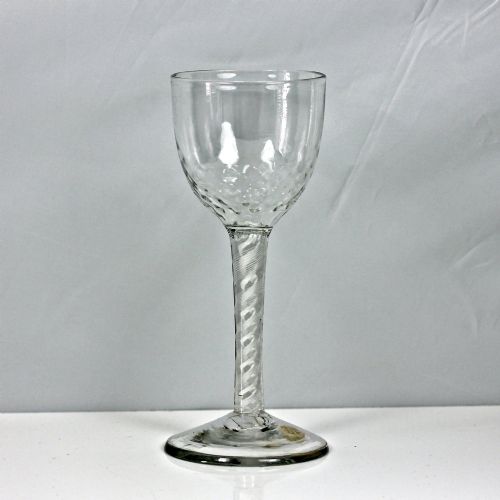
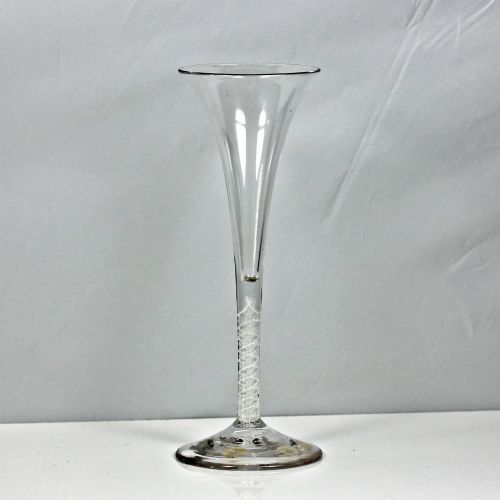
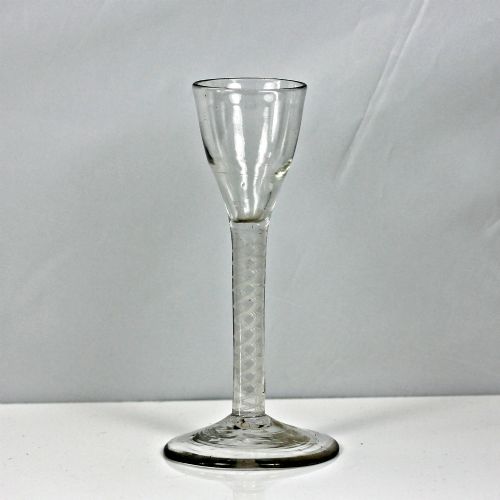
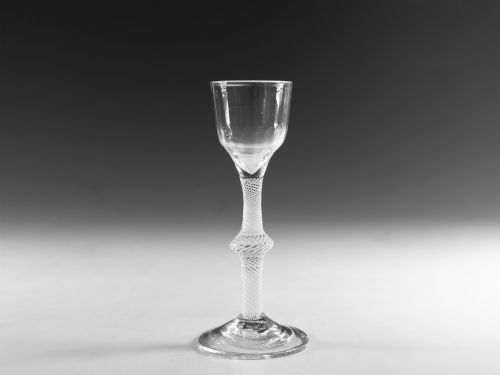
Georgian opaque twist stemware consists primarily of eighteenth-century English drinking vessels, including wine glasses, ale glasses, cordial glasses, and champagne or sweetmeat glasses. These pieces showcase various bowl forms such as trumpet, ogee, flared bucket, and flute-moulded shapes sitting atop distinct stems.
The dominant varieties on this page are double series and single series opaque twists originating from the mid-eighteenth century, particularly around the seventeen-sixties. Occasional variations include mixed twists, multi-spiral formations, and composite stems, alongside later Victorian interpretations.
The forms extend to functional shapes like ships glasses with heavy bases and conical feet on cordial glasses. While wine glasses form the bulk of the selections, specialised vessels like ale glasses with taller bowls also appear.
Qualities of Distinction
The clarity of the lead glass and the precision of the internal white enamel twist dictate visual refinement. Crispness in bowl mouldings, such as ribbed ogees and flute-moulded contours, separates standard examples from finer works.
Structural complexity in the stem elevates specific pieces, particularly those featuring multiple knops or intricate corkscrew and multi-spiral formations. The balance between the bowl, stem, and conical foot also indicates the maker's hand.
Georgian Opaque Twist Stemware Retail Price Guide 2026
Typical asking prices for georgian opaque twist stemware among the pieces listed under this phrase on Sellingantiques today, from the lower quarter to the upper quarter. They describe what is for sale here now, not the wider market.
Some eighteen-century vessels were built with gravity in mind, featuring heavy bases designed specifically to stay upright on rolling ships.
The Georgian Opaque Twist Stemware Glossary
- Opaque twist
- A stem form containing white enamel glass threads spun into spiral patterns. These threads create intricate optical effects inside the clear lead glass rod.
- Double series
- A stem containing two distinct pairs or sets of opaque twists rotating around a central column. This arrangement often pairs an outer cable with an inner spiral.
- Ogee bowl
- A bell-shaped drinking vessel curving inward at the rim and outward at the base. This profile appears frequently on eighteenth-century wine and ale glasses.
- Knop
- A bulbous or swelling decorative lump formed on the stem of a glass. Pieces may feature single, double, triple, or four knops along the shaft.
- Flute-moulded
- A surface decorated with vertical parallel indentations or hollows, commonly seen on the lower section of bowls. This technique adds texture and reflects light.
- Ships glass
- A heavy-bottomed drinking vessel designed with a low centre of gravity to prevent tipping at sea. The stout profile suits practical maritime use.
Georgian Opaque Twist Stemware: Frequently Asked Questions
What is an opaque twist?
An opaque twist is a decorative glass stem containing fine threads of white enamel spun into spirals during manufacture. These threads are encased within clear lead glass to create intricate patterns.
Craftsmen manipulated the molten material to produce single, double, or mixed series formations that catch the light beneath the bowl.
How old are these glasses?
Most pieces date from the eighteenth century during the Georgian period, specifically spanning the seventeen-fifties and seventeen-seventies. English glasshouses produced the majority of these stemwares during this era.
Occasional later examples extend into the Victorian period, reflecting revived interest in earlier styles.
What types of glasses exist?
The selection includes wine glasses, ale glasses, cordial glasses, and champagne or sweetmeat glasses. Each vessel type serves a distinct historical drinking custom.
Formations range from trumpet and ogee bowls to flared bucket shapes atop various stem configurations.
How do knops affect the stem?
Knops provide structural accents and tactile grip points along the stem by forming bulbous or swelling sections. Pieces can feature anything from a single knop up to four distinct swellings.
Their presence alters the overall silhouette and weight distribution of the drinking vessel.