

Engraved Georgian Glass
Engraved georgian glass objects are eighteenth-century drinking vessels and tableware bearing wheel-engraved or enamelled decoration, sought by collectors for their period craftsmanship.
The Nature of Engraved Georgian Glass
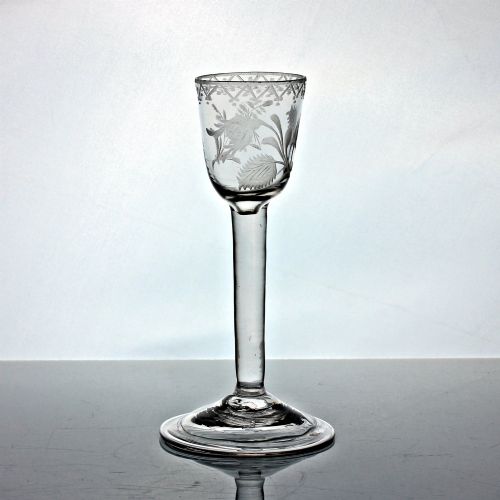
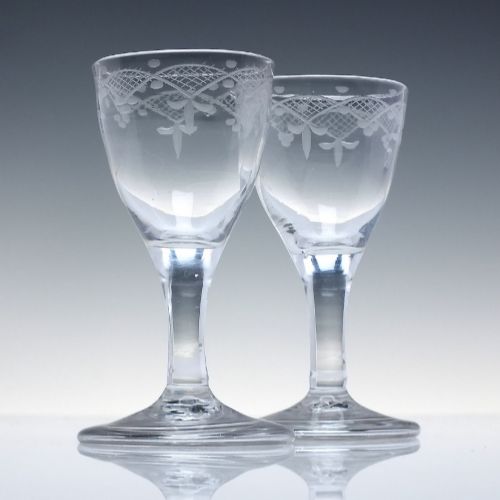
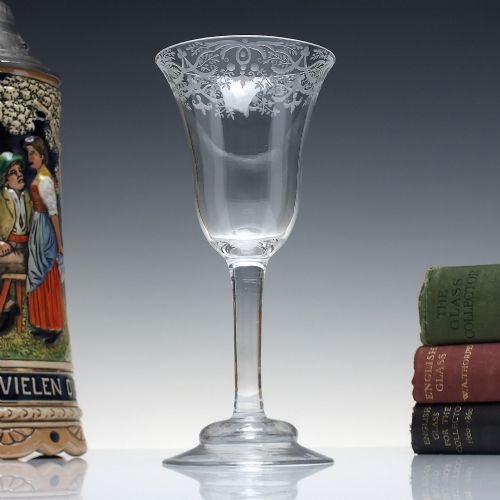
When you search for engraved georgian glass, you encounter drinking vessels and tableware originating from the eighteenth century and the broader Georgian era. The selection centres heavily upon wine glasses, ale glasses, and rummers, alongside occasional sugar bowls, rummers, and jelly glasses.
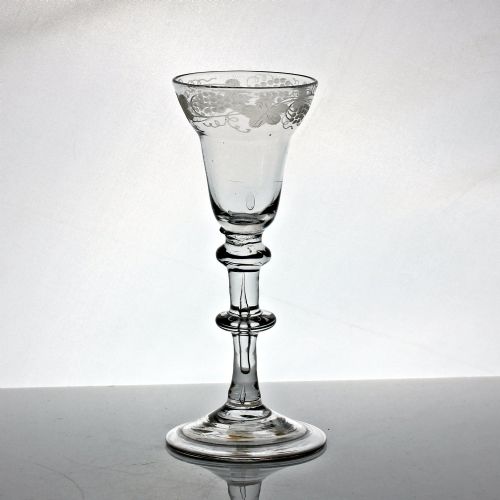
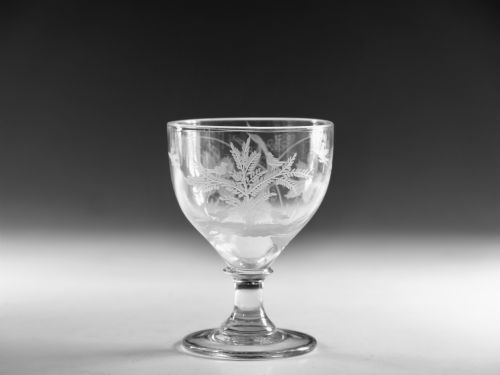
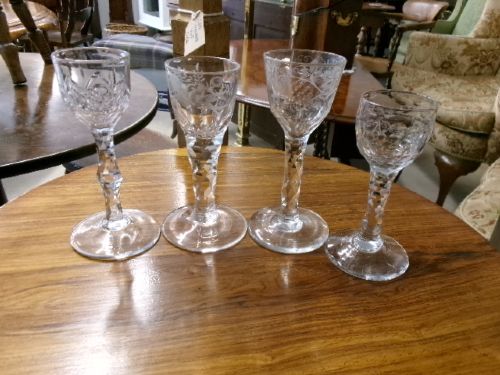
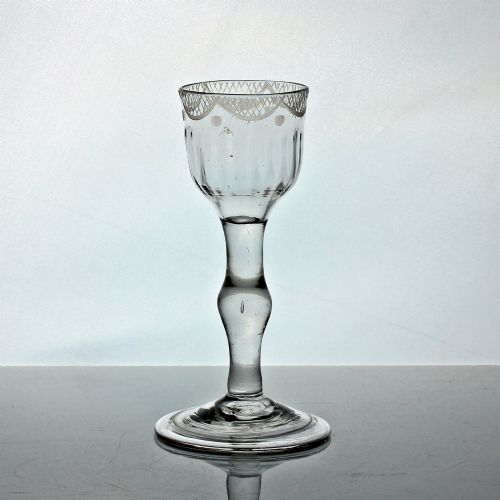
Most pieces you meet on this page take the form of wine and ale glasses featuring various stem formations, including plain stems, balusters, facet-cut stems, and opaque or air twists. Bowls vary from ogee and trumpet shapes to rounded funnels, often decorated with floral, hunting, or commemorative motifs.
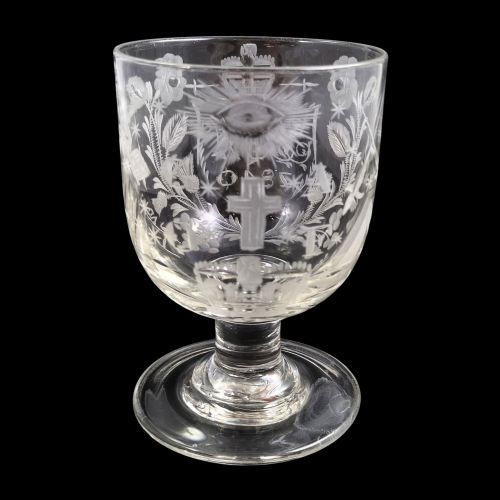
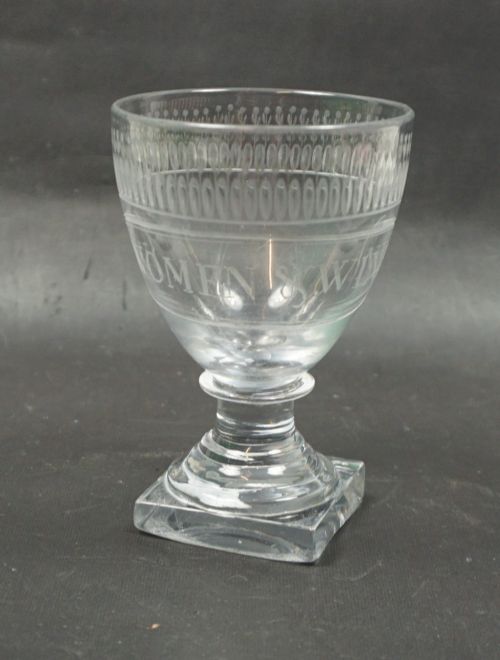
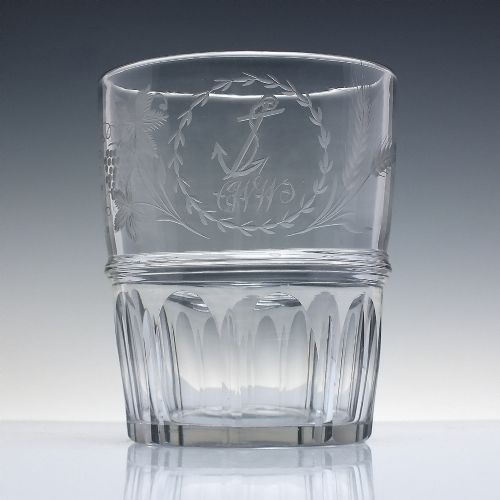
Beyond standard stemware, the category encompasses heavier vessels such as rummers and preserve pots, sometimes bearing specific thematic engravings like hop and barley, Jacobite emblems, or Masonic symbols. These objects represent the domestic and social glassware of Georgian Britain.
Materials and Techniques
Makers formed these vessels using lead glass, lead crystal, and clear glass, occasionally incorporating opaque enamel or coloured glass such as amber. The metal itself provided the heavy, sonorous quality characteristic of the period.
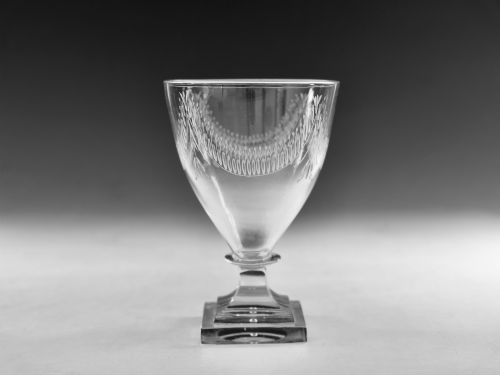
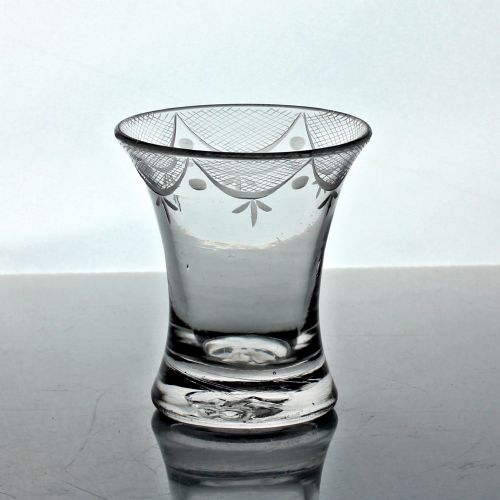
Decoration relied primarily on wheel-engraving to apply detailed motifs like hops, barley, vines, and armorials onto bowls and feet. Stems were shaped through complex manipulations, producing air twists, opaque twists, and precise facet-cutting.
Retail Price Guide 2026
Typical UK retail prices for engraved georgian glass, calculated from the Sellingantiques database of over a million retail prices indexed since 2003. This retail price guide relies exclusively on Sellingantiques data; no external sources or auction records are used, so the figures do not describe the wider market.
Listings feature lead crystal and clear glass formations from the eighteenth century, including opaque enamel twists and facet-cut stems.
Distinctions in Quality
Quality rests upon the crispness and depth of the wheel-engraving, where superior examples exhibit fine detail and precise line work rather than shallow surface scratching. The complexity of the stem construction, such as intricate multi-spiral air twists or double series opaque twists, further separates standard wares from finer productions.
The choice of metal also dictates distinction, with heavy lead crystal showing superior clarity, weight, and resonance compared to simpler clear glass. Additionally, the presence of specific decorative touches, such as folded feet, ribbed ogee bowls, or named historic associations, elevates a piece within the category.
James Giles
The Engraved Georgian Glass Glossary
- Air twist
- A stem formation created by drawing out imprisoned air bubbles within the molten glass into spiral threads. This technique produces delicate internal patterns visible through the clear stem.
- Opaque twist
- A stem type featuring white or coloured enamel rods twisted within the clear glass core. These threads create striking linear patterns inside single or double series formations.
- Facet cut
- A decorative surface treatment involving geometric planes ground and polished onto stems or bowls. This method catches the light and adds tactile texture to the glassware.
- Ogee bowl
- An S-shaped curved bowl profile featuring a flaring rim above a tapering lower body. This form frequently appears on mid-eighteenth-century drinking vessels.
- Baluster
- A heavy, thick stem style echoing architectural pillars, often featuring knops or swelling sections. Such forms typify earlier eighteenth-century heavy glassware.
- Rummer
- A large, sturdy drinking glass introduced towards the end of the eighteenth century, usually set on a short stem or foot. These vessels often featured generous engraved decoration for ale or wine.
Frequently Asked Questions
What is an air twist stem?
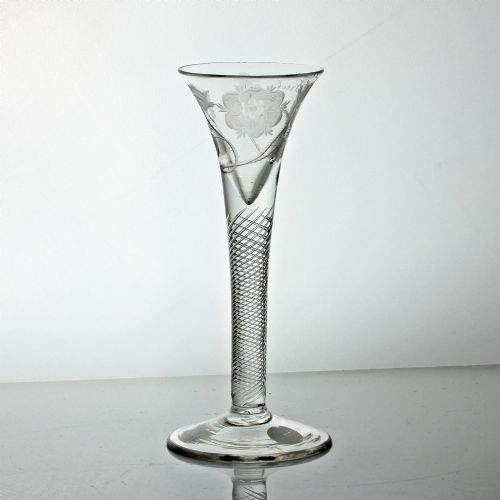
An air twist stem is formed when small bubbles trapped inside the molten metal are elongated and spun into a spiral thread as the glassmaker pulls the stem.
This technique creates delicate internal strands of air that catch the light, distinguishing these stems from plain or cut alternatives.
How do I identify a Jacobite glass?
Jacobite glasses typically feature secret political engravings such as the stricken oak, six-petal roses, or specific moths associated with the exiled Stuart cause.
These symbols allowed sympathizers to toast the king over the water during clandestine eighteenth-century gatherings.
What are hop and barley engravings?
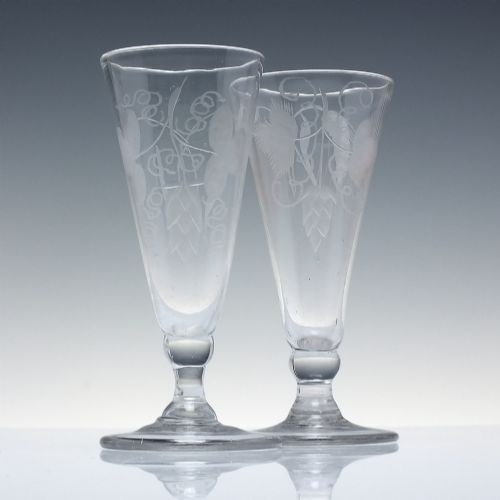
Hop and barley motifs are traditional wheel-engraved patterns depicting the key ingredients used in brewing ale and beer.
They appear frequently on eighteenth-century ale glasses and rummers intended for tavern or domestic dining use.
Why do some glasses have folded feet?
A folded foot involves turning the outer edge of the glass base underneath itself while the metal remains hot, creating a rounded rim of double thickness.
This method added structural strength to fragile bases on early wine glasses and rummers.
What is a firing glass?
A firing glass is a small, sturdy drinking vessel characterised by an exceptionally thick, heavy foot designed to withstand being banged on a table.
Freemasons and dining clubs used these sturdy bases to make celebratory noises without cracking the glass.