





Antique Stemware Collector
These antique stemware collector pieces are historic drinking vessels crafted in lead glass and flint glass, sought after for their intricate stems and Georgian forms.
Antique Stemware Collector
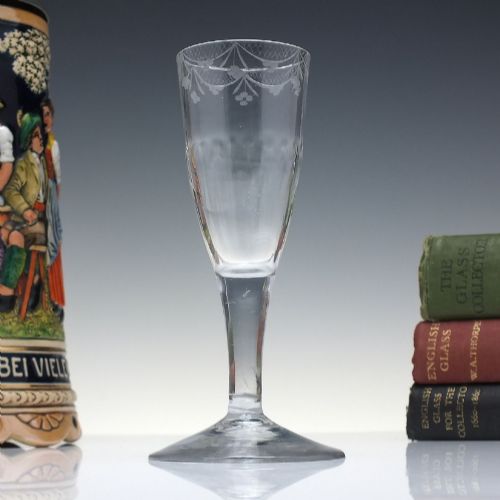
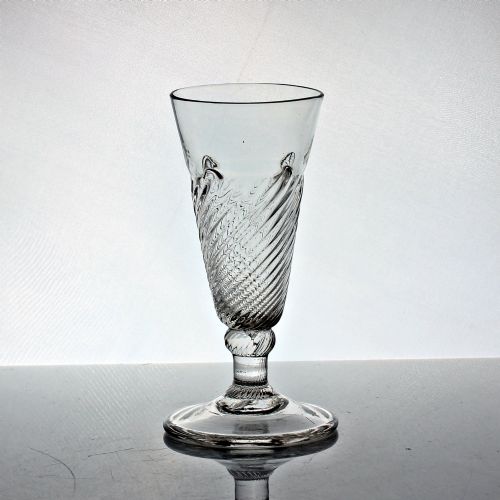
When you search for antique stemware collector items, you encounter drinking glasses spanning the eighteenth century and the early twentieth century. The selection centres heavily upon Georgian wine glasses, gin glasses, ale glasses, and cordial glasses produced in England.
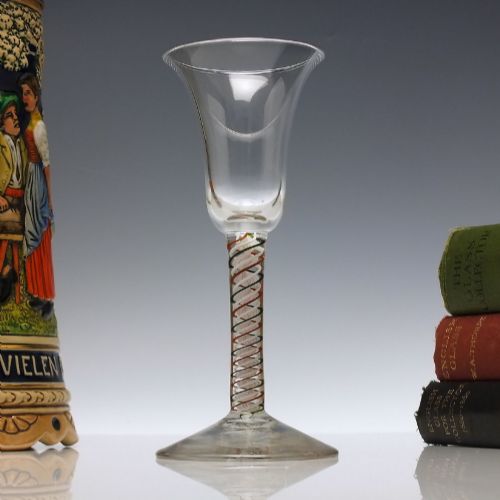
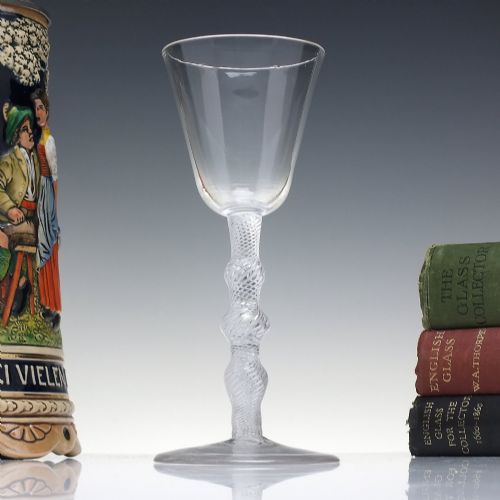
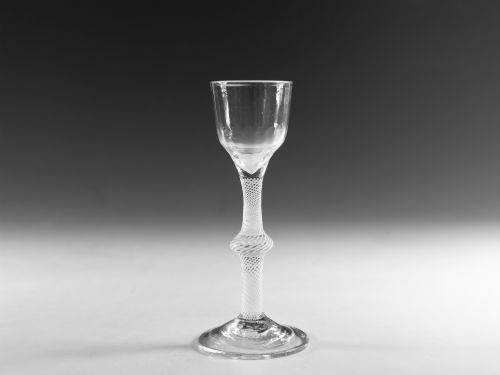
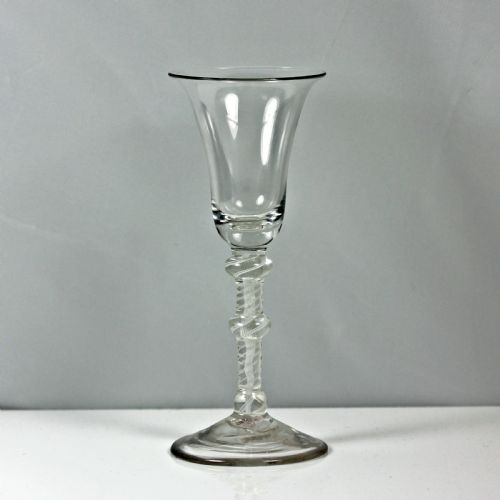
The most common form met on this page is the wine glass featuring a decorative stem, often characterised by air twists or opaque twists. Alongside these drinking vessels, larger rummers and champagne coupes occasionally appear to broaden the forms.
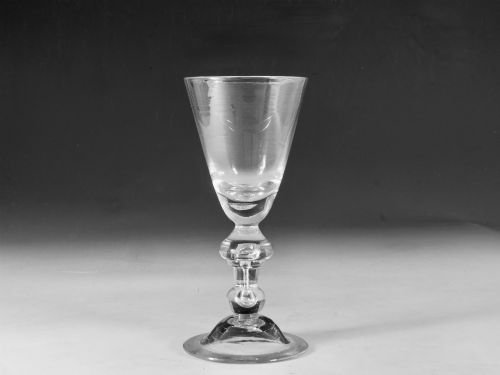
Pieces span periods from the early seventeen-hundreds through to nineteen hundred, demonstrating stylistic shifts from early baluster forms to later enamelled glassware. English production dominates the evidence, alongside continental European pieces such as the nineteenth century enamelled champagne coupe.
How they were made
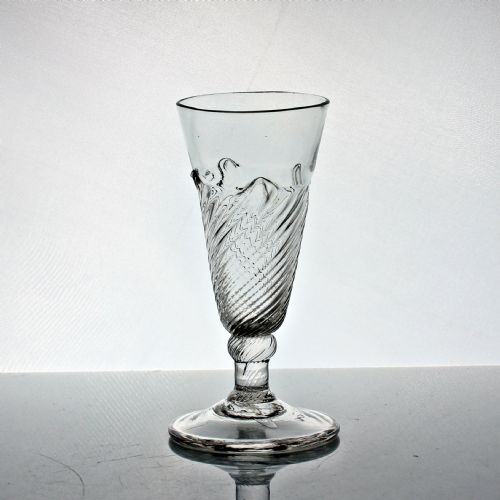
Glassmakers utilised lead glass, flint glass, and clear glass as the foundational materials for these drinking vessels, shaping bowls and stems while hot. Molten metal was blown and manipulated by hand to form specific silhouettes including rounded funnel bowls, ogee bowls, and dwarf ale profiles.
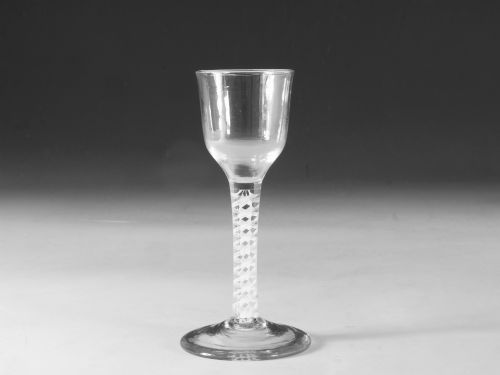
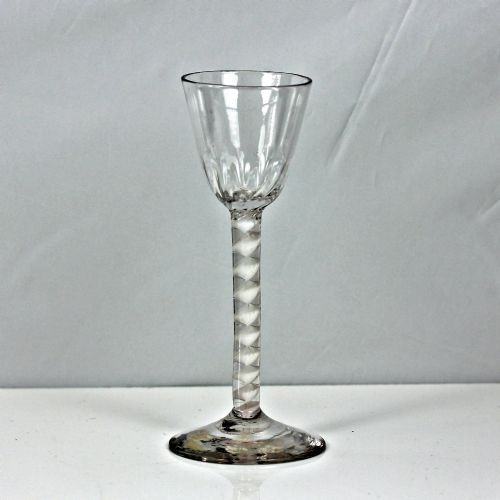
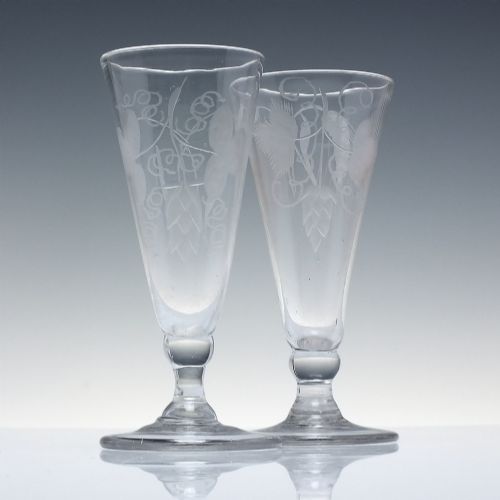
Stems required specialist skill, incorporating air twists, multi-spiral opaque twists, corkscrew two-ply twists, and composite stem structures. Artisans also applied surface decoration through wheel engraving and white enamel painting.
Antique Stemware Collector Retail Price Guide 2026
Typical asking prices for stemware collector among the pieces listed under this phrase on Sellingantiques today, from the lower quarter to the upper quarter. They describe what is for sale here now, not the wider market.
Some eighteenth-century drinkers enjoyed their spirits from miniature gin glasses barely taller than an egg.
What varies in quality
The degree of refinement in the twist formation dictates much of the visual distinction across these drinking glasses. Multi-spiral twists and double series opaque twists demonstrate greater technical ambition from the glassmaker than simpler configurations.
Surface embellishment introduces another layer of distinction, where armorial engraving or detailed white enamel work elevates plain vessels into more decorative objects. The crispness of the wheel-cut details and the clarity of the lead glass or flint glass further differentiate individual examples.
Fritz Heckert
The Antique Stemware Collector Glossary
- Air twist
- A stem formation containing elongated bubbles drawn into spiral threads within the clear glass. This technique creates a delicate internal pattern visible through the column.
- Opaque twist
- A stem enclosing fine threads of white enamel glass twisted into spiral or multi-spiral motifs. These contrasting white strands stand out sharply against the clear metal of the stem.
- Baluster
- A heavy, swelling stem form inspired by architectural pillars, typical of earlier eighteenth-century drinking vessels. Such stems often feature prominent knops and solid proportions.
- Ogee bowl
- A drinking vessel bowl with a distinctive double curvature, curving concave at the top and convex below. This profile appeared frequently on Georgian wine glasses.
- Rummer
- A large, heavy drinking glass popular in the Georgian era, utilised for ale, wine, or punch. These vessels typically possess short stems and capacious bowls.
Antique Stemware Collector: Frequently Asked Questions
How do I identify a Georgian wine glass?
Georgian wine glasses display characteristic eighteenth-century forms such as round funnel bowls, ogee profiles, or trumpet bowls supported on baluster or twisted stems. They are typically fashioned from heavy lead glass.
Examining the pontil mark on the underside helps confirm the hand-finished nature of these early drinking vessels.
What is an opaque twist stem?
An opaque twist stem incorporates white enamel glass threads drawn into spiral patterns inside the clear stem. These threads can form single, double, or multi-spiral designs.
This decorative technique became widespread in English glassmaking during the middle and latter half of the eighteenth century.
How were ale and beer glasses used?
Ale and beer glasses served alcoholic beverages at the table or in taverns during the Georgian period. Their taller, narrower bowls helped retain the carbonation of the brew.
Forms varied from flammiform dwarf ale glasses to larger engraved vessels designed for festive toasts.