

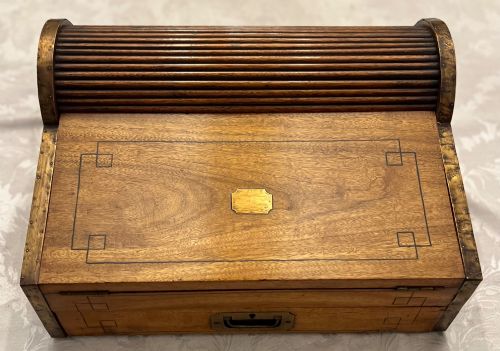
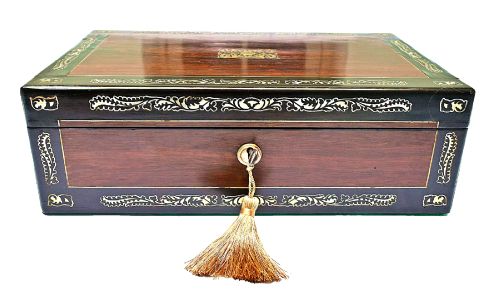
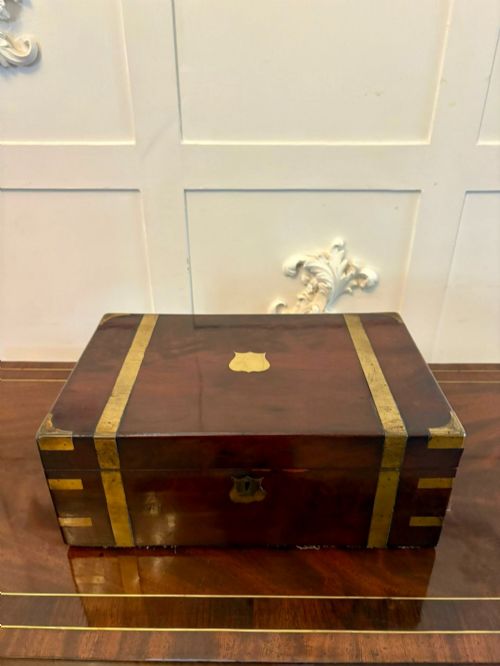

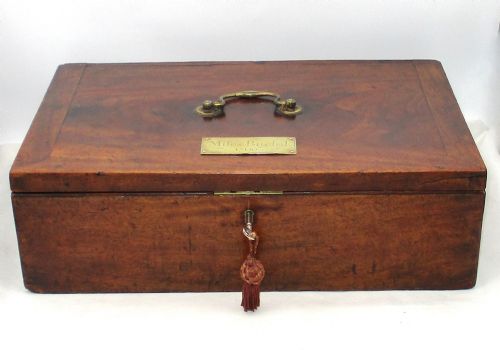

Vintage Wooden Writing Box
A vintage wooden writing box brings portable order to correspondence, offering a solid timber desk surface that opens to reveal fitted compartments and secret drawers.
Vintage Wooden Writing Box
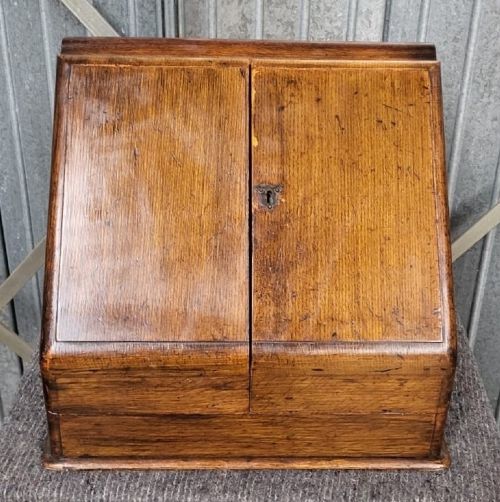
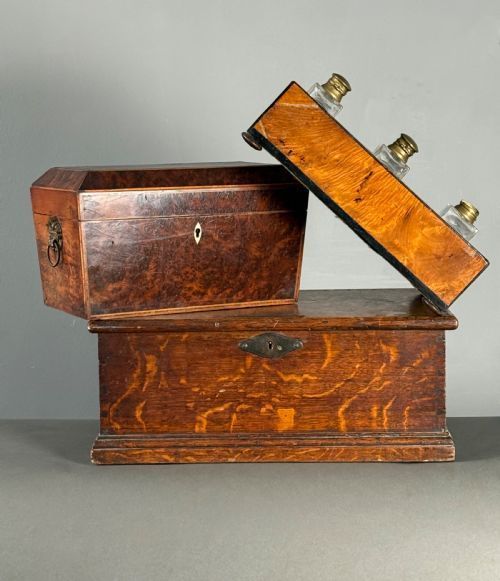
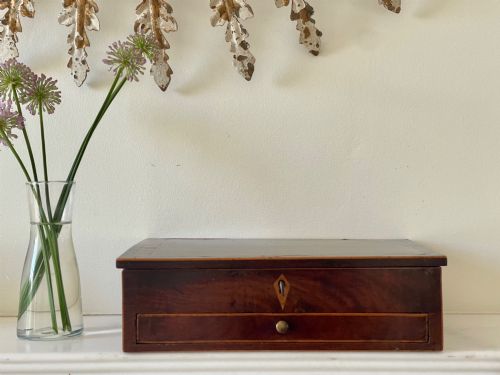
A vintage wooden writing box encompasses traditional writing slopes, campaign boxes, document chests, and stationery cabinets originating across the eighteenth, nineteenth, and early twentieth centuries. These pieces serve to house paper, inkwells, and letters, functioning as portable writing desks designed for travel or domestic study.
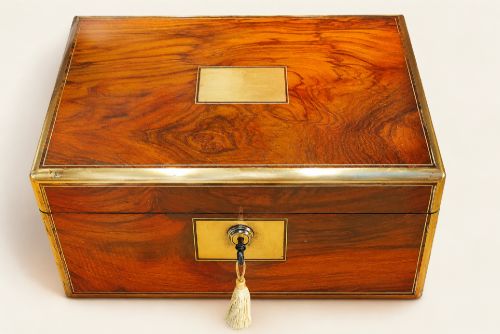
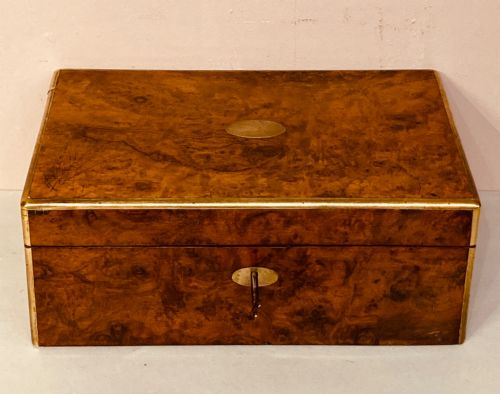
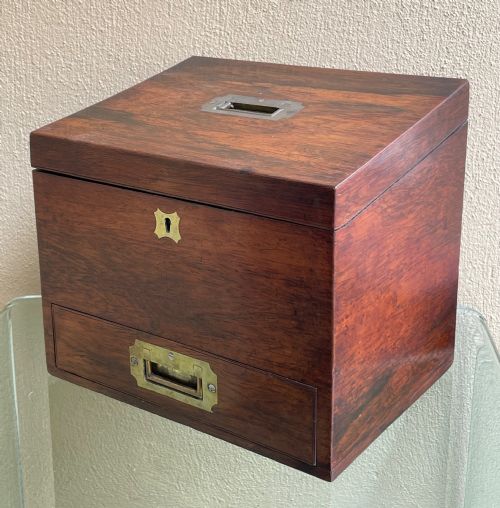
Mahogany and rosewood examples dominate the selection, frequently reinforced with brass binding for durability during transit. Buyers encounter various regional expressions, ranging from English campaign pieces to Anglo-Indian and Chinese hardwood constructions.
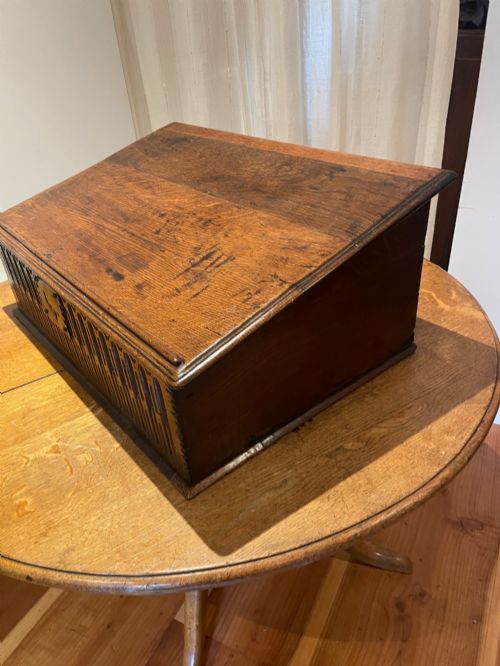
Compact lap desks and bifold writing slopes appear alongside larger stationary cabinets and presentation boxes. Each form reflects the specific writing habits and storage needs of its period, utilising hinged lids that angle downward to create a firm writing plane.
Materials and Construction
Cabinetmakers constructed these boxes using dense timbers such as mahogany, walnut, rosewood, oak, and pollard oak, often selecting figured veneers like burr walnut and flame mahogany for exterior display. Solid wood carcases provide structural integrity, while internal fittings incorporate secondary woods and velvet or leather writing surfaces.
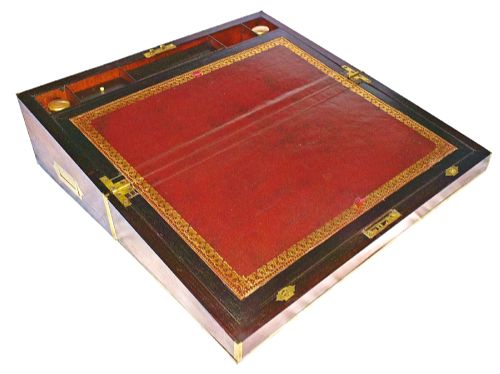
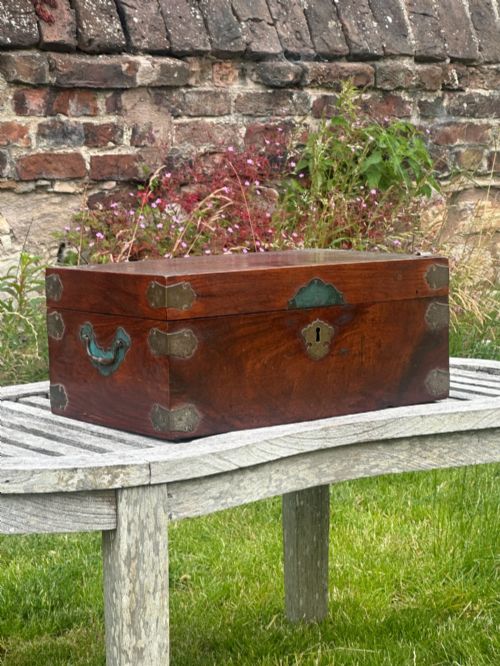
Metalwork played a vital role in construction, with heavy brass corners, straps, and flush carrying handles fitted securely into the timber for travel resilience. Interiors feature precision joinery, creating pigeonholes, pen trays, and concealed compartments accessed through hidden mechanisms.
Vintage Wooden Writing Box Retail Price Guide 2026
Typical asking prices for vintage wooden writing box among the pieces listed under this phrase on Sellingantiques today, from the lower quarter to the upper quarter. They describe what is for sale here now, not the wider market.
Materials span English oak and walnut alongside imported hardwoods like padouk, coromandel, and Chinese huanghuali.
Markers of Quality
Quality rests upon the selection of timber figure, the precision of the brass inlay, and the integrity of the internal fittings. Superior examples display symmetrical grain patterns, tightly fitted secret drawers, and robust locking mechanisms complete with working keys.
The sophistication of the interior layout dictates much of the distinction between standard utilitarian boxes and finer pieces. Original leather inserts, matching glass inkwells, and intricate bone or mother-of-pearl detailing elevate the execution of the piece.
Austin
The Vintage Wooden Writing Box Glossary
- Writing slope
- A portable box with a hinged, slanted lid that opens to provide an angled surface for writing. It typically houses compartments for stationery and ink.
- Campaign box
- A piece of furniture built for travel, characterised by sturdy timber construction, recessed brass handles, and corner brasses designed to withstand rough movement.
- Secret drawer
- A concealed compartment built into the interior of a box behind removable partitions or false bottoms, used for storing valuables.
- Stationery cabinet
- An upright desk accessory featuring tiered shelves or pigeonholes designed to hold paper, envelopes, and correspondence upright rather than flat.
- Padouk
- A durable tropical hardwood with a reddish hue utilised in Anglo-Indian and colonial furniture production for its strength and rich grain.
Vintage Wooden Writing Box: Frequently Asked Questions
How do I use a writing box today?
A vintage wooden writing box functions well on a modern desk to store letters, notebooks, and writing instruments. The sloping lid provides a comfortable angle for drafting notes by hand.
Opening the box reveals original compartments that accommodate modern pens and stationery. Many collectors place them on side tables as decorative storage for small personal items.
How do I tell a Georgian box from a Victorian one?
Georgian boxes often display restrained lines, figured mahogany or rosewood veneers, and simpler brass escutcheons. They frequently emphasise timber grain over heavy metal reinforcement.
Victorian examples tend to incorporate more robust brass binding, corner mounts, and elaborate internal fittings. The introduction of pollard oak, coromandel, and burr walnut also points toward mid to late nineteenth-century manufacture.
What is a campaign writing slope?
A campaign writing slope is a portable desk built specifically for military officers or travellers on the move. These pieces feature flush brass handles and reinforced corners to endure transit.
The exterior prioritizes durability while the interior contains fitted spaces for ink, pens, and paper. They fold securely into a compact rectangular block for packing.
Are secret compartments common in these boxes?
Secret compartments appear frequently in nineteenth-century writing slopes and stationery boxes. Makers designed them behind false partitions or triggered by hidden spring mechanisms to secure valuables.
Accessing these spaces usually requires removing an inkwell or sliding a panel within the interior pigeonholes. They provide insight into the ingenuity of period cabinetmakers.