

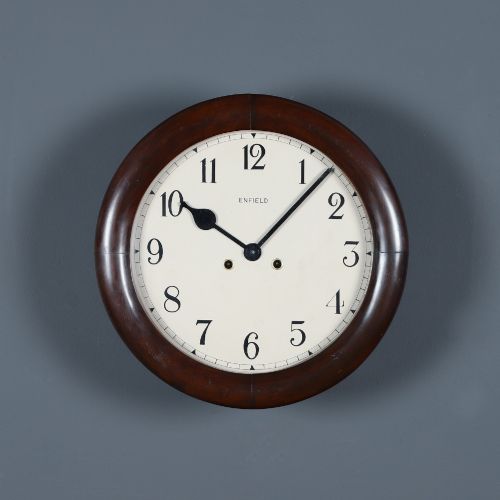
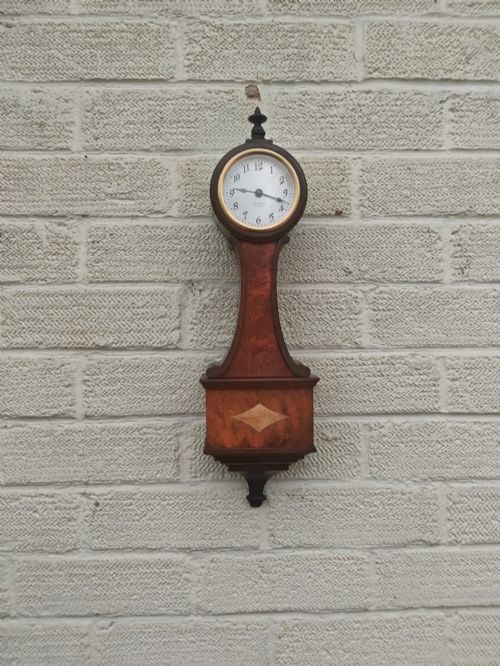
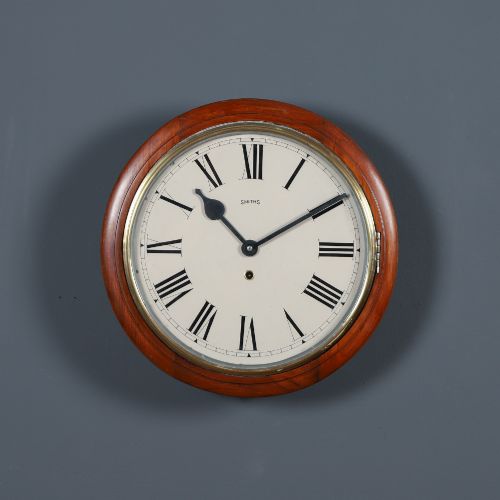
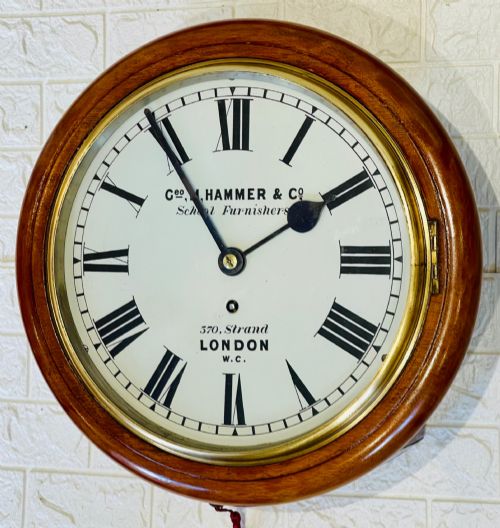
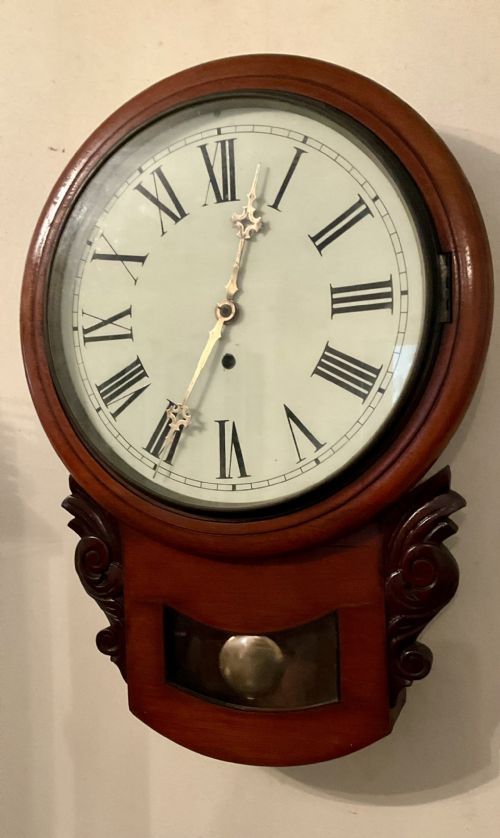
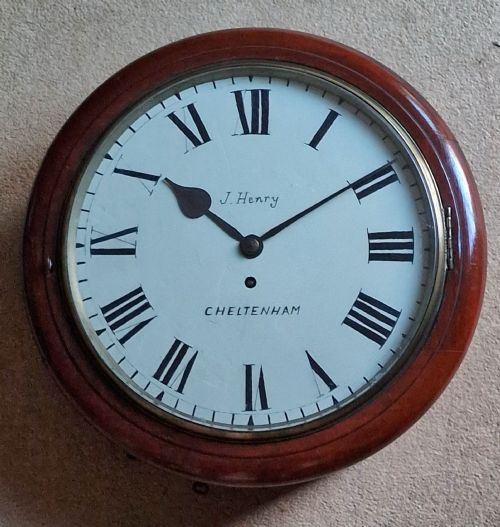
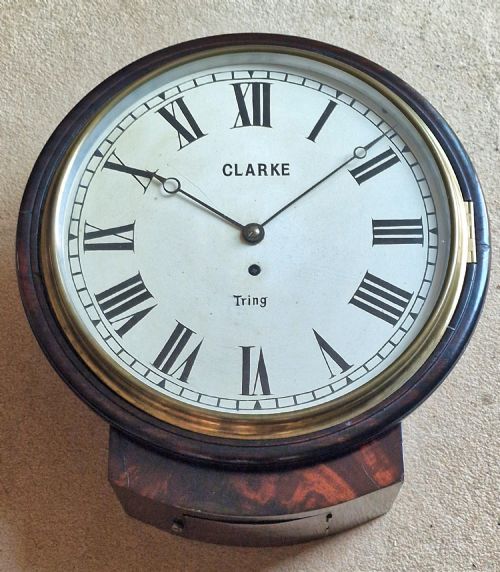
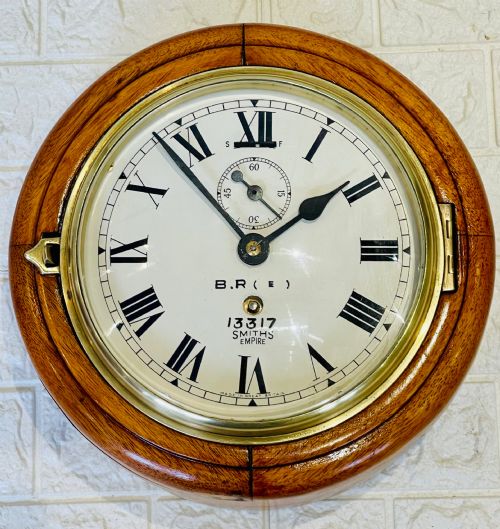
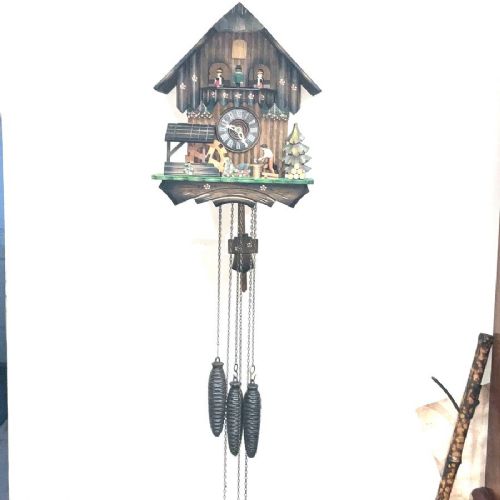
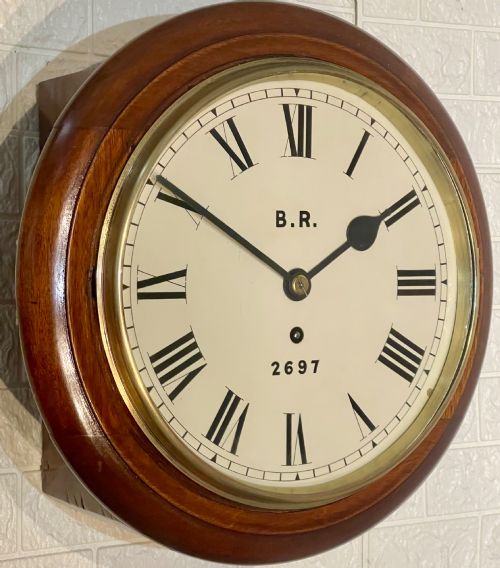
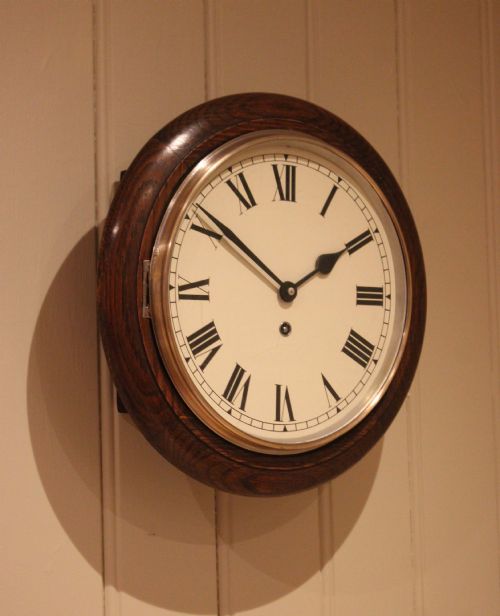
Vintage Wooden Wall Clock
A vintage wooden wall clock brings the precise engineering of the nineteenth and twentieth centuries into a domestic room.
Materials and Construction
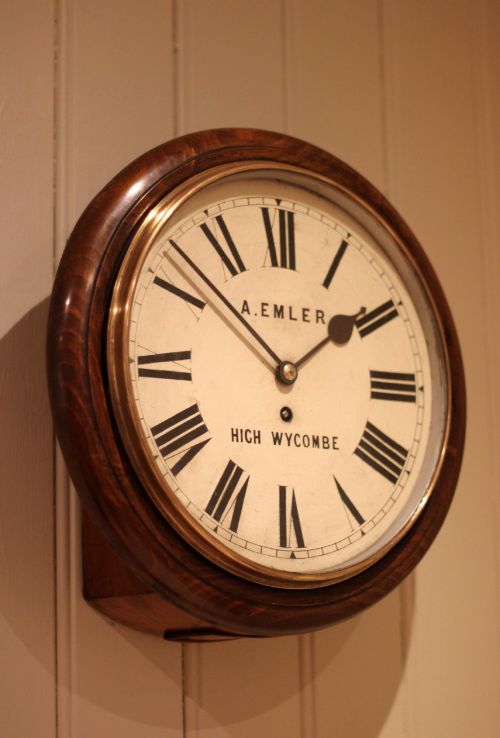
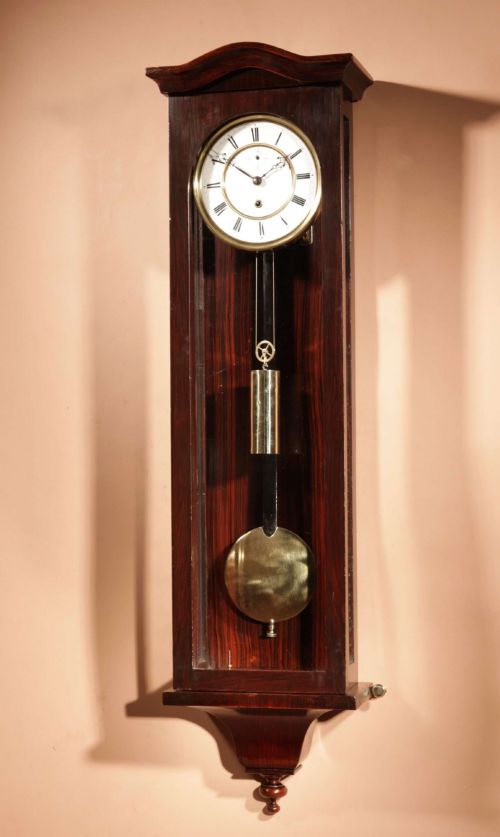
Cases utilise solid timbers such as mahogany, walnut, oak, beech, and pine, shaped into round dials, drop cases, and carved architectural housings. Brass components, glass bezels, and iron elements support the internal mechanisms and protect the dials.
Movements rely on traditional fusee chain drives, pendulum regulation, or mechanical striking systems enclosed within timber boxes. Dials feature painted wood, metal, or enamel surfaces marked with numerals and fitted with metal hands.
Distinctions in Standard
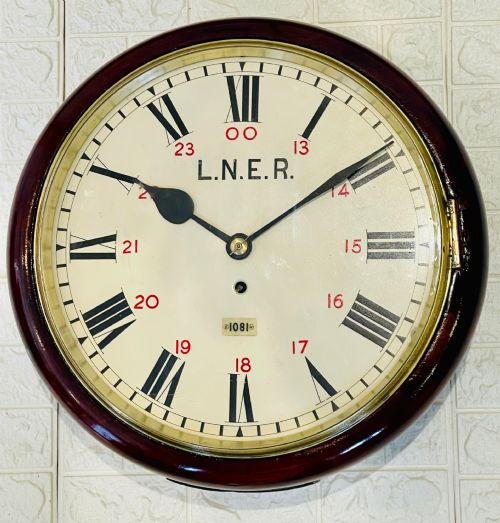
Quality rests upon the crispness of timber carving, the integrity of the original wooden case, and the fidelity of the dial markings. Finer examples maintain untouched painted dials, stamped railway or maker inscriptions, and robust chain-driven fusee movements.
Lesser items display replaced timber sections, obscured dial lettering, or movements lacking their original components. The standard of internal brasswork and the preservation of original painted finishes separate standard utilitarian pieces from exceptional workshop output.
Vintage Wooden Wall Clock Retail Price Guide 2026
Typical asking prices for vintage wooden wall clock among the pieces listed under this phrase on Sellingantiques today, from the lower quarter to the upper quarter. They describe what is for sale here now, not the wider market.
Listings feature oak, walnut, mahogany, beech, pine, brass, glass, iron, and enamel across Victorian and twentieth-century periods.
John Walker·Seth Thomas·George Clarke·D&J Wellby·Zenith
The Vintage Wooden Wall Clock Glossary
- Fusee
- A conical pulley used in clockwork to equalize the power of the mainspring as it unwinds. This mechanism ensures consistent force is delivered to the movement for accurate timekeeping.
- Drop Dial
- A clock case featuring a circular dial at the top positioned above a short, extended wooden trunk. This drop case often houses a pendulum and swings open for access.
- Dial Clock
- A wall-mounted timepiece dominated by a prominent face with minimal surrounding woodwork. These units served railway stations, offices, and schools.
- Banjo Clock
- A wall clock characterised by a round dial atop a tapering stem and a rectangular base box. The silhouette resembles the musical instrument.
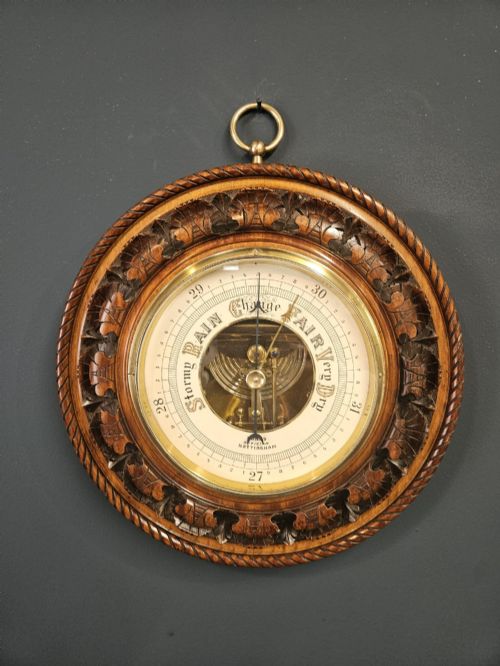
- Aneroid Barometer
- An instrument measuring atmospheric pressure using a flexible metal box rather than liquid mercury. These barometers frequently accompany wall clocks in matching wooden cases.
Vintage Wooden Wall Clock: Frequently Asked Questions
How do fusee movements work?
A fusee movement uses a conical pulley connected to the mainspring via a chain or cord. As the spring unwinds, the chain moves to a wider part of the cone to maintain even tension.
This clever mechanical arrangement prevents the loss of accuracy as the power source gradually runs down between windings.
Where were railway wall clocks used?
Railway wall clocks hung in station booking halls, platform offices, and administrative rooms across the transport network. Railway companies required exact timekeeping to coordinate train movements and timetables.
Many bear inscriptions or stamps denoting specific stations, railway lines, or telegraph offices.
How do I wind a wall clock?
Winding requires inserting a matching key into the winding hole on the dial face and turning it gently until resistance is felt. Care must be taken not to over-wind the mainspring.
Most eight-day movements require attention once a week, while fusee timepieces follow a similar weekly rhythm.
What is a Black Forest clock?
Black Forest clocks originate from the mountainous wooded region of Germany famous for intricate woodworking. These pieces often feature hand-carved walnut foliage, animals, and mechanical cuckoo automatons.
Artisans constructed the internal plate frameworks using local timbers before transitioning to brass components in later periods.