


Vintage Wooden Tray
These vintage wooden tray pieces range from serving items to butler tables, offering practical service and period character.
Vintage Wooden Tray
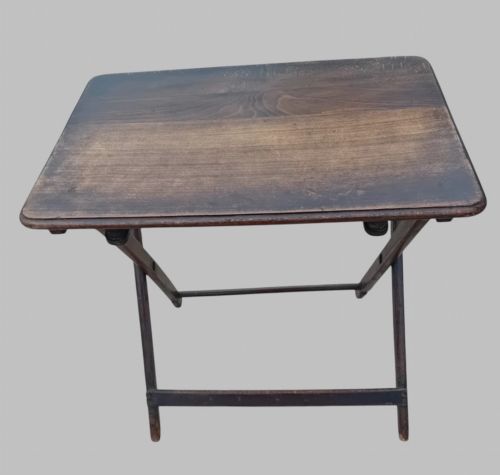
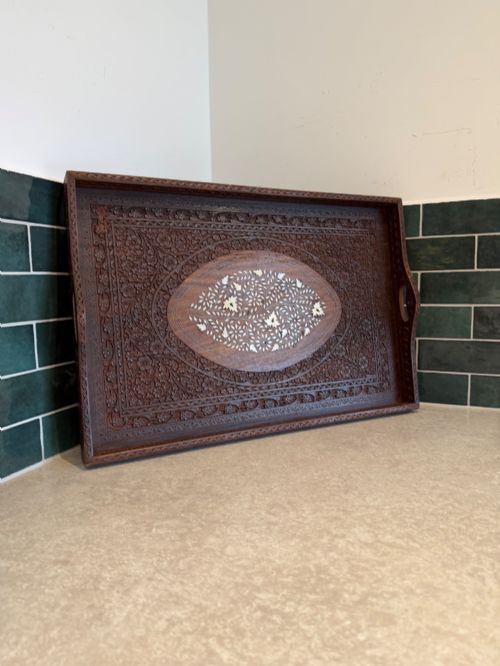
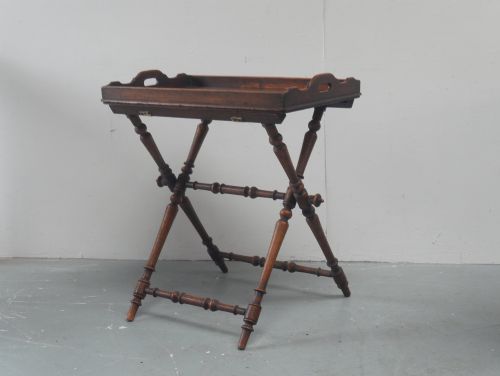
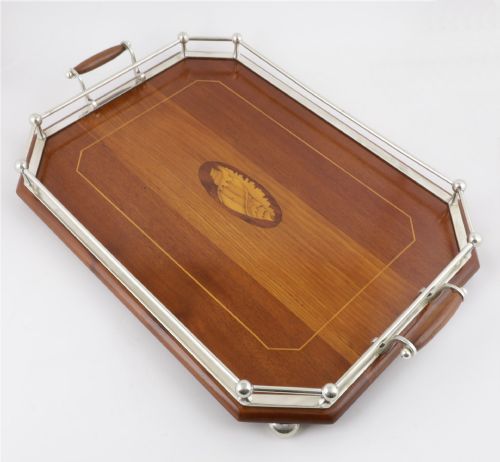
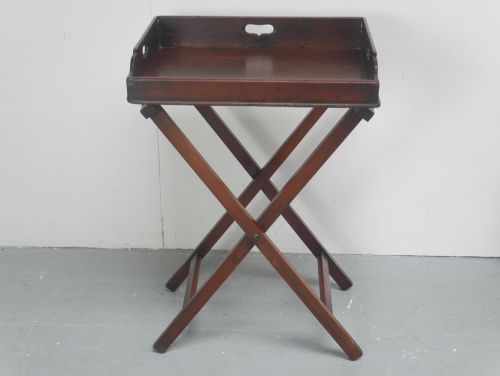
A vintage wooden tray functions primarily as a serving piece or a foundational surface for afternoon tea, shifting in form from oval serving platters to folding butler tray tables. You will encounter various expressions of this item across the Victorian, Edwardian, and Arts and Crafts periods, utilising timbers such as mahogany, oak, and walnut.
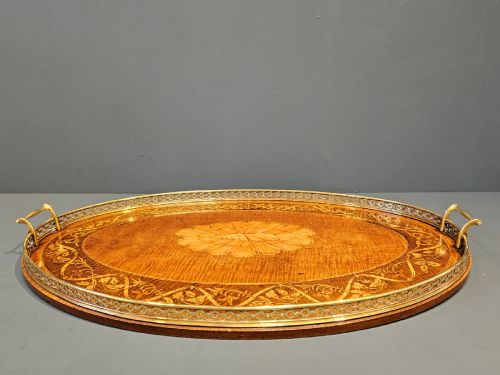
The selection extends from simple serving trays to more complex furniture items including tray tables and trolley side tables. Many incorporate brass handles, gallery edges, or marquetry inlay, reflecting the domestic habits of the nineteenth and early twentieth centuries.
How they were made
Cabinetmakers constructed these trays using solid hardwoods like mahogany and oak, frequently applying veneers such as oyster walnut or satinwood for decorative effect. Joinery methods included dovetailed corners and coopered construction for curved edges.
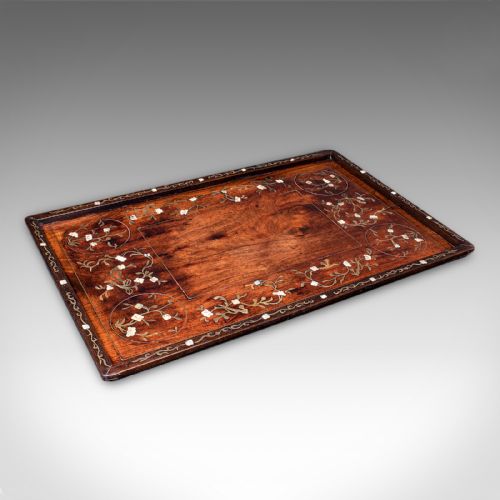
Surface decoration involved intricate marquetry inlay, Sorrento ware, shell details, and brass fittings. Folding stands utilised hinged cross-frames designed for easy stowage after use.
The listings span from the 1880s through the Edwardian era up to the 1950s, featuring oak, mahogany, walnut, and brass.
What varies in quality
Quality rests upon the selection of timber and the precision of the joinery rather than mere age alone. Pieces featuring figured timbers, clean marquetry, and substantial brass mounts demonstrate superior workshop standards.
The crispness of carved details and the structural integrity of folding stands dictate the grade of the piece. Well-preserved original surfaces and tidy inlay work elevate an example above standard utilitarian items.
Liberty Design
The Vintage Wooden Tray Glossary
- Butler's tray
- A removable wooden tray designed to sit upon a folding X-frame stand. This form allowed servants to clear tables efficiently in grand houses.
- Marquetry
- The art of applying pieces of veneer to a structure to form decorative patterns. Craftsmen utilised various coloured woods to create pictorial designs.
- Gallery edge
- A raised border fitted around the perimeter of a tray to prevent items from sliding off during transit. These can be pierced metal or shaped wood.
- Coopered
- A method of construction utilising narrow staves of wood joined edge to edge to form curved vessels or trays. This technique mimics barrel-making skills.
- Satinwood
- A durable timber possessing a lustrous golden yellow sheen used extensively for inlay and fine cabinet work. It became popular during the Georgian and Edwardian periods.
Vintage Wooden Tray: Frequently Asked Questions
How were butler trays used?
These trays served as portable surfaces for carrying tea services and dinnerware between rooms. The folding stand allowed the setup to be stored away when not in use.
Servants placed the wooden tray directly onto the X-frame stand to create an instant auxiliary table during large gatherings.
What woods appear most often?
Mahogany and oak dominate the selection across Victorian and Edwardian examples. Cabinetmakers favoured these hardwoods for their strength and durability.
Satinwood, walnut, and pine also appear, often selected for specific decorative veneers or regional vernacular pieces.
How do I date a tray?
Dating relies on timber choice, construction methods, and stylistic cues like marquetry or brass handles. Victorian and Edwardian pieces exhibit distinct characteristics tied to their respective eras.
Examine the underside and joints for tool marks and ageing patterns that correspond to nineteenth or early twentieth-century workshop practices.
Can I use these for serving?
Most sturdy vintage wooden tray examples remain entirely suitable for contemporary serving use. Solid construction and durable finishes handle everyday tasks well.
Care should be taken with pieces featuring delicate marquetry inlay or antique polished surfaces, which benefit from gentle treatment.