

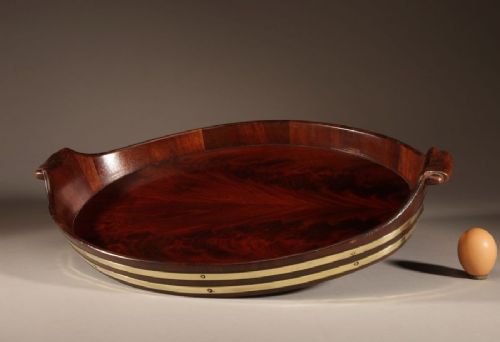


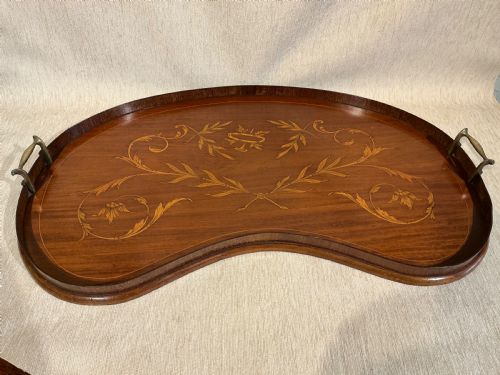

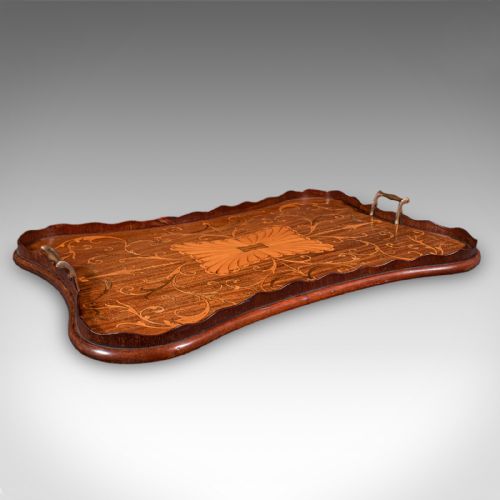


Antique Mahogany Platter
These antique mahogany platter options offer rich timber grains and traditional serving forms, bringing heritage craftsmanship straight to your table.
Antique Mahogany Platter
The selection on this page leans heavily toward Edwardian and Georgian examples, alongside Victorian pieces and items dated to the nineteenth century. These forms range from simple circular wine trays to large galleried ovals and kidney-shaped serving items.
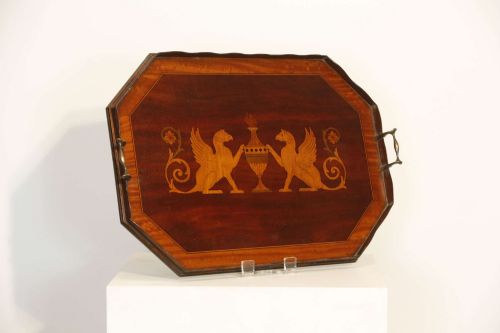
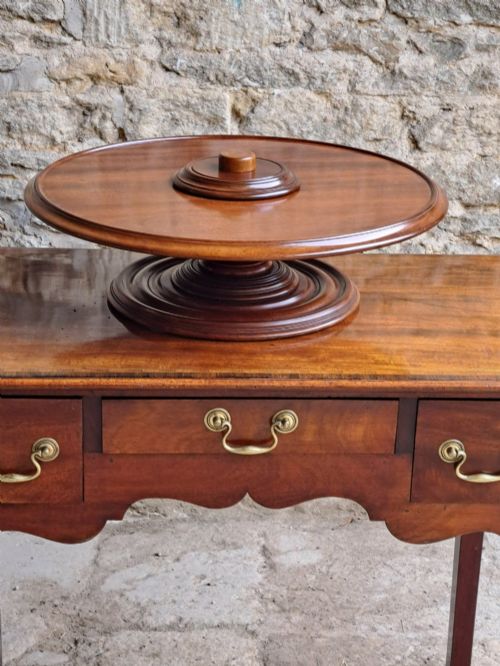
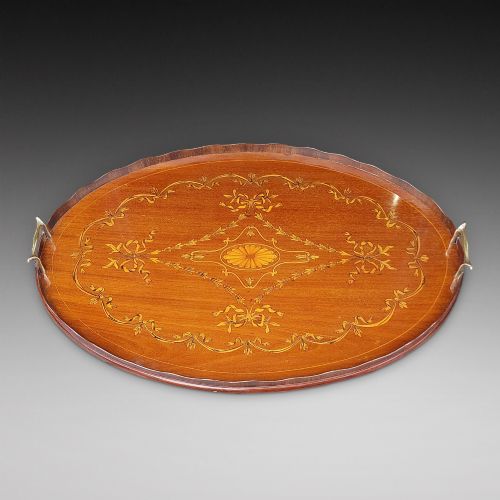
Many items incorporate decorative elements such as shell inlay, marquetry, and brass fittings or silver plate mounts. Alongside traditional trays, the listings include rotating lazy susans and cake stands sharing the same mahogany construction.
Materials and Construction Methods
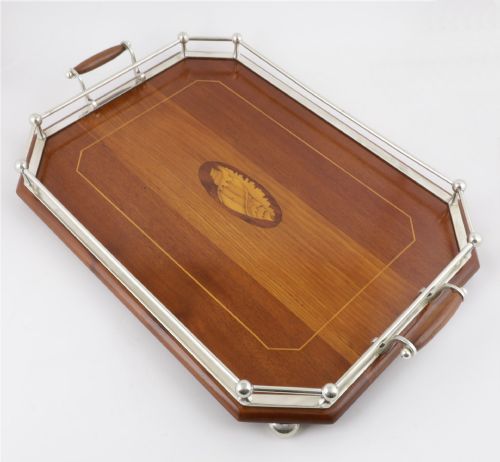
Makers utilised solid mahogany and mahogany veneers, frequently contrasting the dark timber with lighter boxwood and satinwood stringing or pictorial marquetry. Brass handles, gallery rails, and silver plate mounts provide structural definition and secure fastening to the wooden bases.
Construction techniques include coopered joints for curved edges, turned walls, and elevated galleries designed to keep serving items secure. Inlaid details are carefully recessed into the timber surface to create smooth, flush patterns across the platter face.
Antique Mahogany Platter Retail Price Guide 2026
Typical asking prices for mahogany platter among the pieces listed under this phrase on Sellingantiques today, from the lower quarter to the upper quarter. They describe what is for sale here now, not the wider market.
Object forms include serving trays, display stands, lazy susans, and specialised cake or cheese stands.
Judging Quality in Mahogany Platters
Quality rests on the depth of the timber grain, the crispness of any inlay work, and the integrity of the structural joints. Superior examples display tightly fitted brass galleries and precise marquetry without gaps or mismatched veneers.
The weight of the wood and the subtlety of carved edges or scalloped profiles separate standard production items from finer workshop pieces. Better specimens retain their original surface patination and stable rotating mechanisms where applicable.
The Antique Mahogany Platter Glossary
- Gallery
- A raised wooden or metal rim fitted around the edge of a tray to prevent items from sliding off. This feature often incorporates pierced handholds for easier carrying.
- Marquetry
- The art of applying pieces of veneer to a structure to form decorative patterns and pictures. Craftsmen utilise contrasting woods like satinwood and boxwood to achieve detailed pictorial effects.
- Coopered
- Constructed from curved wooden staves bound together, typically seen in cylindrical or oval vessel construction. This technique derives from traditional barrel-making methods.
- Lazy Susan
- A rotating tray placed on a table to assist in moving food easily between diners. These items utilise a central pivot mechanism beneath the wooden platter.
- Stringing
- A thin inlay of contrasting wood used to outline geometric shapes and borders on furniture and trays. It provides a crisp linear boundary to larger veneered panels.
Antique Mahogany Platter: Frequently Asked Questions
Can I use these platters for serving food?
Many of these pieces were originally created for afternoon tea, wine service, and dining room presentation. They function well for dry foods, bottled drinks, and glassware.
Direct contact with moist or acidic food can stain historic timber surfaces. Utilising liners or doilies protects the antique wood from potential damage during use.
What distinguishes Georgian from Edwardian trays?
Georgian trays often feature heavier mahogany timbers, restrained inlay, and structural forms associated with the eighteenth century. They emphasise functional elegance and traditional cabinetmaking techniques.
Edwardian pieces frequently display lighter construction, extensive satinwood marquetry, and Sheraton Revival influences. They reflect a renewed interest in delicate neoclassical decorative motifs.
Are rotating lazy susans period pieces?
Rotating serving items appear in nineteenth-century workshops as mechanical dining aids. They utilise simple central pivots concealed beneath the main wooden platter.
These pieces combine standard turning techniques with functional hardware designed to rotate smoothly on a table surface.