


Vintage Walnut Vanity Mirror
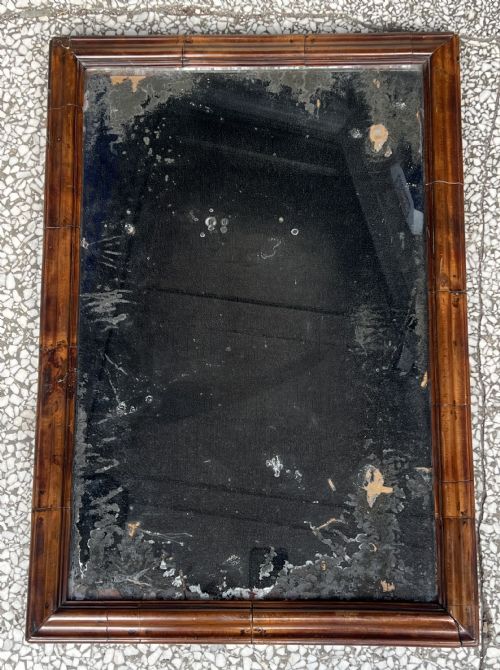
A vintage walnut vanity mirror sits upon a dressing table or chest, bringing warm timber tones and practical reflection to a bedroom.
Vintage Walnut Vanity Mirror
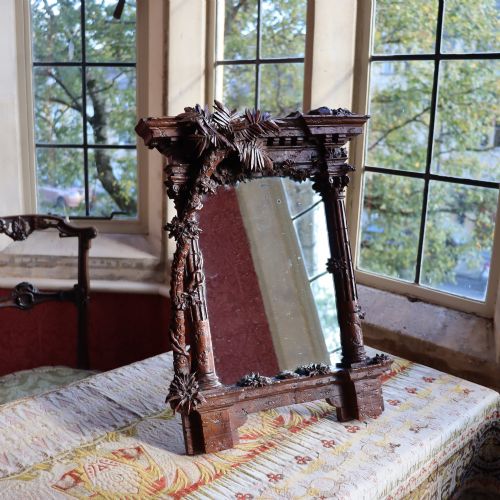
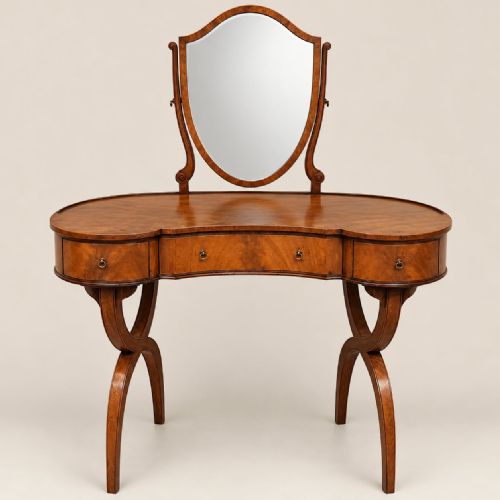
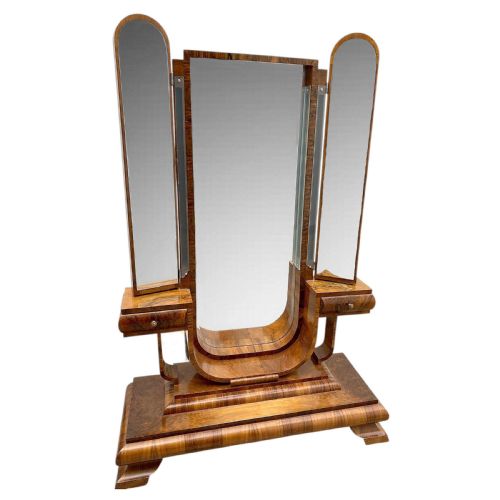
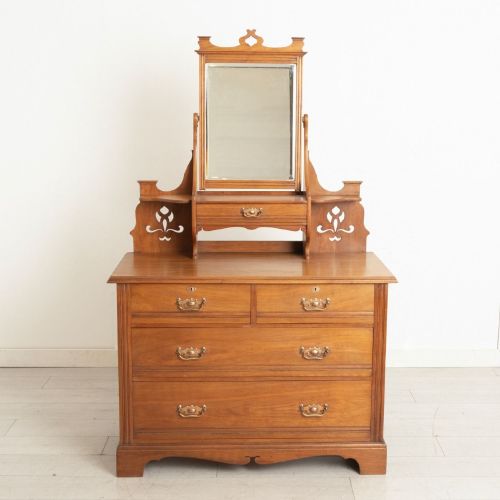
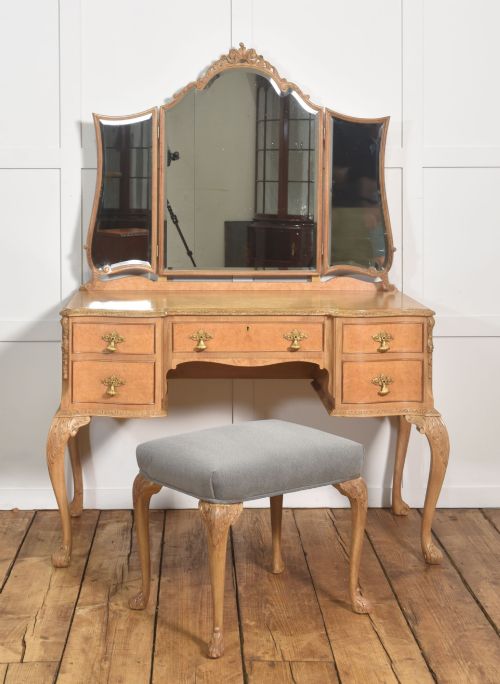
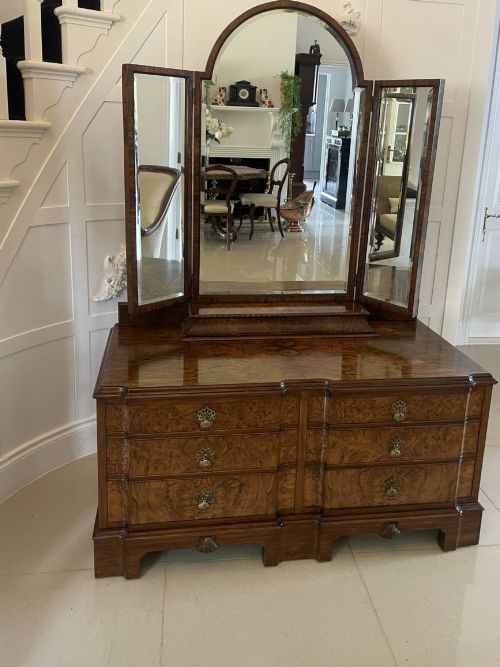
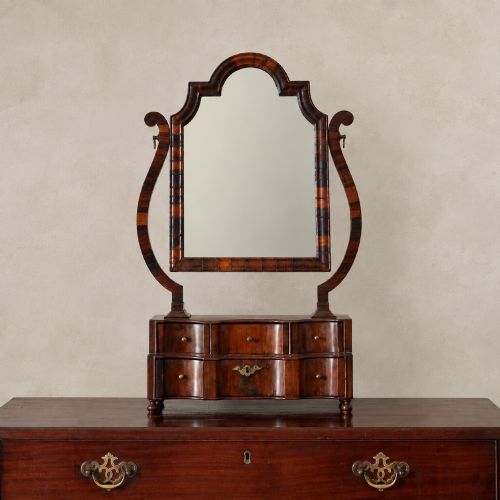
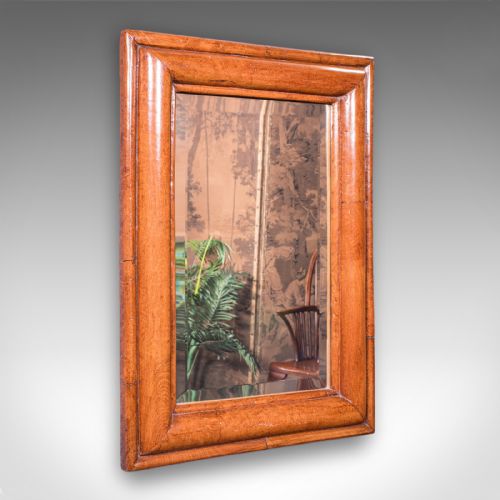
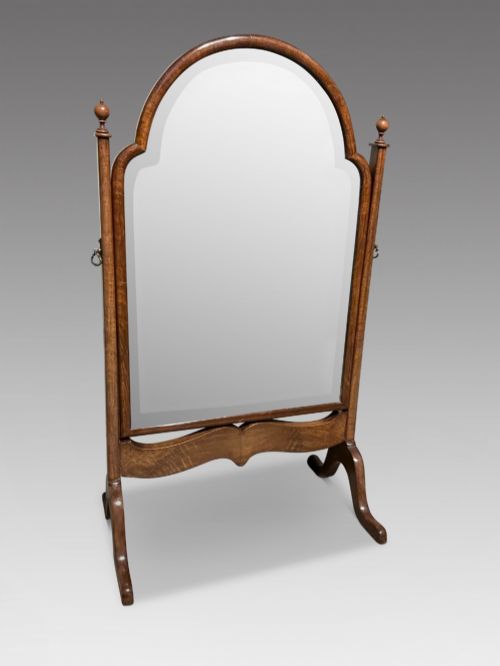
A vintage walnut vanity mirror is typically encountered as a swing glass mounted on a small wooden frame, dating from periods ranging from the eighteenth century to the art deco era. Buyers searching this phrase will find table mirrors, toilet mirrors, and dressing table mirrors constructed primarily from solid walnut or burr walnut veneers. These pieces often accompany larger dressing chests, though many survive as standalone tabletop items designed to pivot on brass or wooden supports.
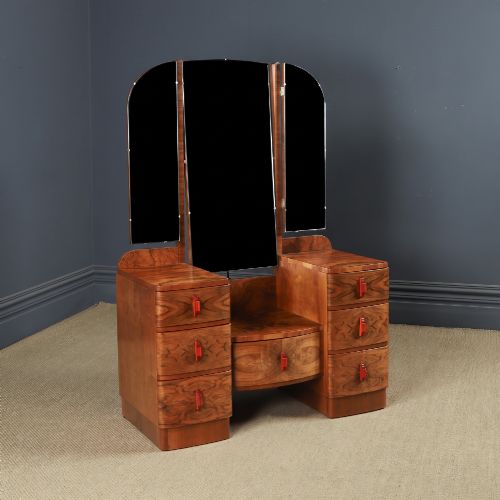
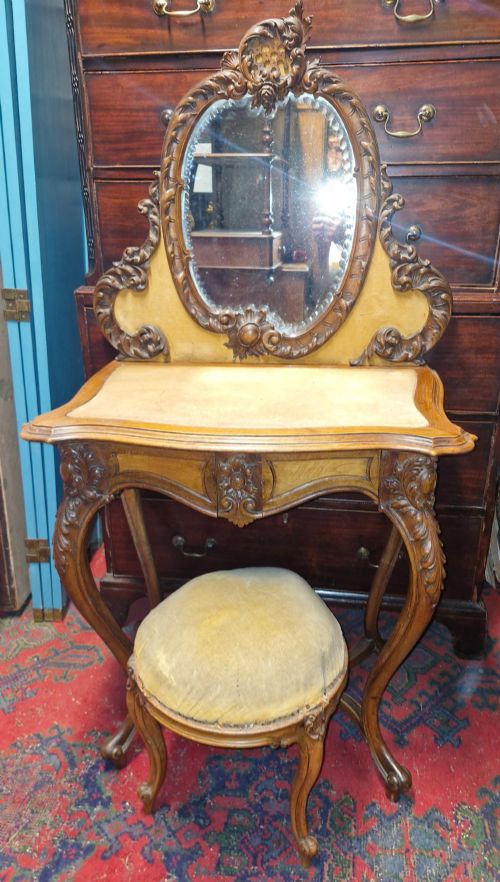
The selection spans centuries of design, encompassing georgian toilet mirrors, queen anne revival styles, victorian pedestal tables, and twentieth-century art deco creations. Earlier examples often feature shaped plates and drawer bases, whilst later twentieth-century interpretations lean towards geometric veneers and streamlined frames. Most versions share a compact footprint, intended to sit securely on a surface whilst offering an adjustable angle for grooming.
Materials and construction
Cabinet makers utilised solid walnut and figured burr walnut veneers applied to secondary woods, creating richly patterned surfaces across the frames and drawer boxes. Glass was set into rebated rebates or held with backboards, frequently featuring bevelled edges on finer examples. Brass fittings, including hinges, screw caps, and swing arms, provided the mechanical linkage allowing the mirror plate to tilt.
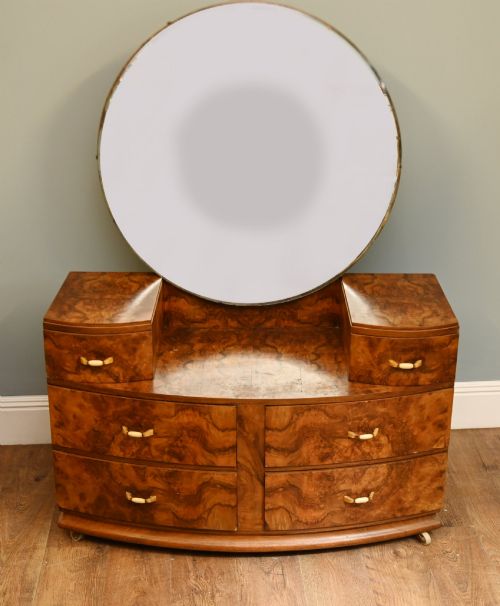
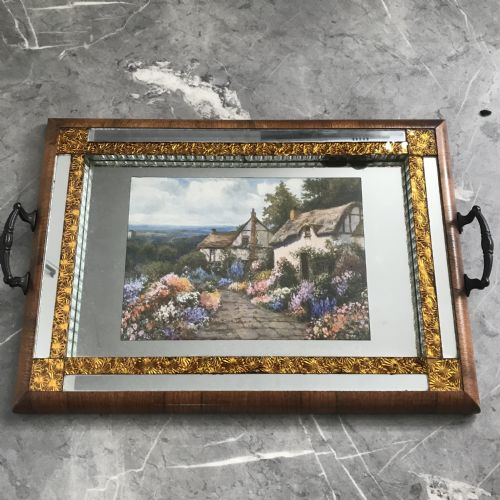
Surface decoration varied by period, with eighteenth-century pieces employing parcel gilding or subtle moulding, and nineteenth-century items showcasing carved details or burr grain patterns. Art deco pieces relied on the natural figure of the wood veneer arranged in symmetrical patterns, sometimes paired with mirrored glass trays or chromium accents. Joinery methods included dovetail joints on miniature drawers and mortise and tenon frames for the supports.
Vintage Walnut Vanity Mirror Retail Price Guide 2026
Typical asking prices for vintage walnut vanity mirror among the pieces listed under this phrase on Sellingantiques today, from the lower quarter to the upper quarter. They describe what is for sale here now, not the wider market.
Materials featured across the inventory include solid walnut, burr walnut veneers, bevelled mirror glass, and brass hardware.
Assessing quality and craftsmanship
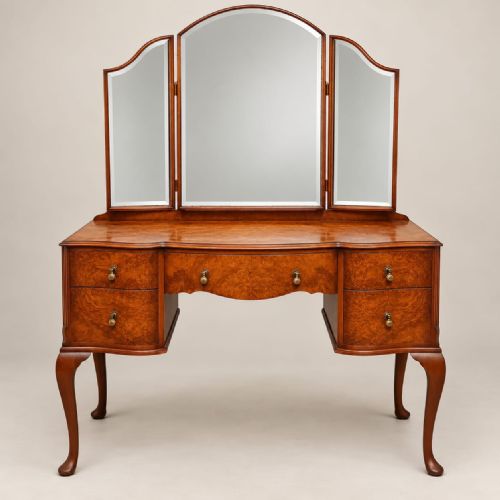
Quality in a vintage walnut vanity mirror rests upon the selection of timber veneers and the crispness of the cabinet work. Finer pieces display matched burr walnut grain that flows logically across the drawer fronts and frame, whereas simpler items utilise plain timber or less rhythmic veneer patterns. The weight and clarity of the mirror glass, alongside the substantial nature of the brass hardware, separate workshop standards.
Proportion and structural integrity dictate the standing of a piece within its period. Well-proportioned framing with tight joinery and original backing boards indicates superior manufacturing, whereas loose pivots or crude secondary timbers suggest utilitarian production. The presence of marquetry inlay, parcel gilding, or finely carved mouldings elevates specific examples above standard domestic wares.
Lamb of Manchester·Maurice Adams·Harry and Lou Epstein·Maples
The Vintage Walnut Vanity Mirror Glossary
- Burr walnut
- A veneer sliced from the knotty growth of a walnut tree, prized for its swirling, highly figured grain patterns. It was frequently utilised on the primary surfaces of high-status furniture.
- Toilet mirror
- A small mirror mounted on a miniature drawer base, historically placed on a dressing table or commode for personal grooming. These items date from the eighteenth century onwards.
- Swing mirror
- A mirror plate hung on horizontal pivots between two upright arms, allowing the glass to tilt back and forth. This mechanism is common on vanity and dressing table mirrors.
- Bevelled glass
- Mirror glass with an angled, polished edge tapering down to a thinner perimeter. This technique adds depth and decorative reflection to the edge of the plate.
- Pedestal dressing table
- A larger dressing furniture form incorporating banks of small drawers flanking a kneehole space, frequently surmounted by a fixed or swinging mirror. They often share stylistic traits with matching vanity mirrors.
Vintage Walnut Vanity Mirror: Frequently Asked Questions
How do I date a walnut vanity mirror?
Dating relies upon construction methods, hardware, and stylistic cues such as drawer dovetails, veneer thickness, and the shape of the mirror frame. Eighteenth-century pieces generally show hand-cut joinery and old mirror plates, whereas art deco examples display geometric veneers and twentieth-century backing.
Examining the secondary woods and hinge types provides further clues. Earlier items use native timbers and simple iron or brass screws, whilst Edwardian and art deco pieces often incorporate machine-cut elements and standardised hardware.
Were these mirrors always attached to tables?
Many vanity and toilet mirrors were designed as standalone tabletop pieces intended to rest securely on any chest of drawers or dressing surface. Others formed an integrated component of larger dressing tables or pedestals.
Standalone versions could be moved easily around a room to catch the best light. Fitted examples usually secured to the table base via wooden uprights or metal brackets.
What is burr walnut?
Burr walnut is a decorative wood veneer taken from the abnormal growth or burl on a walnut tree. It produces intricate, swirling patterns that cabinet makers highlighted on prominent surfaces.
Because of its decorative appeal, burr walnut was reserved for the finest pieces of furniture, including high-end vanity mirrors and art deco dressing chests.
How should I clean a vintage mirror surface?
Cleaning requires a soft, dry cloth for the timber frame, avoiding harsh chemical polishes that can damage old wax or French polish finishes. The glass can be wiped gently with a mild glass cleaner applied to the cloth rather than sprayed directly onto the plate.
Care must be taken around the edges of antique mirror glass where the silver backing may be fragile. Keeping the piece out of direct sunlight prevents the walnut timber from fading over time.