



Walnut Swing Toilet Mirror
A walnut swing toilet mirror brings warmth and a tilting glass to a chest or dressing table, offering a traditional way to check your appearance.
Walnut Swing Toilet Mirror
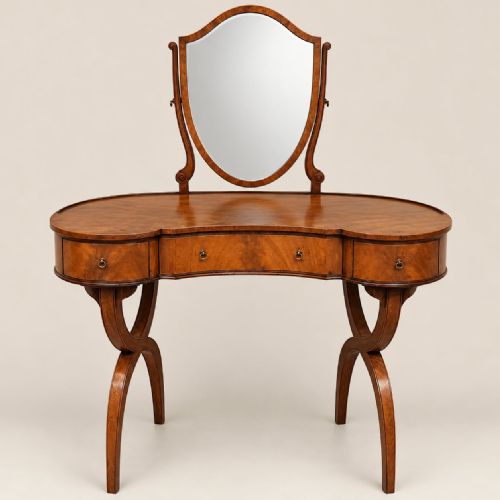
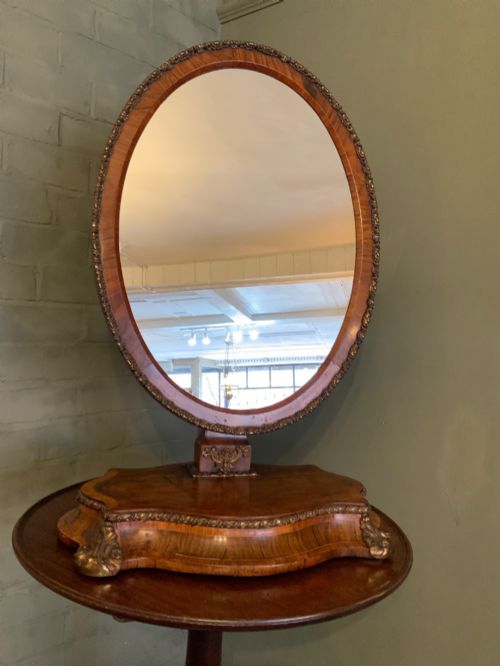
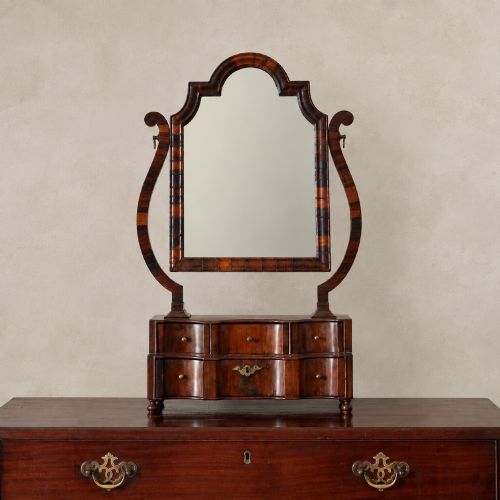
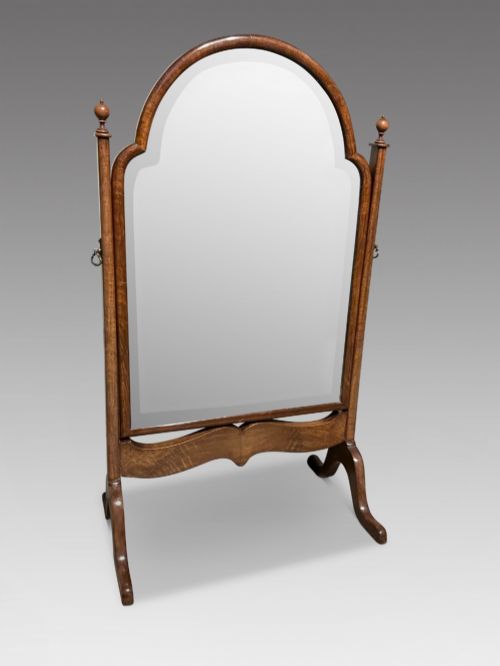
A walnut swing toilet mirror is a tabletop dressing glass designed to tilt within an upright frame, sitting atop a box base or small bureau fitment. These pieces span from the 18th century through the Georgian and Victorian eras up to Edwardian and later 20th-century revivals.
You will encounter various formats on this page, including simple box-base mirrors, elaborate Dutch marquetry designs, and occasional bureau mirrors fitted with small drawers. The styles range from Queen Anne and George II through to Victorian interpretations and French influences.
The primary forms function as dressing mirrors, table mirrors, and toilet glasses. They provide movable reflection in bedrooms and living spaces while displaying the grain of walnut timber.
Materials and construction
Cabinet makers utilised solid walnut, burr walnut, and figured veneers applied to secondary timbers, often embellishing surfaces with marquetry inlay or contrasting laburnum banding. Glass plates were set into movable swing frames supported by upright arms.
Brass hardware such as adjusting screws, side sconces, and hinges allowed the glass to tilt smoothly. Ormolu mounts and giltwood details occasionally appeared on 19th-century and Continental variants.
Walnut Swing Toilet Mirror Retail Price Guide 2026
Typical asking prices for walnut swing toilet mirror among the pieces listed under this phrase on Sellingantiques today, from the lower quarter to the upper quarter. They describe what is for sale here now, not the wider market.
Listings feature walnut, burr walnut, laburnum, and ormolu across 18th-century, Georgian, Victorian, and Edwardian periods.
Judging the quality
Quality rests in the selection of the timber, where finely figured burr walnut or crisp marquetry floral patterns distinguish superior pieces from plain variants. The joinery of the box base, particularly dovetailing on the small drawers, indicates the maker's skill.
Proportion and the retention of original mirror glass and brass fittings elevate an example. Pieces that maintain their original pivoting mechanism and backboards show greater integrity than those with replaced components.
James Jenkins The Strand London
The Walnut Swing Toilet Mirror Glossary
- Swing frame
- The pivoting mirror glass assembly held between two vertical arms. This allows the user to adjust the angle of reflection.
- Marquetry
- Decorative veneer work created by fitting together small pieces of different woods to form floral or pictorial patterns. Dutch makers frequently applied this technique to walnut surfaces.
- Bureau fitment
- A sloping desk section incorporated into the base of the mirror. It provides a compact writing surface above the drawers.
- Laburnum
- A dense timber used in contrasting cross-grain banding on early 18th-century walnut furniture. It creates dark circular oyster patterns known as oyster-graining.
Walnut Swing Toilet Mirror: Frequently Asked Questions
How do I date a walnut swing toilet mirror?
Dating relies on observing construction methods, timber choice, and hardware styles across different periods. 18th-century examples often feature fine dovetailing and oyster-cut veneers, while Victorian and Edwardian pieces show heavier proportions.
Examining the mirror plate itself and the wood of the secondary backing boards helps confirm the era of manufacture.
Where should I place a table mirror?
These mirrors sit comfortably on top of chests of drawers, dressing tables, or sideboards. Their compact footprint makes them suitable for bedrooms and hallways.
Ensure the surface is stable and level to support the weight of the frame and base.
Are the mirror plates original?
Many older mirrors have replacement glass because original silvering degrades over centuries. Older glass often displays subtle distortions, slight foxing, or bevelled edges shaped by hand.
Inspecting the back of the glass and how it is secured in the rebate provides clues to its age.
What is a bureau mirror?
A bureau mirror combines a small sloping writing flap and internal pigeonholes with the traditional box-base dressing glass. This dual-purpose form was popular in the 18th and 19th centuries.
It allowed owners to write short notes and attend to grooming at the same piece of furniture.