


Tabletop Vanity Mirror Drawers
Tabletop vanity mirror drawers are functional dressing glass pieces that bring period charm and practical storage to any surface.
Tabletop Vanity Mirror Drawers
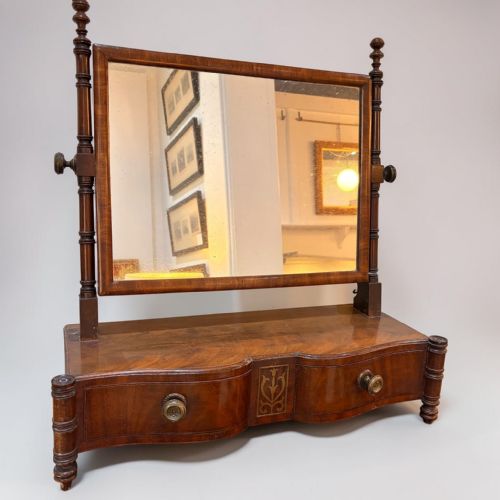
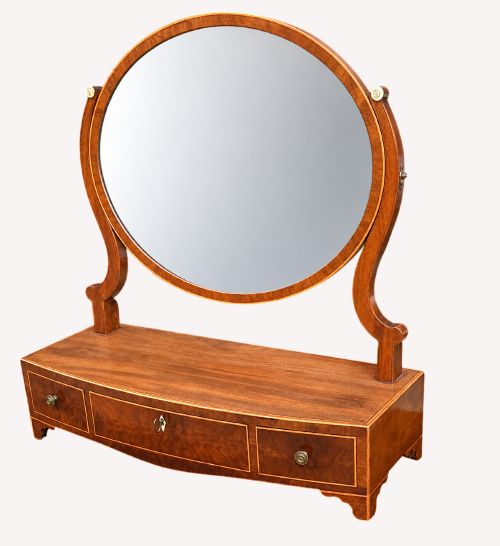
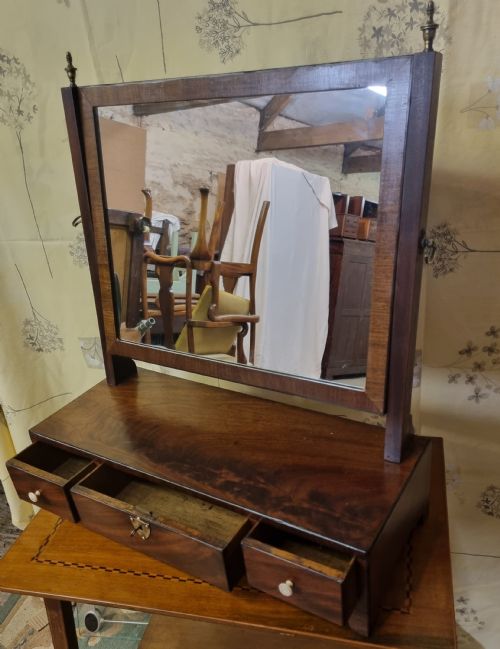
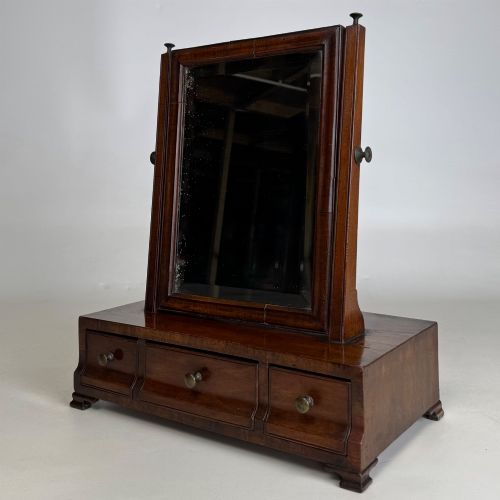
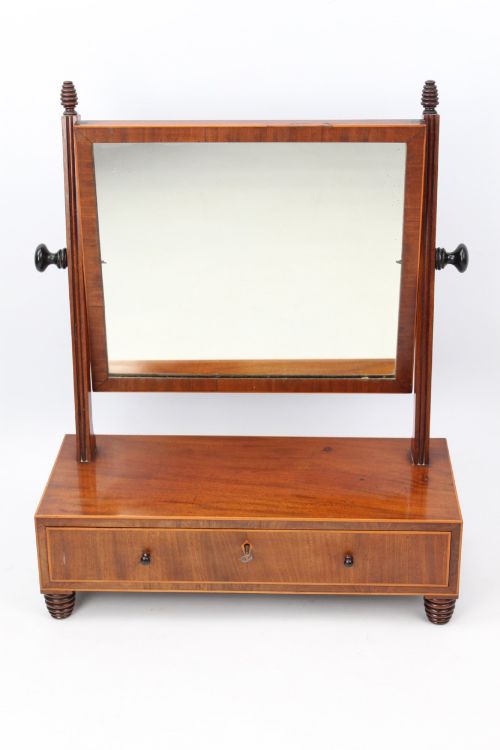
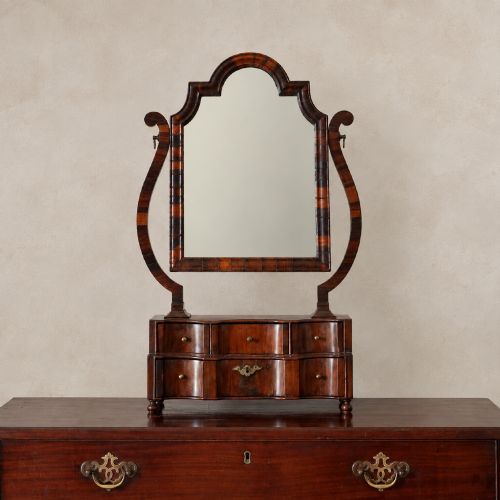
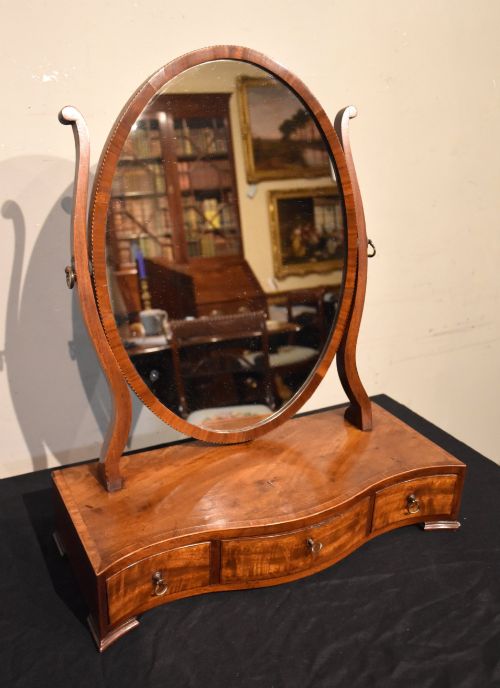
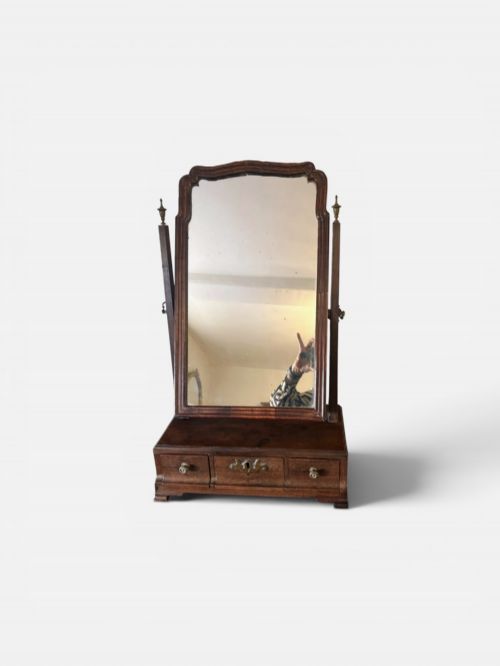
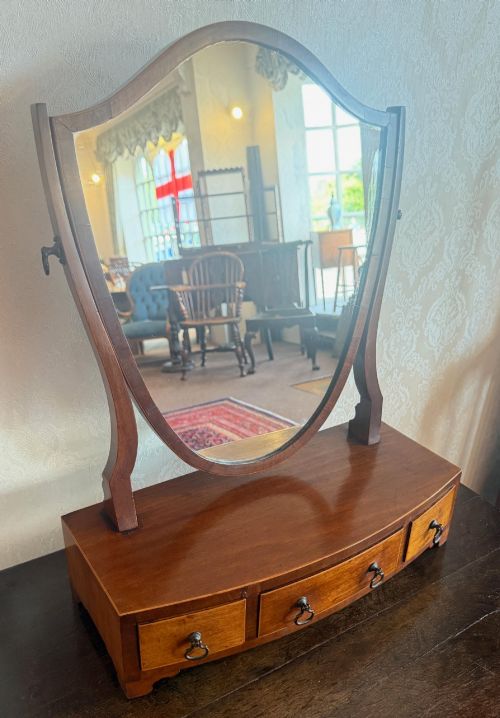
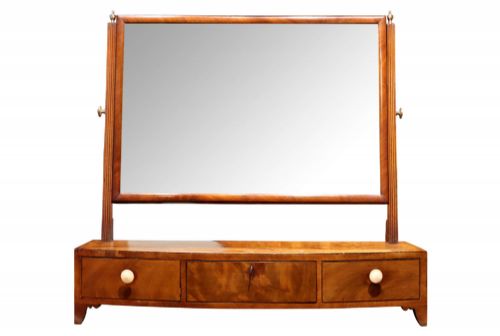
Tabletop vanity mirror drawers combine a swing mirror plate with a small base housing one or more small compartments. These objects served generations for daily grooming before wall-mounted looking glasses became common in bedrooms.
The pieces appearing here span from the eighteenth century into the twentieth, with Georgian and Regency examples forming the bulk of the selection. You will encounter forms styled as toilet mirrors, dressing mirrors, and dressing glasses.
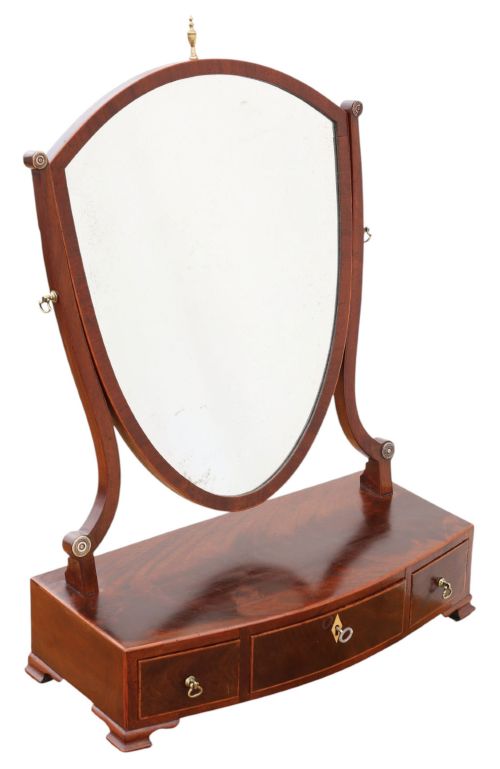
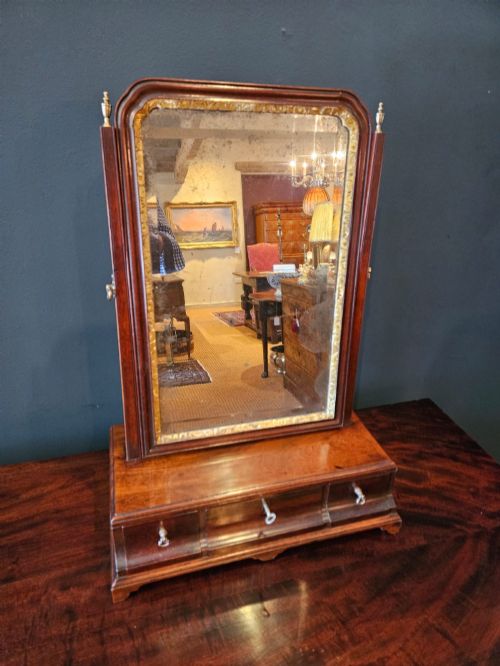
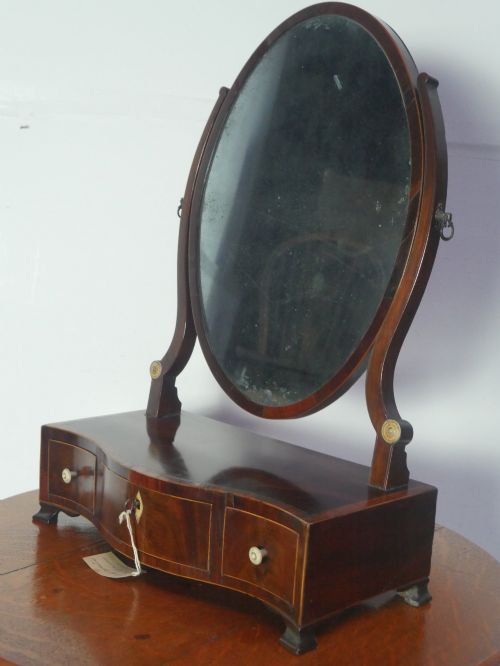
Base configurations range from simple straight fronts to serpentine shapes and fitted bureau compartments. Walnut and mahogany dominate the woodwork, often augmented by crossbanding, marquetry, or giltwood details.
Materials and Construction
Cabinetmakers built these mirrors primarily in solid mahogany and walnut, frequently selecting figured veneers for the drawer fronts and base panels. Crossbanding in contrasting timbers and fine satinwood inlay added decorative contrast to the primary wood surfaces.
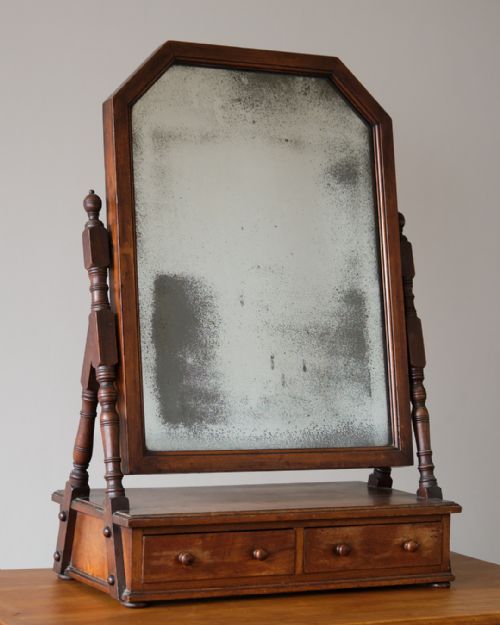
Mirror plates were set into pivoting wooden frames supported by upright arms, allowing the glass to tilt at various angles. Small brass knobs, bone escutcheons, and gesso embellishments completed the hardware and surface ornamentation.
Some nineteenth-century examples include clever bureau fitments hidden in the base, perfect for storing secret love letters.
Quality Variations
The standard of timber selection and veneer matching defines the upper tier of these pieces, alongside the crispness of any inlaid decoration. Finely figured walnut or mahogany with well-executed crossbanding marks the work of superior cabinet shops.
Proportion and the integration of the mirror frame to the drawer base dictate overall elegance. Pieces retaining their original mirror glass, brass fittings, and smooth-running drawer construction command the strongest interest.
Heal And Sons
The Tabletop Vanity Mirror Drawers Glossary
- Toilet mirror
- A small mirror designed to sit on a dressing table or chest, typically incorporating drawers in the base. These pieces were essential items of bedroom furniture in the eighteenth and nineteenth centuries.
- Shield mirror
- A mirror plate cut into the shape of a heraldic shield, popular during the Georgian period. This silhouette offers a lighter visual weight than traditional rectangular plates.
- Crossbanding
- A border of veneer laid with the grain running perpendicular to the surrounding wood. This technique frames drawer fronts and top surfaces on finer cabinetry.
- Marquetry
- The art of applying decorative veneer pieces in floral or geometric patterns onto a wood base. Dutch examples frequently employ this method using various contrasting timbers.
- Parcel-gilt
- Partially gilded woodwork where gold leaf highlights specific carved details such as bezels or mouldings. This treatment adds subtle contrast to walnut or mahogany frames.
Tabletop Vanity Mirror Drawers: Frequently Asked Questions
What is the difference between a toilet mirror and a dressing mirror?
Historically, the terms are often used interchangeably to describe movable looking glasses with drawer bases. Generally, a toilet mirror sits upon another piece of furniture, while dressing mirror variations sometimes denote slightly larger formats.
Both types served the same domestic purpose for personal grooming and hair arrangement in bedrooms and dressing rooms.
How do I date an antique tabletop mirror?
Dating relies on examining the timber species, construction methods of the drawer boxes, and the shape of the mirror frame. Eighteenth-century pieces frequently employ walnut or early mahogany with hand-cut dovetails, while later nineteenth-century versions show machine-sawn elements and different plate bevelling.
Hardware styles and secondary woods hidden inside the drawer construction also provide reliable clues for establishing the period of origin.
Are the mirror plates usually original?
Many older pieces have replacement mirror plates because the original mercury or silver backing degraded over decades of use. Early glass often exhibits minor imperfections, slight warping, or foxing that collectors look for as signs of age.
A replacement plate does not diminish utility, though surviving original glass remains desirable for authenticity.
Where should I place a tabletop mirror at home?
These mirrors function effectively on top of low chests of drawers, sideboards, or dedicated dressing tables. Their compact footprints allow them to add height and reflected light to darker corners of a room.
Ensure the surface is stable and level to support the weight of the base and the pivoting frame safely.