


Vintage Persian Rug Fragment
These vintage persian rug fragment pieces are nomadic weavings and bag faces sourced from Persian tribes, offering authentic historic pattern and texture.
Vintage Persian Rug Fragment
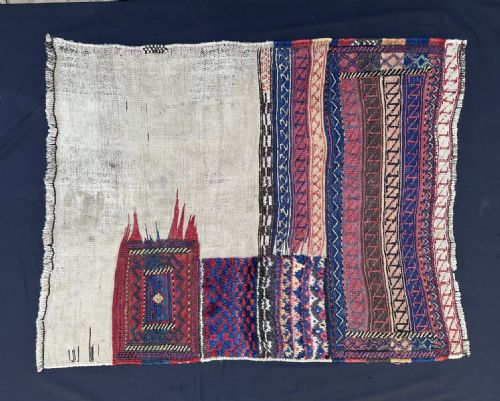
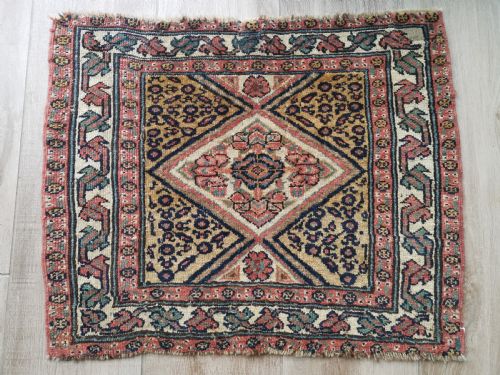
A vintage persian rug fragment comprises surviving sections of nomadic and tribal weavings, principally bag faces, saddlebags, and storage pouches from Western, Southern, and Northwestern Persia. These textile pieces originate from various tribal groups including the Afshar, Shahsavan, Lori-Bakhtiari, Kurdish, and Jaf nomads, dating from the mid nineteenth century through to the early twentieth century. Buyers encounter these items mounted as textile art or preserved in their original format, representing functional objects repurposed for display.
How They Were Made
The construction relies primarily on hand-spun wool and cotton foundations, occasionally incorporating silk and utilising vegetable dyes to achieve lasting colour depth. Weavers employed techniques such as soumak work and pile weaving to produce durable surfaces suitable for nomadic utility.
Materials like lustrous wool and cotton warp and weft threads reflect the local resources available to nineteenth-century nomadic weavers in regions such as Western and Southern Persia.
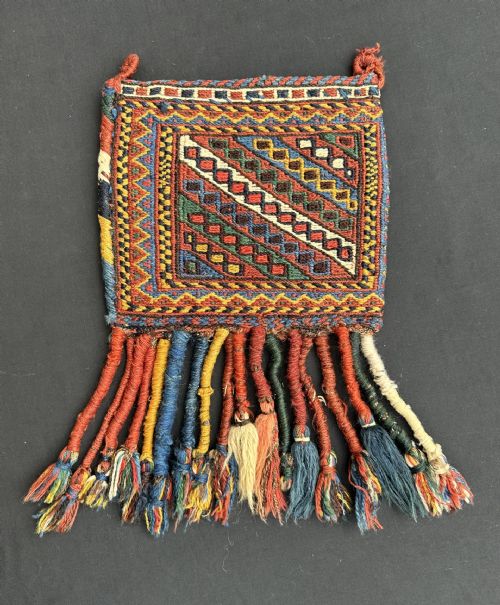
Nomadic weavers packed small personal vanity bags with bright dyes and bird motifs, ensuring even everyday storage items carried a touch of spirit.
What Varies in Quality
Quality in these fragments depends on the fineness of the weave, the clarity of the vegetable dyes, and the condition of the remaining wool or silk fibres. Superior examples display luminous wool and precise execution in motifs like the boteh or bird designs, showing skilled craftsmanship from specific tribal groups.
The integrity of the structural foundation and the retention of original borders or field patterns distinguish finer tribal bag faces from standard or heavily worn fragments.
The Vintage Persian Rug Fragment Glossary
- Bag face
- The decorative front panel of a nomadic storage bag, separated from the plain back after the piece ceased its original function. These panels contain the primary design work.
- Sumac
- A flat-weave technique involving wrapping weft threads around warp threads in a continuous pattern, creating a durable and textured surface structure. Shahsavan weavers frequently utilised this method.
- Chanteh
- A small personal bag or vanity bag woven by nomadic groups for carrying small possessions. Surviving examples are often preserved as individual textile fragments.
- Boteh
- A traditional almond-shaped or paisley motif representing a floral shoot or cypress tree, commonly found in Afshar and other Persian tribal designs.
- Jajim
- A flat-woven textile produced in strips and stitched together, often utilised for bedding or storage and occasionally worked in silk.
Vintage Persian Rug Fragment: Frequently Asked Questions
What is a rug fragment?
A rug fragment is a surviving section of a larger nomadic weaving, such as a saddlebag face or storage pouch, separated from its original utility context.
These pieces are preserved for their historic patterns, natural dyes, and tribal artistry, often displayed as textile art on walls.
How were tribal bags used?
Nomadic tribes utilised these bags for transporting possessions, storing grain, or carrying personal items during seasonal migrations across Persia.
Different formats served specific functions, from large wheat-sacks to small personal vanity pouches.
How do I care for fragments?
Keep textile fragments away from direct sunlight to protect natural vegetable dyes from fading over time.
Mount them securely on stable backing materials if displayed on walls to prevent strain on the historical fibres.
Which tribes made these?
Weavers from groups such as the Afshar, Shahsavan, Lori-Bakhtiari, Kurdish, and Jaf tribes produced these textiles across various Persian provinces.
Each tribal group maintained distinct palettes, geometric vocabularies, and specific weaving techniques.