


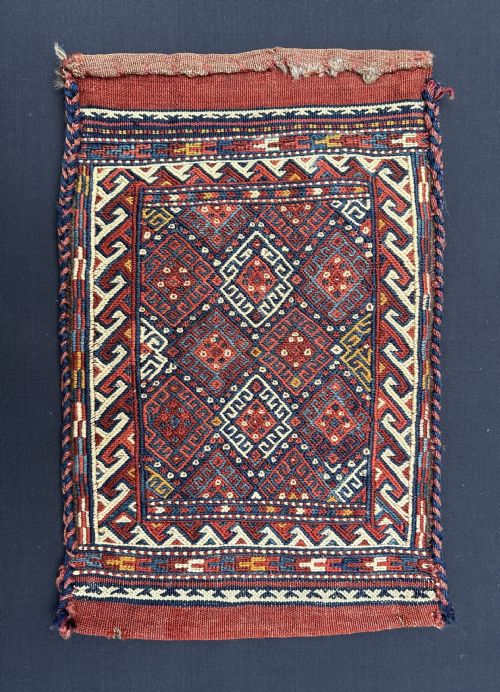

Antique Persian Bagface
An antique persian bagface is a small tribal textile fragment holding centuries of nomadic artistry.
Antique Persian Bagface
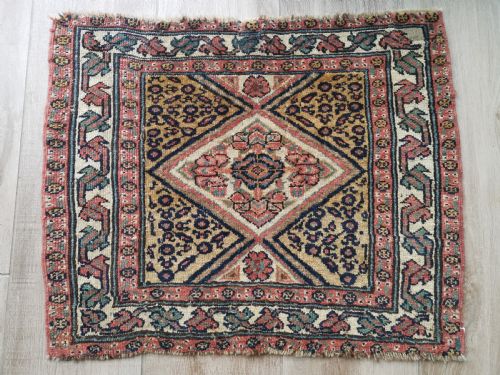
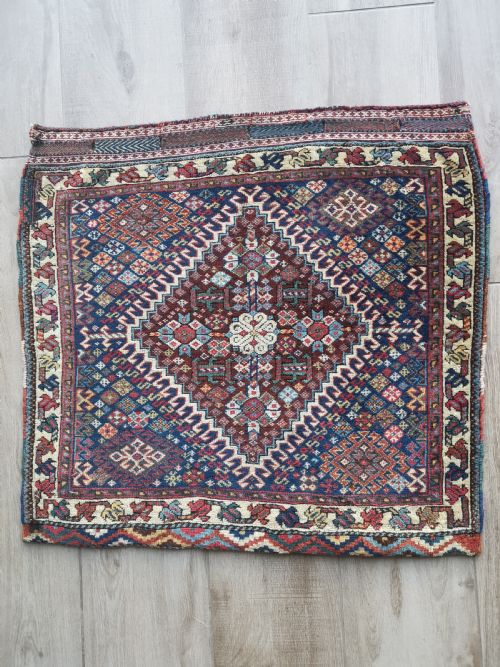
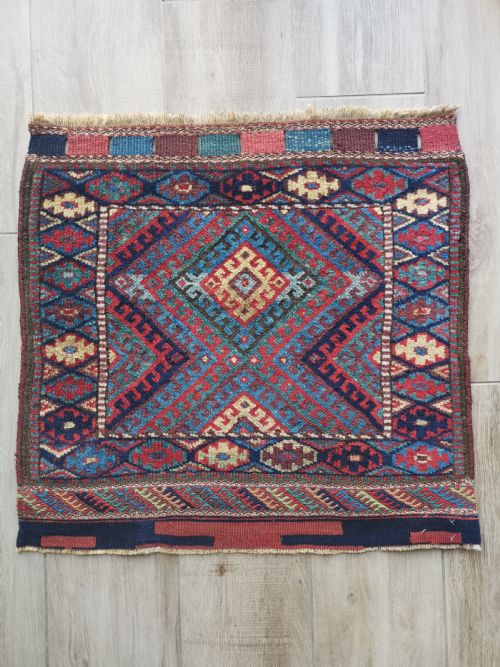
When you search for an antique persian bagface, you are looking at fragments and complete faces of nomadic storage sacks woven across Persia. These pieces include single bagfaces and double-sided saddlebags created by various tribal groups.
The versions you are most likely to meet on this page hail from the nineteenth century and the early twentieth century. They showcase regional tribal designs woven from hand-spun materials by makers such as the Qashqai, Baluch, Jaf, and Khamseh.
Many survive as cut fragments or converted cushions, preserving the utilitarian art of pastoral communities. Their formats range from square panels to rectangular saddlebag faces featuring traditional tribal motifs.
How they were made
These textiles were constructed using hand-spun wool and cotton foundations, often incorporating goat hair for durability on the edges and backs. Weavers utilised natural dyes to colour the wool, producing rich hues that soften gracefully over time.
The nomadic makers employed traditional tribal techniques to create dense, flat-woven or pile structures designed to withstand the rigours of animal transport. Every bagface reflects the specific regional methods passed down through generations of tribal weavers.
Listings span from eighteen-ninety to nineteen-twenty, featuring wool, cotton, goat hair, and natural dyes across tribal Persian origins.
What varies in quality
Quality in these textiles rests upon the handle of the wool and the clarity of the natural dyes. Finely spun wool and tight knotting or weaving separate the superior tribal pieces from coarser examples.
The artistic strength of the tribal design and the preservation of the original format dictate the standing of a bagface. Pieces retaining complete borders and crisp iconography command greater attention from collectors of nomadic textiles.
The Antique Persian Bagface Glossary
- Bagface
- The decorative front panel of a nomadic storage bag, preserved after the plain back web has worn away or been removed. This section displays the primary tribal motifs and dye work.
- Baluch Tribal
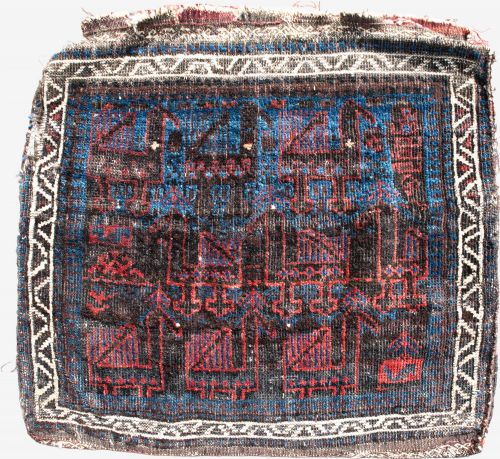
- Woven by nomadic and semi-nomadic groups residing along the borders of Persia and Afghanistan. These pieces frequently feature deep indigo tones and stylised bird or tree motifs.
- Khamseh
- A confederation of five distinct tribes in south-west Persia known for bold geometric patterns and saturated wools. Their weaving often incorporates distinctive animal and human figures.
- Qashqai
- A powerful tribal confederation in the Fars province renowned for highly expressive geometric designs and luminous natural dyes. Their work represents some of the finest nomadic weaving in Persia.
Antique Persian Bagface: Frequently Asked Questions
What is an antique persian bagface?
An antique persian bagface is the decorative front panel of a nomadic storage sack, woven by tribal groups in Persia during the nineteenth and early twentieth centuries.
These pieces were originally part of larger utilitarian bags used for transport and storage, later surviving as independent textile art.
How were these bags used?
Nomadic tribes utilised these sacks for packing household goods, grain, and personal belongings during seasonal migrations.
Loaded onto pack animals, the durable woven faces protected contents while adding vibrant colour and tribal identity to the camp.
How do I live with a bagface?
Bagfaces adapt easily to modern interiors as small wall hangings, table mats, or cushion covers.
Protecting them from direct sunlight preserves the natural dyes, while placing a suitable underlay prevents slip if used on surfaces.
How can I tell different tribes apart?
Tribal attribution relies on specific wool characteristics, colour palettes, and repeating geometric or zoomorphic motifs.
For instance, Baluch weavings often display dark indigo grounds with bird forms, while Qashqai pieces showcase bright highlights and stepped medallions.