




Small Wool Rug Panel
A small wool rug panel brings centuries of nomadic and tribal weaving tradition into your interior space.
Small Wool Rug Panel
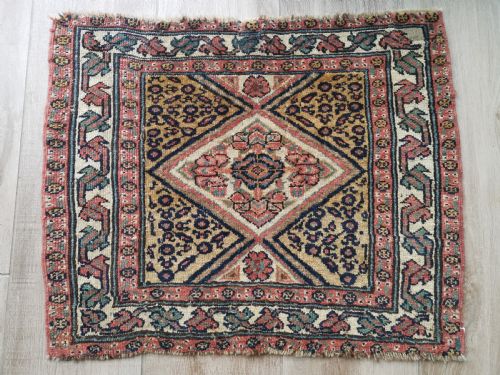
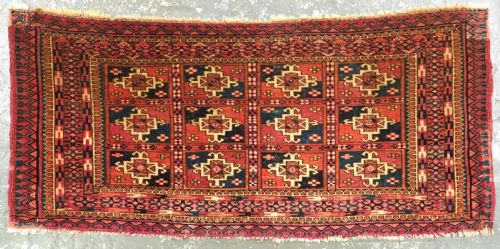
A small wool rug panel represents fragments and functional faces of larger nomadic weavings, most frequently encountered here as bagfaces, torbas, and mafrash panels. These pieces originate from Turkmen, Persian, Caucasian, and Kurdish traditions dating from the nineteenth and early twentieth centuries. Rather than complete floor coverings, collectors typically find truncated sections of storage sacks and animal trappings designed for portable nomadic life.
The format encompasses specific tribal forms such as Yomut, Ersari, Tekke, and Saryk chuval or torba faces alongside Persian rasht embroideries and Shahsavans mafrash panels. Makers constructed these textiles for daily utility within tribal households, utilising durable wool and natural dyes to withstand heavy domestic movement. Surviving examples present as compact wall art, decorative fragments, or repurposed kilims adapted for display.
Materials and construction methods
Weavers constructed these panels primarily using hand-spun wool foundations paired with natural dyes yielding deep crimson, ivory, and earthy tones. Artisans occasionally incorporated supplementary materials such as cotton and silk highlights or wool felt backing, visible in specific Persian embroideries and Turkmen storage bags. The resulting textile structure relies on dense knotting or flatweave techniques designed to endure rigorous daily usage.
Production techniques varied across tribal groups, ranging from the intricate gül motifs knotted on Yomut and Tekke torbas to the silk-on-felt needlework characteristic of Rasht workshops. Artisans secured structural integrity through robust wool warps and wefts, ensuring the surviving fragments maintained their structural cohesion over generations of use and eventual separation from their original parent objects.
Nomadic weavers occasionally signed their textile storage bags with camel hair to ward off the evil eye.
Factors of distinction and merit
Quality in a small wool rug panel rests upon the precision of the tribal design execution and the depth of its natural colour palette. Finer examples display crisp structural geometry within classical motifs like the kepse, schemle, or aina gül, alongside tight knot density and supple wool handles. The preservation of original borders and structural edges further elevates a panel above heavily compromised fragments.
The choice of materials also dictates standing, with superior specimens employing glossy hand-spun wool and pristine white cotton or crimson silk accents that retain their original saturation. Pieces demonstrating exceptional pictorial clarity or scarce structural formats command greater attention from collectors who prioritize authentic tribal provenance over mere decorative utility.
The Small Wool Rug Panel Glossary
- Torba
- A small Turkmen storage bag traditionally used inside a tent for household goods. These pieces feature prominent face designs that collectors often preserve independently as wall panels.
- Chuval
- A large Turkmen tent bag designed for bedding and clothing storage. Surviving chuval faces display repeating rows of primary guls.
- Mafrash
- A rectangular box-like storage container or side panel originating from nomadic tribal groups. Shahsavan and Yomut weavers produced these structures to carry possessions during seasonal migrations.
- Gul
- A repeating medallion or octagonal design motif central to Turkmen tribal weaving. Each pattern identifies specific tribal lineages and regional traditions.
- Rasht embroidery
- A traditional Persian needlework technique utilising fine silk threads applied to heavy wool felt backings. These panels often incorporate intricate floral medallions.
Small Wool Rug Panel: Frequently Asked Questions
How were these panels used originally?
Nomadic tribes utilised these woven sections as functional storage bags, saddlebags, and tent furnishings to organise household possessions during migrations.
Over time, as the parent objects sustained wear, surviving decorative faces were preserved independently for their artistic merit and visual impact.
Where do these tribal panels originate?
The pieces originate primarily from Central Asian Turkmen tribes, alongside Persian, Caucasian, and Kurdish weaving traditions.
Specific regional groups such as the Yomut, Ersari, Tekke, and Shahsavan produced these distinctive geometric and pictorial textile forms.
How should I display a panel?
Collectors most frequently mount these compact textile panels directly onto walls as framed or unframed flat art.
Their manageable dimensions make them suitable for hanging in spaces where a full-sized carpet would prove impractical.
How do I identify the age of a piece?
Dating relies upon examining the wool quality, natural dye saturation, and structural characteristics consistent with nineteenth and early twentieth-century production.
Tribal design attributions and construction techniques provide reliable indicators of a piece's historical period.