
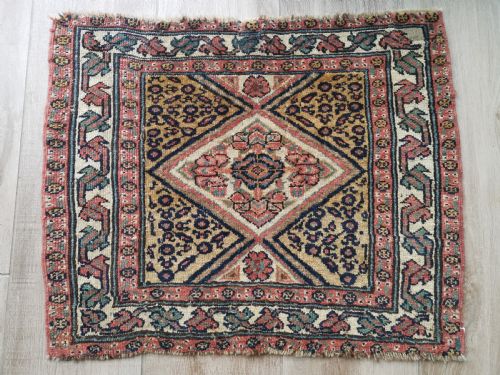
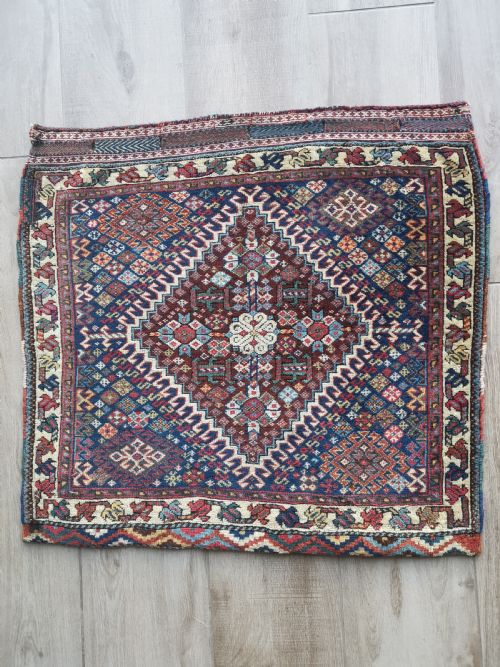

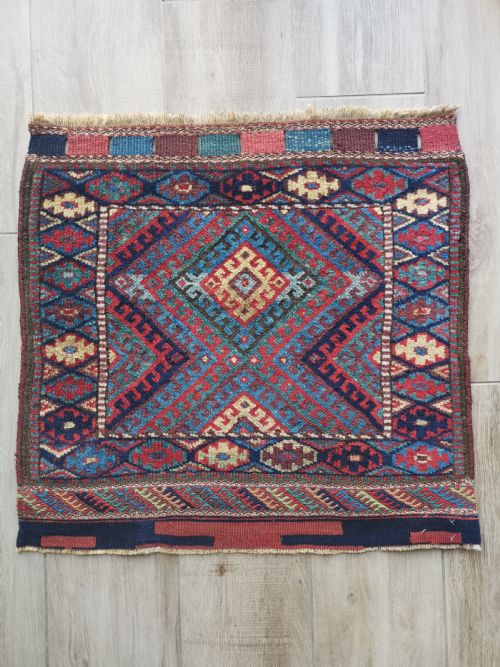
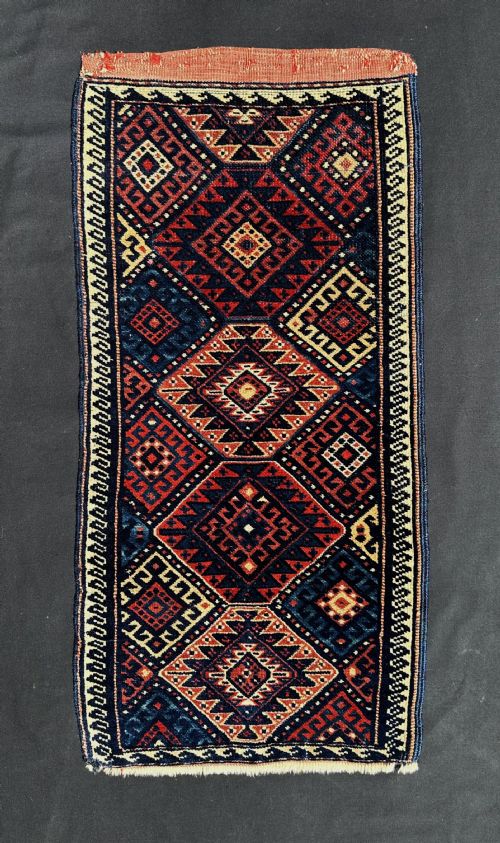


Hand Knotted Rug Fragment
These hand knotted rug fragment pieces are historic nomadic textile remnants offering collectors authentic tribal artistry and structural durability.
Hand Knotted Rug Fragment
A hand knotted rug fragment represents the surviving portion of an older nomadic or village textile, such as a dismantled saddlebag, pillow face, or larger carpet remnant. Buyers seek these pieces to study indigenous weaving traditions and incorporate historical tribal designs into modern spaces.
The inventory on this page consists predominantly of tribal bag faces, chuvals, torbas, and sectional remnants originating from Persian, Caucasian, and Turkmen workshops. These items trace back to the eighteenth, nineteenth, and early twentieth centuries, preserving the utilitarian textile art of nomadic groups.
Materials and Technique
Makers constructed these textiles primarily using hand-spun wool and cotton foundations, knotted by hand to create dense, durable pile surfaces. Natural dyes provided the deep polychrome palettes characteristic of nineteenth-century tribal weaving.
Weavers employed structural techniques specific to their tribes, utilising symmetric or asymmetric knots alongside wool warp and weft threads. The integration of natural dyes ensures that the colours age gracefully over decades of exposure.
Some bag faces served as portable filing cabinets for desert nomads.
Evaluating Quality
Knot density and structural integrity distinguish superior examples from ordinary remnants, with finer weaves allowing for sharper execution of traditional guls and medallions. The purity and depth of the natural dyes also elevate a piece.
The completeness of the design field within the surviving fragment affects desirability, as does the vibrancy of the wool. Pieces retaining strong structural edges and crisp tribal motifs represent the higher tier of these historic textiles.
The Hand Knotted Rug Fragment Glossary
- Bagface
- The decorative front panel of a nomadic storage bag, usually preserved after the back panel wore away. These faces function effectively as small decorative wall hangings.
- Chuval
- A large tent storage bag traditionally used by Turkmen tribes for household goods. Surviving chuval faces display complex primary gul arrangements.
- Torba
- A smaller storage bag than the chuval, often wider than it is deep. Torbas hung inside nomadic tents for personal items.
- Gul
- A medallion or repeating octagonal motif used in Turkmen and tribal rugs. Each pattern often identifies a specific tribal group or lineage.
- Remnant
- A surviving portion of a larger carpet or textile that has been cut or worn down over time. These remnants retain the artistic merit of the original full-scale piece.
Hand Knotted Rug Fragment: Frequently Asked Questions
What is a rug fragment?
A rug fragment is a surviving portion of an antique textile that has lost parts of its original field or borders through age and use. Despite missing sections, these pieces retain complete decorative motifs and structural integrity.
Collectors prize fragments because they offer access to historic nomadic weaving traditions at a smaller scale. They display the exact wool quality, dyes, and knotting techniques found in intact carpets.
How were tribal bags used?
Nomadic tribes utilised woven bags for domestic storage inside tents, holding bedding, clothing, and household provisions. These containers endured heavy daily handling during seasonal migrations.
Over time, the plain wool backs wore out while the decorative faces survived. Families often separated and preserved the ornamental front panels as independent textiles.
How do I display a fragment?
Fragments mount securely onto neutral backing fabrics for safe wall presentation, protecting the structural edges from strain. Textile conservators recommend non-invasive stitching methods to support the weight.
Smaller pieces also function effectively beneath glass in shadow boxes or laid flat on stable surfaces. Proper placement avoids direct sunlight to protect natural dye pigments.
What is a gul motif?
A gul is a repeating medallion pattern deployed across Turkmen and Central Asian tribal weaving. These geometric designs often denote specific tribal clans and geographical origins.
Weavers passed these symbolic patterns down through generations without written charts. Their precise execution indicates the skill level of the maker.