

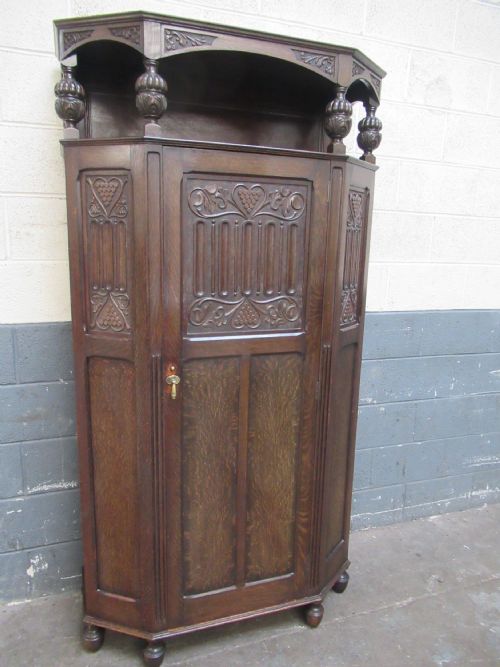


Vintage Oak Corner Cabinet
A vintage oak corner cabinet makes use of neglected space while grounding a room with rich timber grain and period character.
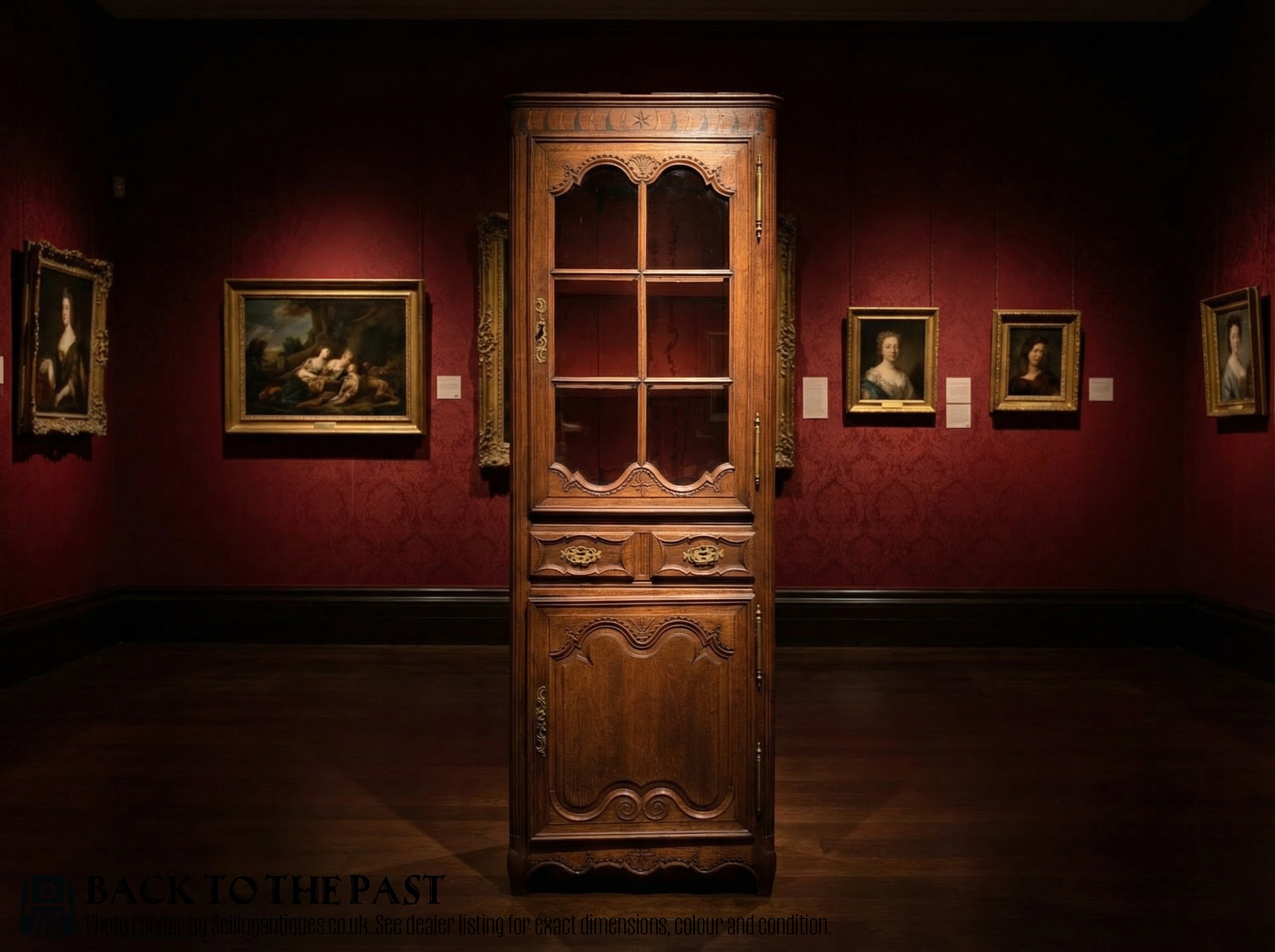
Vintage Oak Corner Cabinet
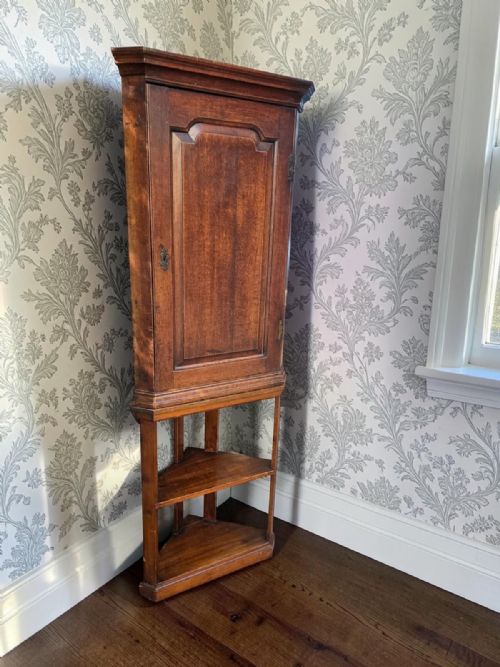
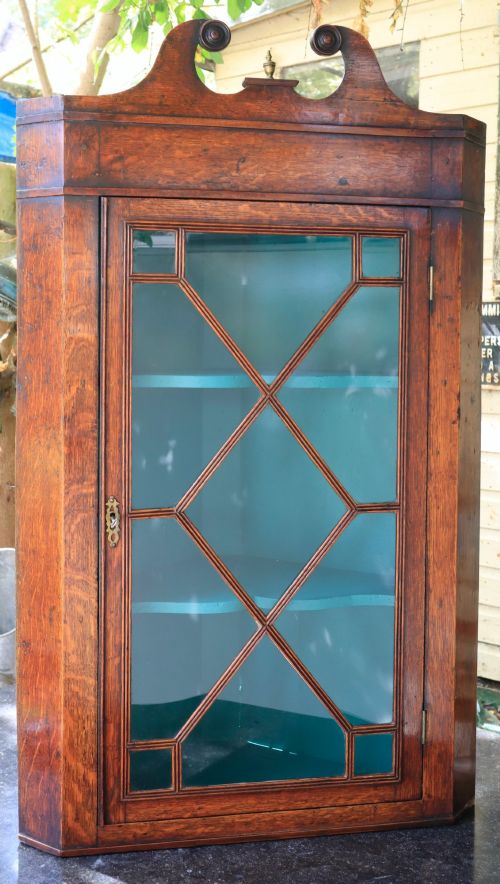
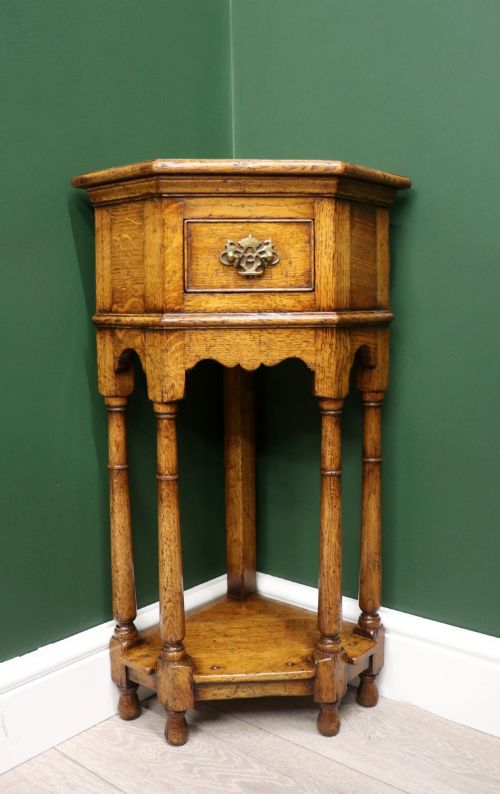
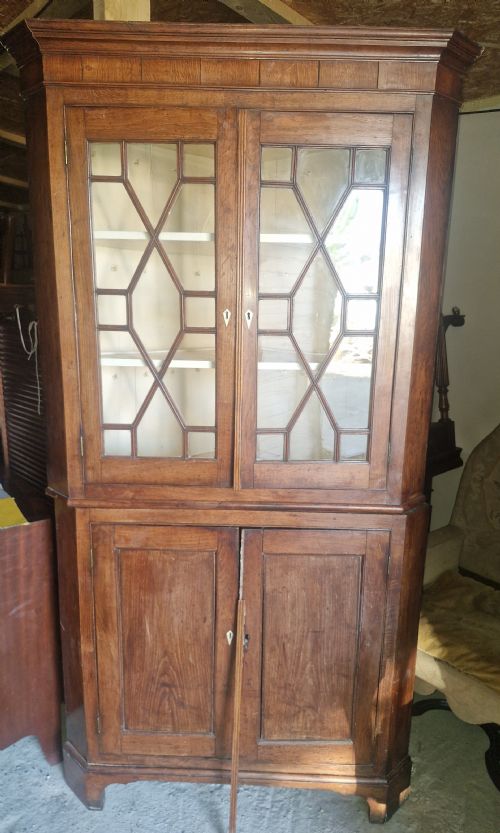
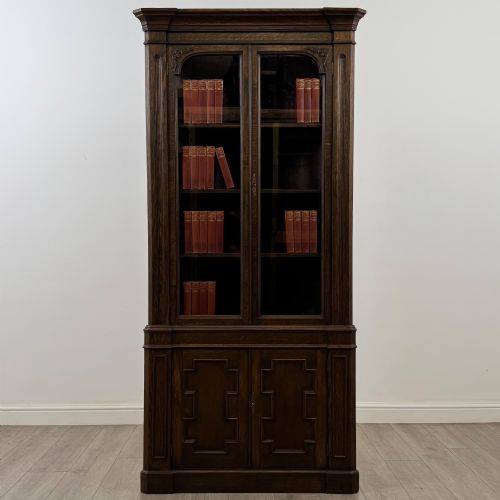
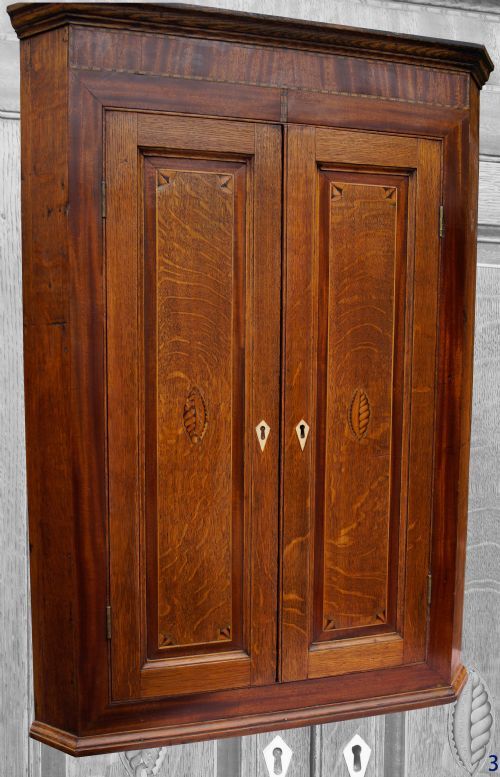
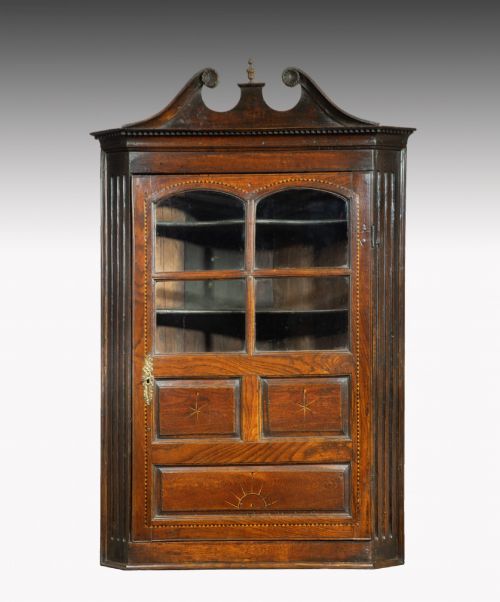
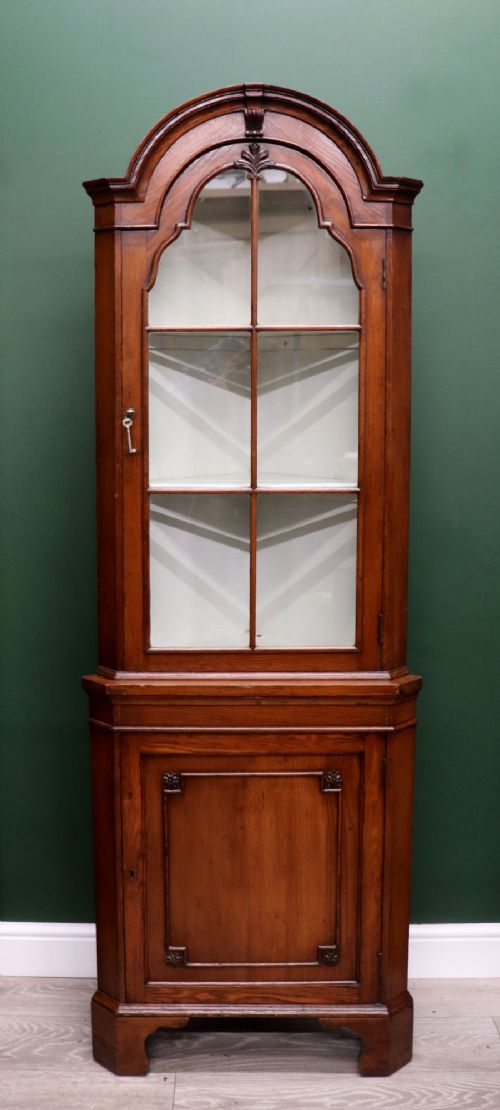
A vintage oak corner cabinet is a specialised storage piece designed to fit neatly into the right angle of a room, maximising floor or wall space efficiently. The listings show forms ranging from compact hanging cupboards to substantial two-part floor-standing models and glazed display units.
The pieces span several centuries of British and European craftsmanship, with Georgian, Victorian, Edwardian, and 1930s examples appearing frequently. Buyers encounter both wall-mounted versions and tall standing units featuring single panelled doors, bow fronts, or glass panes for showing contents.
Provincial English workshops and regional makers produced the vast majority of these cabinets using native timber. They serve primarily to house porcelain, glassware, or books while adding architectural interest to empty corners.
Materials and construction methods
Solid oak serves as the primary timber across the inventory, often complemented by secondary woods like pine for internal shelving or fruitwood inlay for decorative contrast. Cabinet makers utilised traditional pegged joinery and raised panels to accommodate the natural expansion and contraction of timber over time.
Brass hardware, including butterfly hinges and escutcheons, provides functional detailing alongside glazed doors and occasional painted finishes. Certain regional pieces incorporate mahogany crossbanding or fruitwood elements to elevate the appearance of the native oak.
Floor-standing examples frequently employ a two-part construction method, allowing a top display section to sit securely upon a lower cupboard base. Wall-hanging variants rely on sturdy internal brackets and solid backboards to bear the weight of the heavy timber structure.
Listings feature oak corner cabinets spanning the Georgian, Victorian, Edwardian, and 1930s periods, utilising materials such as brass, glass, mahogany, and fruitwood inlay.
What separates the standard of these cabinets
The refinement of the timber selection and the crispness of the panel carving distinguish finer examples from utilitarian country pieces. Cabinets featuring highly figured oak grain, subtle fruitwood inlay, or well-proportioned architectural mouldings command greater attention from collectors.
Structural integrity depends on the original joinery remaining tight and the doors hanging true without sagging on their brass hinges. The presence of period glass, original brass furniture, and untouched surface patination adds significant weight to the pedigree of any given cabinet.
The Vintage Oak Corner Cabinet Glossary
- Hanging cupboard
- A wall-mounted storage unit designed to be secured directly to intersecting walls. These pieces free up floor space while utilising neglected upper room angles.
- Bow front
- A convex, curved cabinet front that projects outward from the corner angles. This design softens the geometric harshness of a standard corner piece.
- Raised panel
- A wooden central panel with edges thinned down to fit into a grooved frame, allowing the wood to move with humidity changes. This construction method defines traditional cabinet doors.
- Two-part cupboard
- A large storage unit built in separate upper and lower sections that stack together. This configuration eased transport and installation in older homes.
Vintage Oak Corner Cabinet: Frequently Asked Questions
How do I secure a heavy oak corner cabinet to the wall?
Wall-hanging models require robust fixing screws anchored directly into the masonry or timber studs behind the plaster. Because solid oak is remarkably heavy, relying solely on plasterboard anchors risks pulling the unit from the wall.
Floor-standing and two-part models typically require only a simple discreet wall tether near the top to prevent accidental tipping, as their primary weight rests securely on the floor.
What is the difference between a hanging and a standing corner cabinet?
Hanging corner cabinets mount directly to the wall at eye level or above, leaving the floor entirely clear underneath. They suit smaller rooms or spaces where floor area is at a premium.
Standing corner cabinets rest on the floor, often extending from the baseboards to shoulder height or higher. These larger units offer significantly more interior volume and frequently feature separate upper and lower compartments.
How do I date an antique oak corner cabinet?
Dating relies on examining construction techniques, hardware, and stylistic revival markers. Eighteenth-century and Georgian pieces often display hand-cut dovetails, pegged joints, and simple raised oak panels with authentic patination.
Cabinets from the Victorian, Edwardian, and 1930s periods frequently incorporate machine-sawn timber, different hinge types, or revival motifs such as Jacobean twist turnings and Chippendale fretwork.
Can these cabinets fit modern rooms easily?
Corner cabinets utilise dead angles in a room that standard rectangular furniture cannot occupy efficiently. Their triangular footprints allow them to tuck neatly beside doorways or between windows without impeding walkways.
Glass-fronted versions work well in dining areas for storing tableware, while solid-panelled doors provide concealed storage in hallways or sitting rooms.