
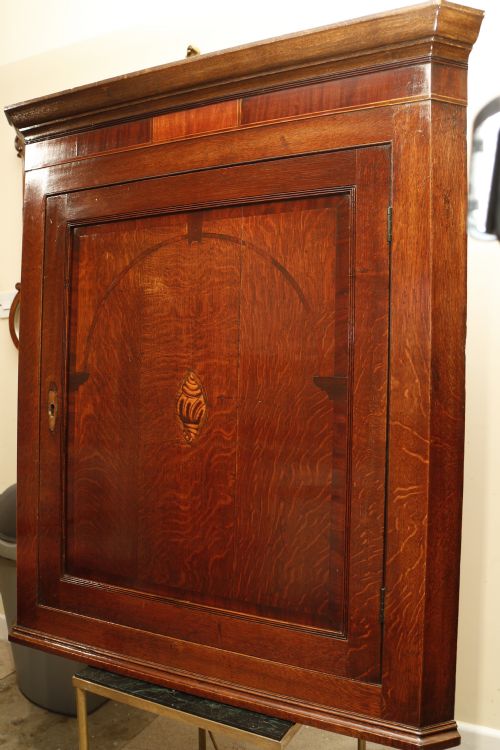


Rustic Oak Corner Cupboard
These rustic oak corner cupboards bring practical period storage to empty walls, offering the honest character of Georgian and eighteenth-century craftsmanship.
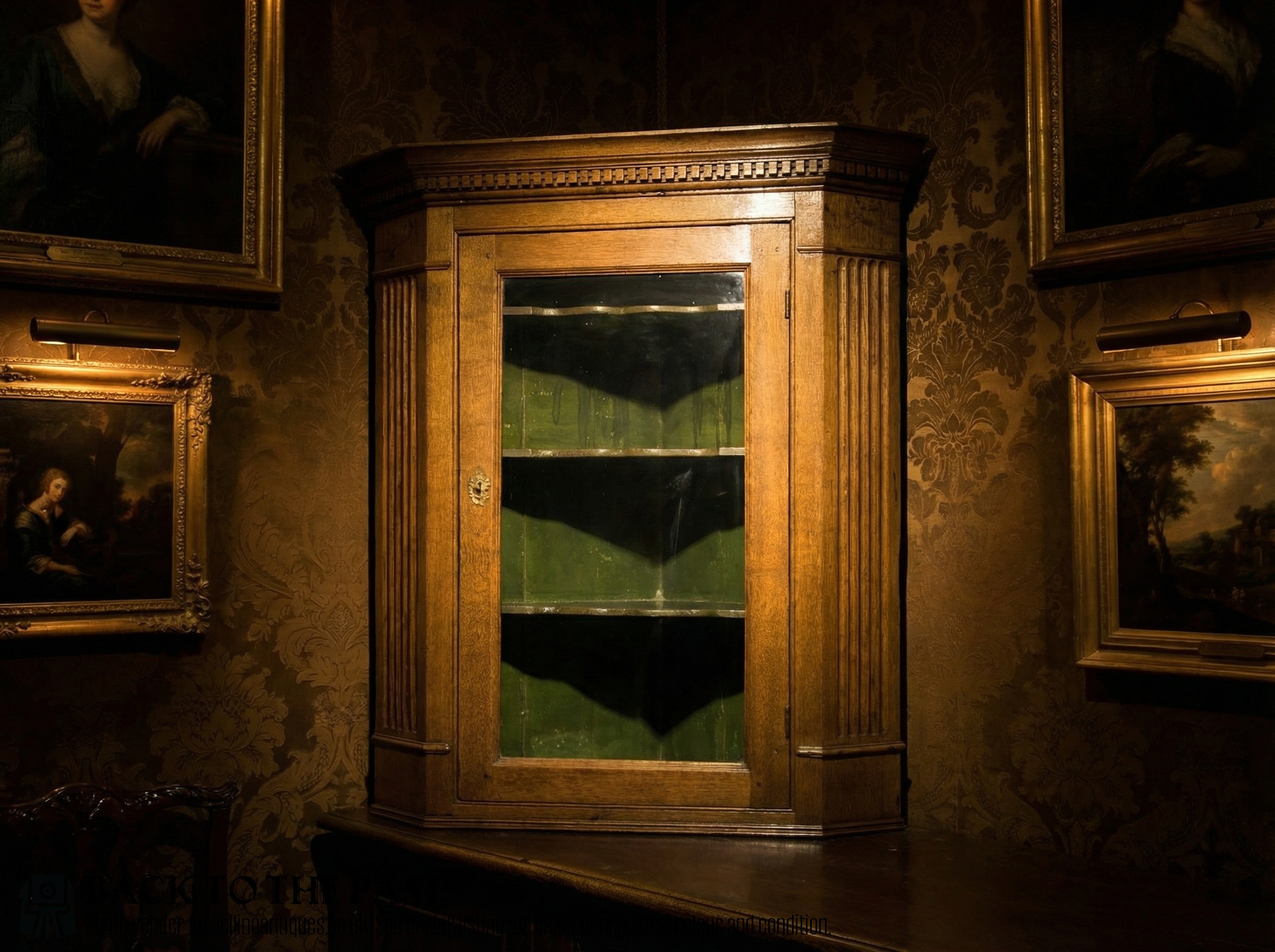
What a rustic oak corner cupboard is
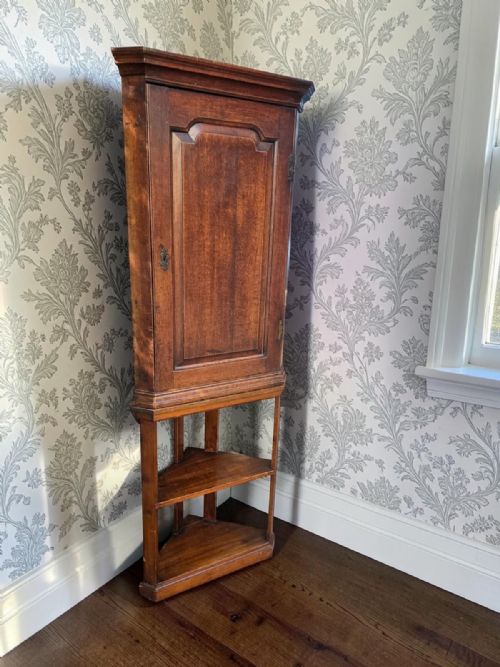
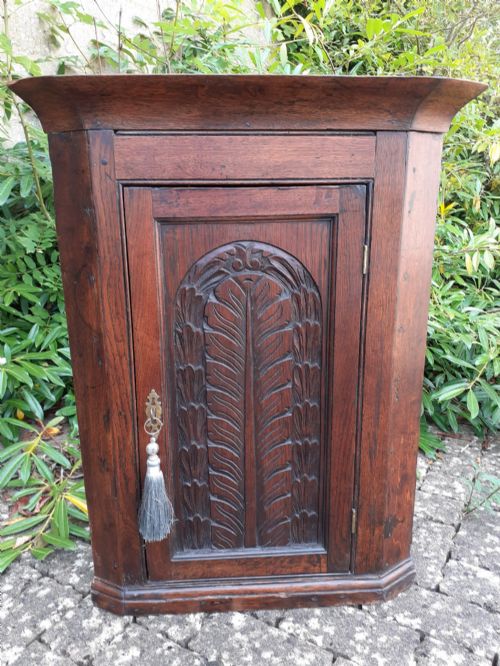
A rustic oak corner cupboard utilises dead space in a room, fitting neatly into room angles while housing household goods on internal shelves. These items emerge primarily from the Georgian period and the eighteenth century, presenting practical storage solutions for period interiors.
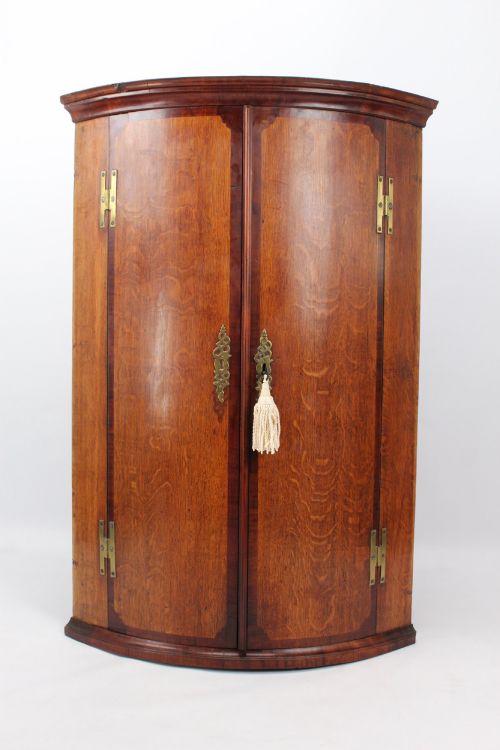
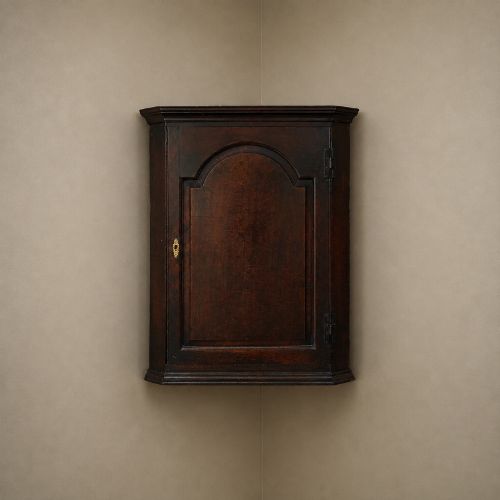
The selection ranges from hanging wall cabinets to taller floor-standing variations, with some examples displaying bowed fronts or glazed doors. Most pieces showcase the warm tones of solid timber built for domestic utility.
How they were made
Cabinet makers constructed these cupboards predominantly from solid oak, sometimes incorporating secondary woods or contrasting details such as mahogany and wood inlay. Timber panels were often raised for decorative depth on door fronts.
Metalwork played a functional and visual role, utilising brass for hinges and key escutcheons. Joinery relied on traditional framing methods suited to solid wood construction during the eighteenth century.
Retail Price Guide 2026
Typical UK retail prices for rustic oak corner cupboard, calculated from the Sellingantiques database of over a million retail prices indexed since 2003. This retail price guide relies exclusively on Sellingantiques data; no external sources or auction records are used, so the figures do not describe the wider market.
Many a dusty eighteenth-century corner cupboard still retains its original iron or brass key, turning with a satisfying heavy click.
What varies in quality
Quality rests in the choice of timber and the sophistication of the construction, distinguishing standard utilitarian storage from pieces with refined bow fronts or inlaid details. The integration of mahogany accents or raised panel doors elevates the visual weight of the piece.
The integrity of the original brass hardware and the crispness of the timber joinery separate standard workshop output from finer Georgian examples. Proportion and scale also dictate the balance of the cabinet within a room.
The Rustic Oak Corner Cupboard Glossary
- Georgian
- The period spanning the reigns of the first four Georges, known for distinct proportions and domestic furniture development. Pieces from this era often feature robust timber construction.
- Bow front
- A convex curved cabinet front that projects outward from the corner. This curved profile requires skilled woodworking techniques.
- Raised panel
- A wooden panel with bevelled edges fitted into a grooved frame. This technique allows the solid wood to expand and contract with humidity changes.
- Escutcheon
- A protective plate surrounding a keyhole, frequently cast in brass on these cupboards. It serves both a decorative and a functional purpose.
Frequently Asked Questions
How do I hang a wall cabinet?
Hanging corner cabinets require secure fixing into solid masonry or substantial wall studs due to the heavy weight of solid oak.
Professional installation ensures the cabinet supports its own weight safely without pulling from the wall.
What is the difference between hanging and floor-standing?
Hanging models mount directly to the wall at eye level or above furniture, freeing up floor space in smaller rooms.
Floor-standing versions rest directly on the ground, offering greater internal storage capacity and a more substantial presence.
How do I date a Georgian piece?
Dating relies on construction methods, timber choice, and hardware styles consistent with eighteenth-century workshop practices.
Hand-cut joints and period brasses provide reliable indicators of age.
Can these fit modern rooms?
Their angled design makes them ideal for utilising unused room corners in contemporary or period settings alike.
They provide compact storage without dominating the floor plan.