






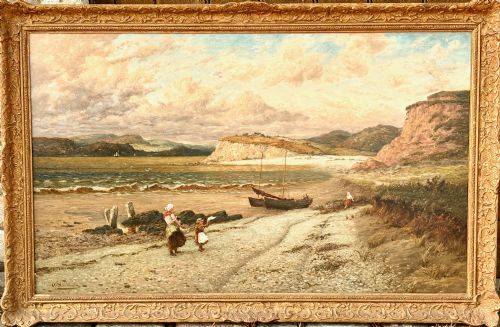
Vintage Marine Landscape
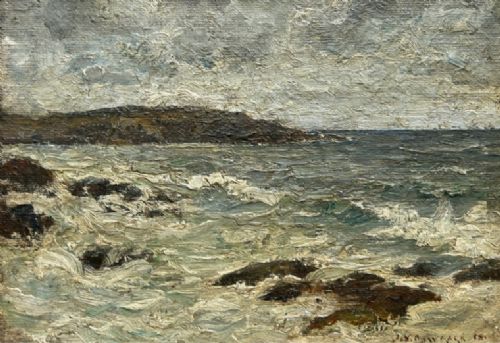
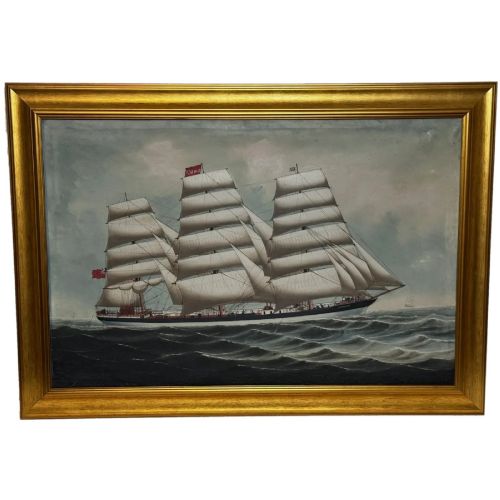
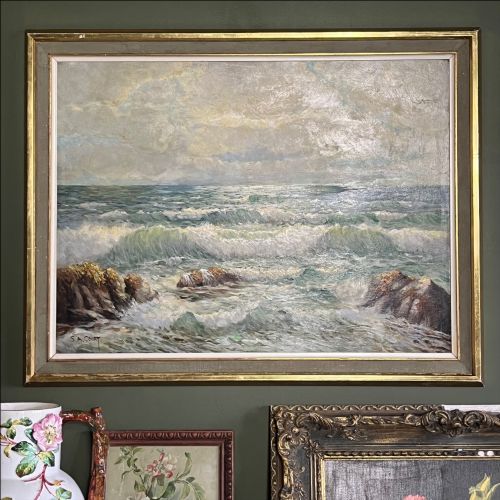
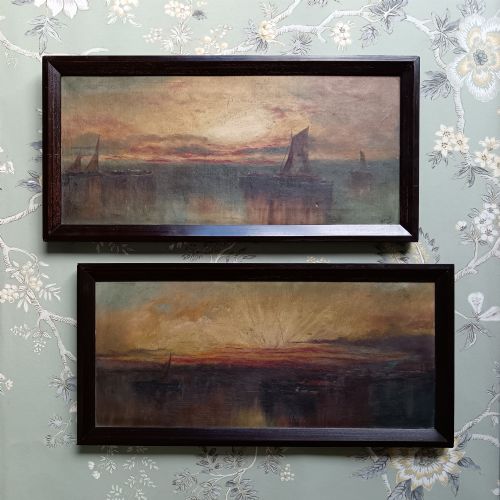
Vintage marine landscape paintings capture the enduring pull of the coast, spanning bustling harbours, quiet estuaries and open seas across the nineteenth and twentieth centuries.
Vintage Marine Landscape
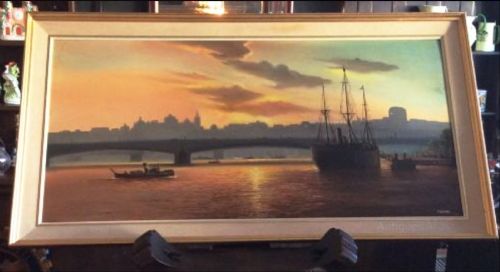
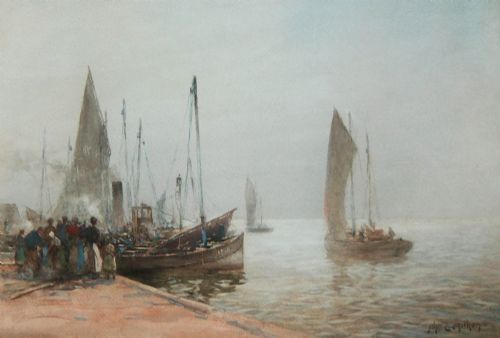
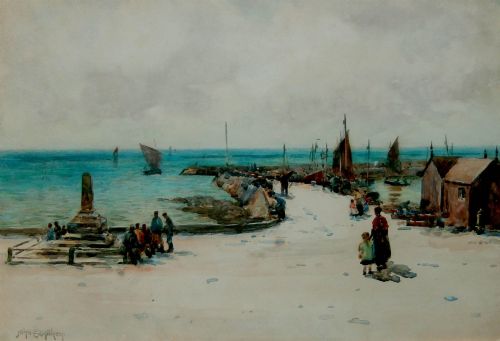
A vintage marine landscape brings together coastal scenery, maritime activity and open water, spanning styles from Victorian realism to mid-century modern interpretations. These works record ports, fishing villages, cliffs and tidal rivers across Britain and continental Europe.
Buyers encounter both oil paintings and watercolours, rendered on canvas, board or paper. Many pieces retain their original gilt wood frames, preserving the historical context of the artwork.
The selection ranges from detailed nineteenth-century maritime watercolours to energetic mid-century British and French coastal oil paintings. These pieces reflect specific regional harbours, from Cornwall and Yorkshire to the Mediterranean and the North Sea.
Materials and technique
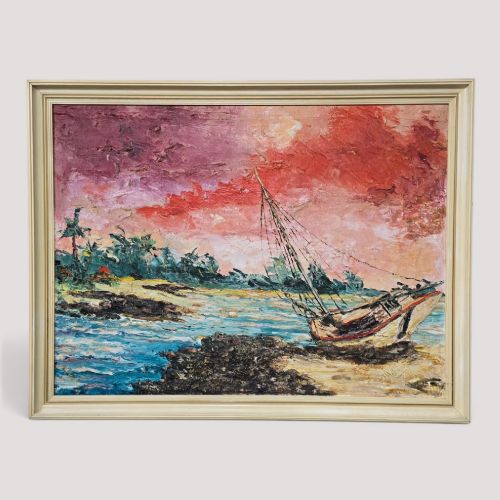
Artists working on vintage marine landscapes utilised oil paint and watercolour as primary mediums. Oil paint was applied to canvas, wood panels or board, often allowing for thick impasto strokes or smooth, luminous finishes suited to shifting coastal light.
Watercolour paintings on paper captured the translucent qualities of sea and sky, executed either in the studio or en plein air directly along the shoreline. Finished watercolours and canvases were commonly housed behind glass or within decorative gilt wood frames.
Materials documented in current works include oil paint, watercolour, canvas, wood, paper and gilt wood.
Distinguishing quality in coastal art
The strength of a vintage marine landscape relies on the artist's command of light, atmosphere and maritime structure. Superior examples demonstrate confident brushwork and a convincing depiction of water, wind and weather rather than rigid adherence to topography.
Provenance and documentation elevate certain pieces, particularly when a work bears a clear signature, a known exhibition history or a connection to recognised regional schools of painting. The integrity of the original support, surface condition and framing also contribute to the standing of an individual work.
Clifford Hanney·Reginald Arthur Borstel·Sidney A Court·B Nash·Edward Mills·James E Aitken·John E Aitken·William Banks Fortescue·Clive Browne·Peter Brannan·Paul Bret·Bernard Benedict Hemy·Willem Bos·William Henry Williamson·Robert Leslie Howey·John Holland·George Stanfield Walters·Frank Kelsey·Goodin·F A Roylance·William Frederick Settle·Alfred George Morgan·Lionel Horsnell·John Bedloe Goddard·William Edward Webb
The Vintage Marine Landscape Glossary
- En plein air
- Painting outdoors in the open air to capture natural light and atmospheric conditions directly. This method was widely practiced by coastal artists seeking immediate visual truth.
- Impasto
- Paint applied thickly to a canvas or board, leaving prominent brush or knife marks. This technique adds literal texture and depth to representations of crashing waves and rugged cliffs.
- Maritime
- Pertaining to the sea, ships and navigation, often featuring prominently in coastal artworks. It encompasses harbour scenes, docks, shipping lanes and open sea views.
- Watercolour
- A painting method in which pigment is suspended in a water-based solution on paper. It relies on the white of the paper to provide luminosity and light.
- Gilt wood
- Wood carved and coated with gold leaf or metallic gilt paint to form a decorative frame. These frames frequently accompany nineteenth and early twentieth-century paintings.
Vintage Marine Landscape: Frequently Asked Questions
What subjects appear in these paintings?
The works depict busy fishing ports, tidal rivers, sandy bays and open ocean views. Artists recorded specific harbours across Britain, France and the Mediterranean.
Scenes frequently capture working vessels, sailing ships, coastal cliffs and local townscapes under varied weather conditions.
How do I care for an antique painting?
Keep paintings away from direct sunlight and sources of extreme heat or humidity to protect the canvas and paper. Consistent indoor climates prevent warping of wooden boards and degradation of pigments.
Display oil paintings and watercolours on stable walls using appropriate fixings, ensuring glass-fronted pieces remain secure.
Are these works signed by the artist?
Many pieces carry original signatures, monograms or inscriptions detailing the location and date of creation. Some works bear contemporary labels or gallery stamps on the reverse.
Unsigned or indistinctly signed pieces still appear, attributed on stylistic grounds or through historical records.
What is the difference between oil and watercolour?
Oil paintings utilise pigments bound in drying oils applied to canvas or board, offering a rich, buildable surface. Watercolours use water-soluble mediums on paper, resulting in lighter, translucent compositions.
Oils are typically framed without glass, whereas watercolours require glass protection against moisture and dust.