
Vintage Mahogany Server Cabinet
A vintage mahogany server cabinet brings solid timber and traditional proportions into a modern dining room.
Vintage Mahogany Server Cabinet
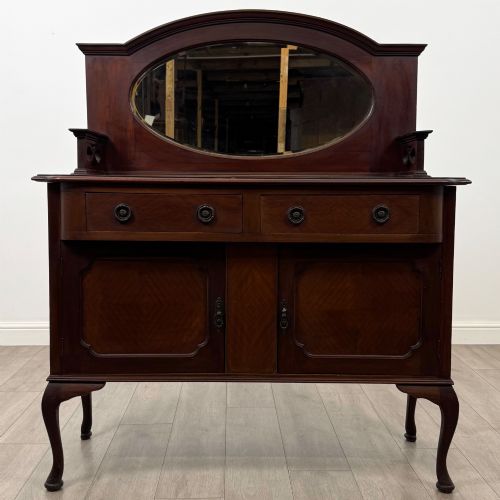
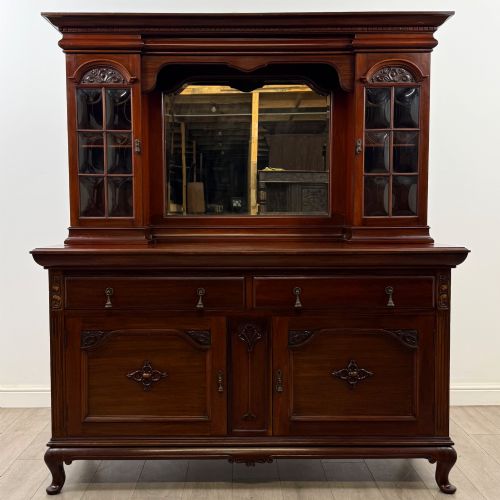
A vintage mahogany server cabinet is typically encountered as a sideboard, buffet, or chiffonier spanning the Victorian, Edwardian, and Georgian periods, along with later revival styles. These pieces serve primarily for dining room storage, offering cupboards, drawers, and sometimes display space behind glass doors.
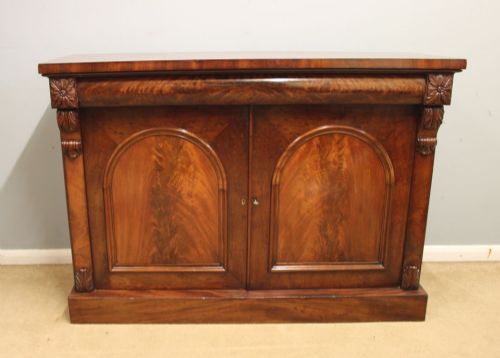
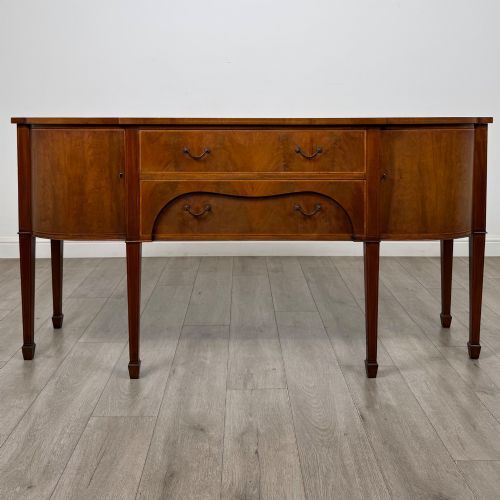
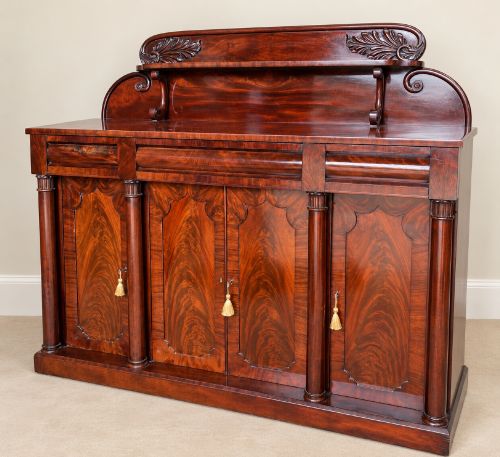
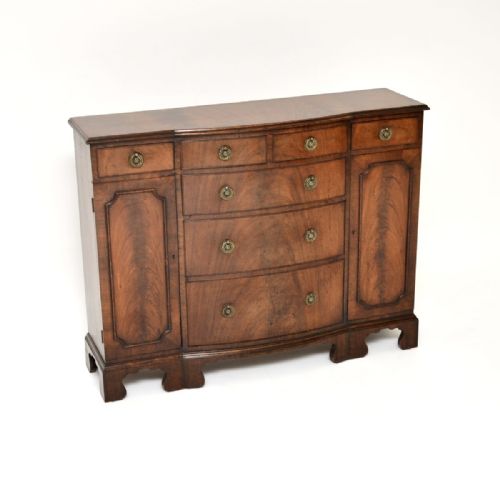
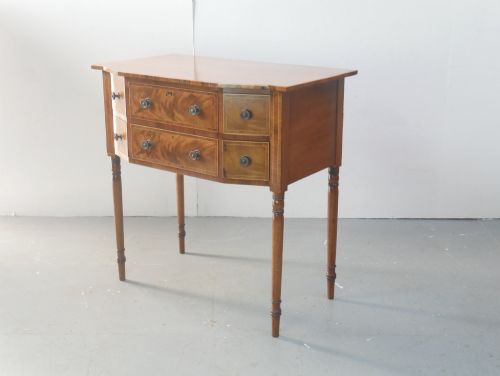
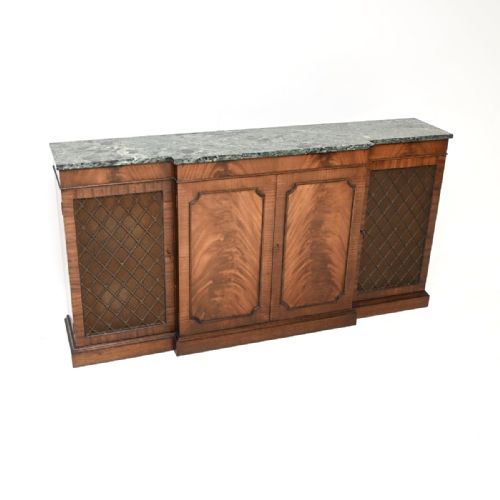
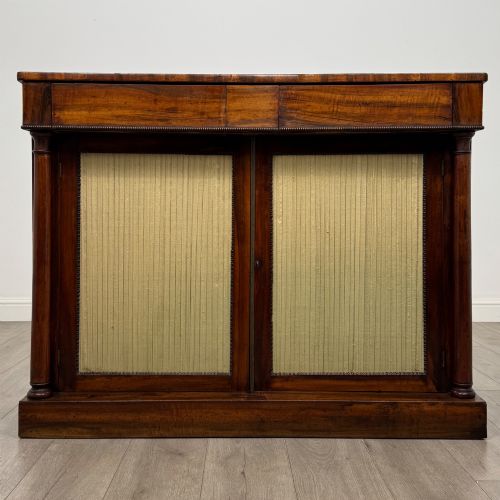
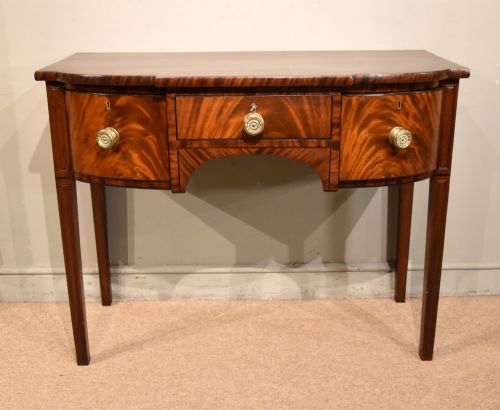
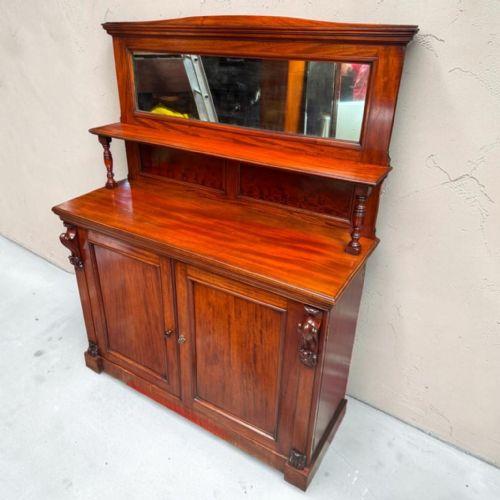
The items seen on this page range from compact bow-front cupboards to large breakfront sideboards and mirror-back chiffoniers. Most examples date from the nineteenth and early twentieth centuries, reflecting both original period construction and later revivals of Georgian and Regency designs.
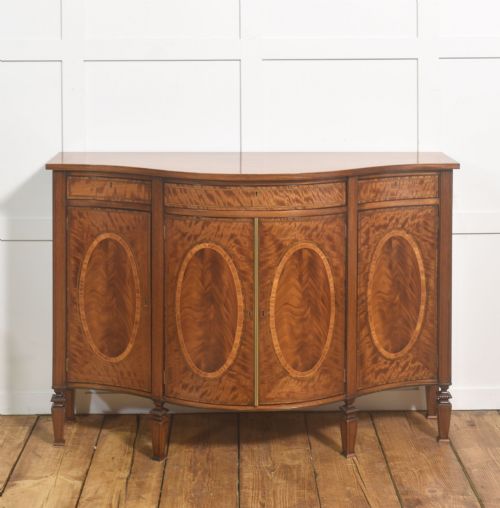
Buyers seeking a vintage mahogany server cabinet will find forms equipped with brass hardware, satinwood inlay, and occasionally marble tops or grille fronts. These variations stem from the stylistic preferences of makers working across different decades.
How they were made
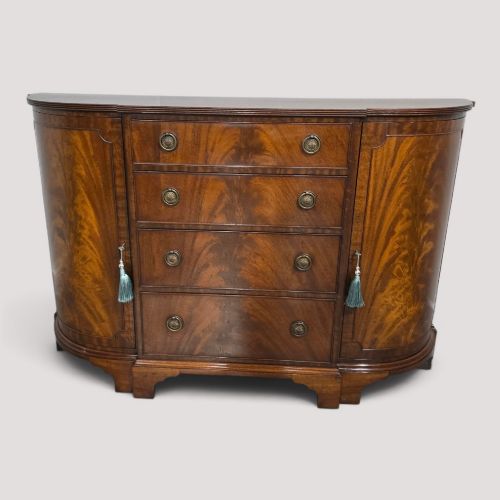
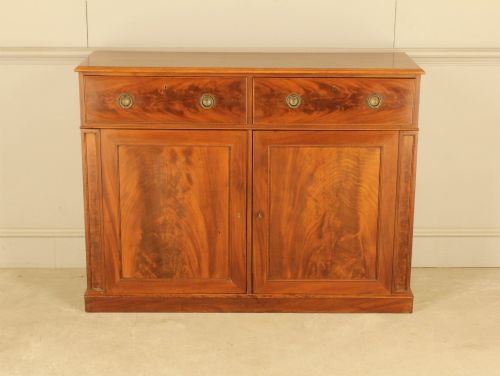
Cabinet makers utilised solid mahogany and flame mahogany veneer applied to structural carcases, often incorporating satinwood for contrasting stringing and inlay work. Timber selection dictated the visual depth of the grain, particularly on curved bow-front doors and top surfaces.
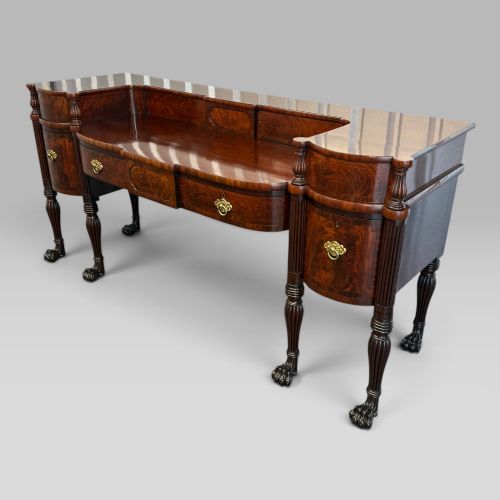
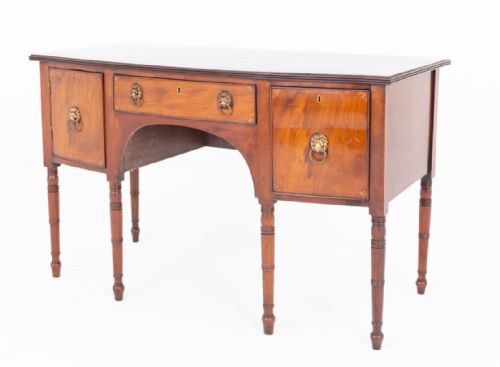
Secondary materials such as brass provide structural and decorative mounts, including lion paw feet and drawer pulls, while marble and glass appear on specific buffet and cabinet variants. Construction relies on traditional joinery techniques suited to heavy hardwood furniture.
Some nineteenth-century sideboards stand proudly on carved brass lion paw feet, ready to pounce on the dining room carpet.
What varies in quality
The distinction between ordinary and superior pieces rests on the choice of timber and the precision of the cabinet work. Finely figured flame mahogany veneer and intricate satinwood inlay separate exceptional items from plain, utilitarian alternatives.
Proportion and decorative detail also dictate standing. Pieces featuring carved elements, original brass hardware, and balanced bow-front or breakfront configurations display a higher level of craftsmanship than simpler, unadorned storage cupboards.
M. D. Miller & Sons
The Vintage Mahogany Server Cabinet Glossary
- Bow-front
- A cabinet front that curves outward in a convex shape. This configuration appears frequently on Edwardian and nineteenth-century sideboards to soften the room's geometry.
- Chiffonier
- A low cupboard or sideboard, often featuring a shelf or mirror back. Victorian examples frequently combine storage drawers with enclosed lower compartments.
- Breakfront
- A large cabinet design where the central section projects forward from the flanking sides. This layout creates depth and visual hierarchy on formal dining room pieces.
- Flame mahogany veneer
- A thin slice of timber cut from the fork of the tree where branches meet the trunk, revealing a distinctive swirling pattern. It decorates the primary surfaces of better-quality server cabinets.
- Satinwood inlay
- Contrasting pale wood inserted into the mahogany surface in geometric or floral patterns. It serves as a key decorative indicator of Sheraton Revival and Edwardian pieces.
Vintage Mahogany Server Cabinet: Frequently Asked Questions
What is a vintage mahogany server cabinet used for?
These cabinets function primarily as dining room storage for tableware, linen, and serving dishes. The top surface provides a convenient station for food and drink during meals.
Beyond the dining room, many owners place them in hallways or living spaces to store books and household items while displaying decorative objects on top.
How do I identify the period of my cabinet?
Dating relies on examining the timber, hardware, and stylistic details such as inlay patterns and leg shapes. Georgian and Regency pieces show classical restraint, whereas Edwardian items often feature delicate satinwood stringing and Sheraton Revival motifs.
Secondary wood types inside drawers and the method of drawer construction also provide clues to the approximate decade of manufacture.
Are these cabinets made of solid mahogany?
Most examples combine solid mahogany frames with figured mahogany veneers applied to larger flat surfaces like drawer fronts and cabinet doors. This technique allowed cabinet makers to display striking grain patterns without risking the warping associated with large solid boards.
Secondary timbers such as pine or oak frequently appear inside carcases and drawer linings.
How do I care for a mahogany cabinet?
Maintenance involves dusting with a soft cloth and occasionally applying a traditional beeswax to nourish the timber. Avoid placing the piece in direct sunlight or near heat sources to prevent the wood from drying out.
Limiting exposure to extreme humidity fluctuations protects both the solid timber structure and the delicate interior veneers.