


Vintage Khorjin Face
These vintage khorjin face pieces are authentic tribal textile fragments and bag faces woven by nomadic groups in Persia, prized for their rich colour and heritage.
Vintage Khorjin Face
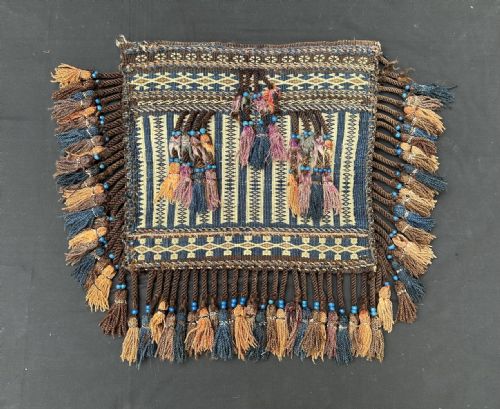
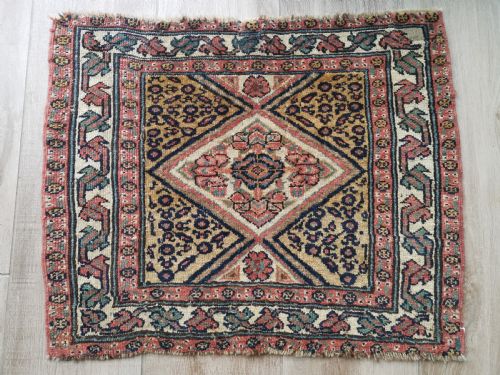
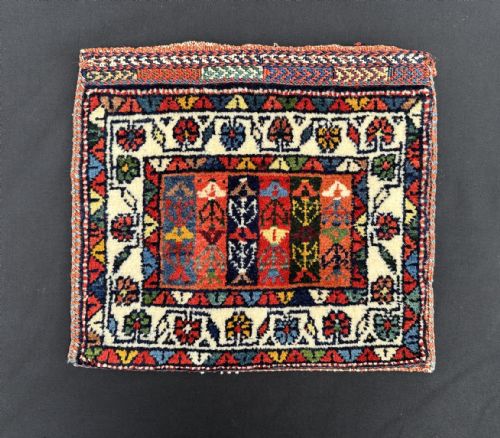
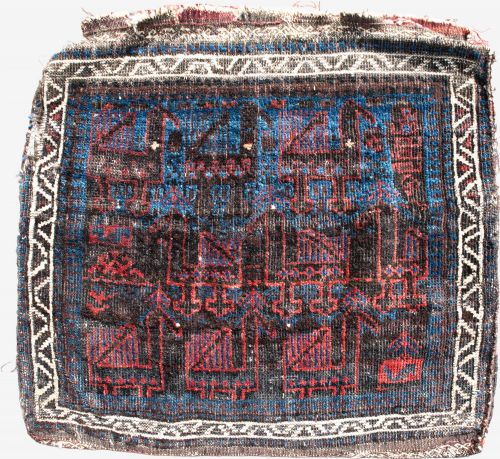
A vintage khorjin face represents the front panel of a traditional saddlebag created by nomadic and tribal groups across Persia. When you search for this phrase, you encounter authentic fragments and complete bag faces originating from communities such as the Afshar, Baluch, Kurdish, Qashqa'i, and Shahsavan tribes. These items date from the mid-nineteenth century through to the early twentieth century, reflecting the utilitarian craft of pastoral societies.
The objects on this page appear in various forms, including preserved bag faces, half saddle-bags, storage bags, and textiles adapted into cushions or mounted as textile art. Many examples retain their original wool backs, while others function as decorative cushions or wall pieces. Each item carries the distinct geometric or pictorial iconography of its maker, serving as a direct link to nineteenth-century tribal weaving traditions in regions such as Luristan, Fars, and Kerman.
Materials and construction
The construction relies fundamentally on hand-spun wool for both the pile and the foundation, often combined with cotton for structural support in specific regional weaves. Artisans utilised natural dyes to achieve a deep palette, complemented on occasion by decorative glass beads woven into the textile. The spinning and dyeing processes were carried out entirely by hand within nomadic encampments and villages.
Weaving techniques vary according to tribal origin, encompassing standard pile knots alongside flatweave structures such as Sumac work. The structural integrity depends on the tightness of the weave and the quality of the hand-spun wool, which frequently displays a lustrous, luminous finish. Edges and backs often incorporate banded weft work or plain weave structures to withstand practical daily use on pack animals.
The listings span the nineteenth and early twentieth centuries, featuring wool, cotton, natural dyes, and glass beads across multiple tribal traditions.
Markers of distinction
Quality in these textiles rests upon the handling of the wool and the depth of the natural dyes. Superior examples exhibit lustrous, luminous hand-spun wool that retains its vitality and softness over generations. The clarity and precision of the tribal motifs, such as large boteh designs or specific bird bag patterns, distinguish finer tribal weaving from standard utilitarian work.
Preservation and structural completeness also define the upper tier of the range. Pieces retaining original backs, intact borders, and minimal restoration command attention, whereas fragments or heavily worn cushions occupy a different category. The finesse of the knotting and the complexity of the flatweave or sumac work further separate everyday nomadic output from exceptional masterworks.
Afshar Tribes·Baluch Tribes·Qashqa'i Nomads·Shahsavan·Luri Tribes
The Vintage Khorjin Face Glossary
- Khorjin
- A traditional Persian double saddlebag used by nomadic tribes for transport and storage. The face of this bag is the decorated panel typically preserved today.
- Boteh
- A traditional teardrop or almond-shaped motif with a curved upper end, frequently seen in Persian tribal weaving. This pattern holds deep symbolic roots in textile design.
- Sumac
- A flatweave technique where supplementary weft threads wrap around the warp threads to create a durable, textured surface. It provides distinct structural definition without a cut pile.
- Chanteh
- A small personal bag or vanity bag woven by tribal makers for individual use. These smaller items often feature intricate geometric patterns and fine knotting.
- Pile
- The upright yarn loops forming the fuzzy surface of a woven textile. In these pieces, hand-spun wool creates a tactile and durable decorative layer.
Vintage Khorjin Face: Frequently Asked Questions
What is a khorjin face?
A khorjin face is the decorative front panel of a traditional Persian nomadic saddlebag. These panels were cut from the original double bags when the utility of the piece ended.
Today, collectors frame them as textile art or repurpose them into cushions. They preserve the distinct geometric designs of the weavers who made them.
How do I identify tribal origins?
Tribal origins reveal themselves through specific colour palettes, wool qualities, and structural motifs. For instance, Afshar pieces often feature boteh designs, while Baluch works display distinct dark tones and banded weft work.
Examining the weave structure and knotting style provides further clues to the specific region and nomadic group.
Were these bags used daily?
Yes, these items served as practical storage and transport gear on pack animals during tribal migrations. They held personal belongings, household goods, and provisions.
Their sturdy construction using hand-spun wool and durable flatweave ensured they could withstand harsh nomadic conditions.
How should I care for a textile?
Keep these textiles out of direct sunlight to protect the natural dyes from fading over time. Gentle vacuuming with a low suction attachment helps remove dust without damaging the wool.
Professional textile conservators should handle any significant cleaning or restoration work.