




Persian Tribal Khorjin
These pieces of persian tribal khorjin are woven saddle bags and functional containers made by nomadic groups, prized for their geometry and dye work.
Persian Tribal Khorjin
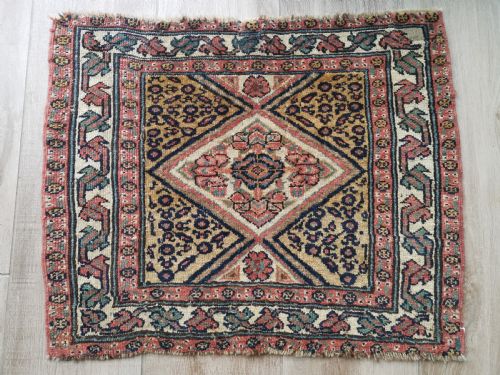
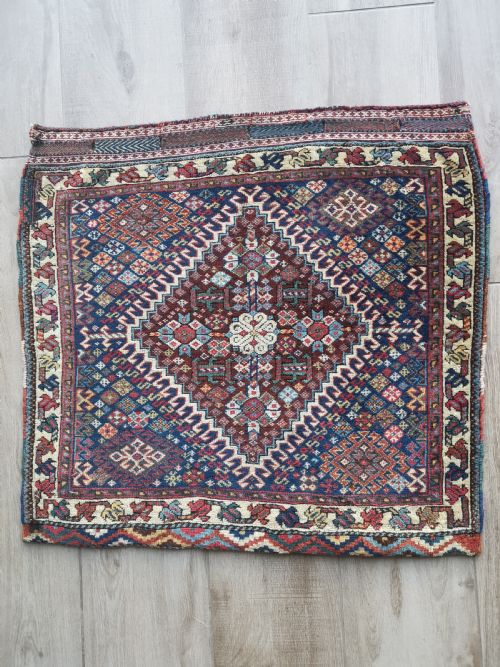
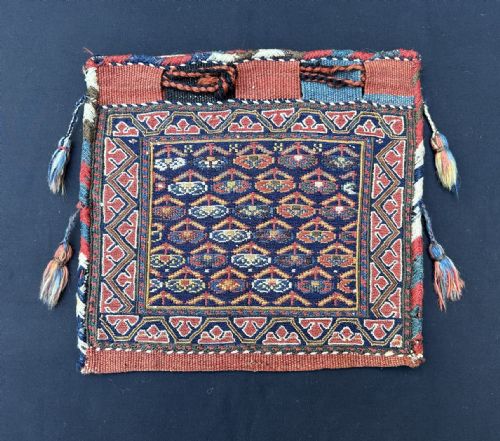
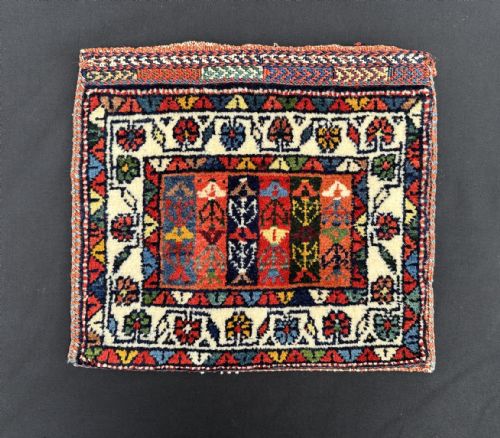
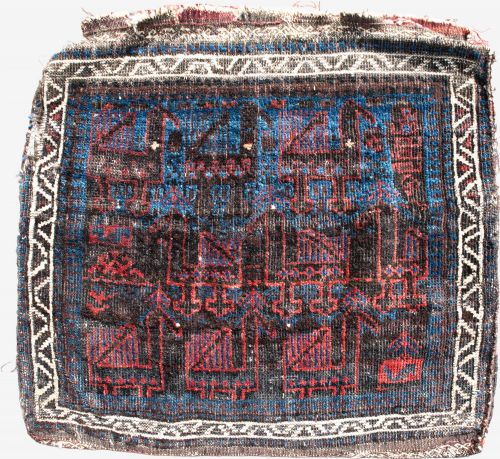
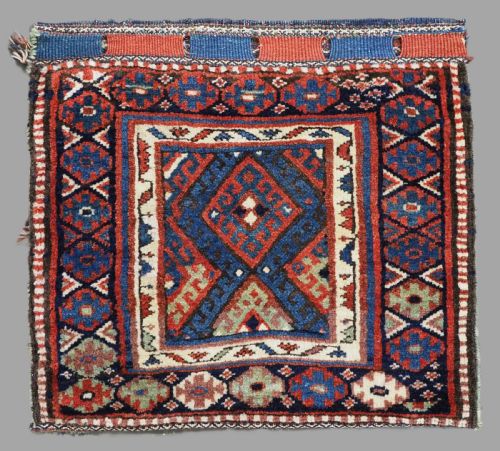
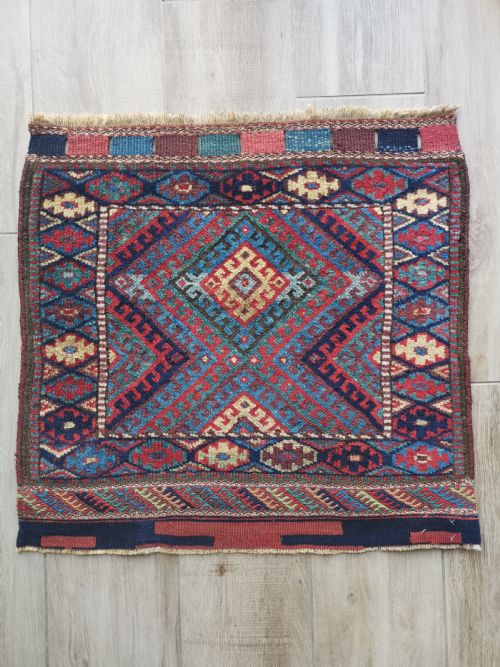
A persian tribal khorjin is a traditional double-sided saddle bag utilised by nomadic and village weavers across Persia for transport and storage. When searching this phrase, you encounter complete saddle bags, half-bags, and surviving bag faces that have been separated from their original backs.
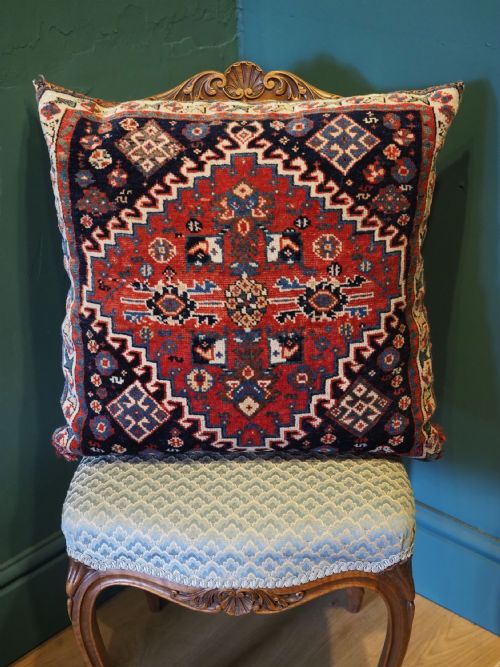
The examples available range from pieces woven by the Qashqai and Afshar to work by Shahsavan, Baluch, and Jaf Kurd tribes. These items frequently manifest as square bag faces or cushion conversions that preserve the original tribal iconography.
Materials and Construction
These textiles rely on hand-spun wool for the pile and foundation, often combined with cotton warps and sturdy goat hair reinforcements along the edges and backs for durability during travel. Natural dyes provide the palette, yielding deep indigos, madder reds, and earthy yellows that soften gracefully over decades of exposure.
Weaving techniques vary by tribal group, encompassing precise symmetrical knotting for pile surfaces alongside flat-woven sumac and plain weave structures on backs and sides. Cowrie shells and leather additions occasionally appear on smaller personal vanity bags and storage pouches.
The listings span the nineteenth and early twentieth centuries, featuring wool, cotton, and natural dye constructions from regions including Fars and Kerman.
Assessing Quality and Execution
Quality rests in the precision of the knotting density and the crispness of the geometric or pictorial drawing. Superior pieces display saturated, varied natural dye lots and intricate tribal motifs such as boteh, medallions, or bird designs executed with sharp clarity.
The survival of original flat-weave backs, complete closure systems, and structural integrity elevate an example. Finer wool preparation and tighter structural packing distinguish master tribal weaving from standard utilitarian output.
The Persian Tribal Khorjin Glossary
- Khorjin
- A traditional Persian double saddle bag used by nomads to transport belongings on animals. These textiles feature two compartments connected by a central web.
- Bagface
- The decorative pile-woven front of a khorjin that remains visible when the bag is packed and folded. Many surviving examples are mounted or used as small mats and cushions.
- Sumac
- A warp-wrapping flat-weave technique that produces a durable, textured surface without a cut pile. This method frequently appears on Shahsavan storage pieces.
- Chanteh
- A small personal vanity bag or container woven by tribal groups for carrying small possessions. These items often showcase high knot density and refined mini-designs.
- Boteh
- A stylised almond or pear-shaped motif representing a floral shoot or cypress tree. It is a recurring element across Afshar and tribal Persian weaving.
Persian Tribal Khorjin: Frequently Asked Questions
What is a khorjin used for?
Nomadic groups utilised these double-sided bags slung over pack animals to carry household goods, grain, and personal belongings during seasonal migrations.
Today, collectors preserve complete bags or display individual bag faces as wall hangings and small decorative floor rugs.
How do I identify different tribal styles?
Tribal attribution relies on specific colour palettes, wool qualities, and structural motifs unique to each confederation.
Afshar pieces often show boteh designs and deep blues, while Shahsavan work frequently employs crisp sumac weave and geometric lattice patterns.
Are these pieces made with natural dyes?
The pieces from the nineteenth and early twentieth centuries utilise organic dyes derived from plants, roots, and insects.
These natural colours interact with hand-spun wool to create subtle tone variations known as abrash across the field.
How should I care for a tribal bag face?
Gentle surface vacuuming without a beater bar removes dust and keeps the wool pile clean.
Professional textile conservation and specialist rug cleaning are recommended for deeper maintenance to protect natural fibres.