




Oriental Wool Bag Face
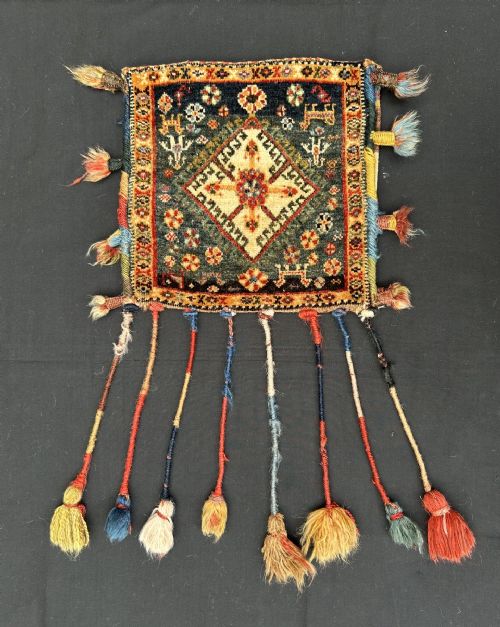
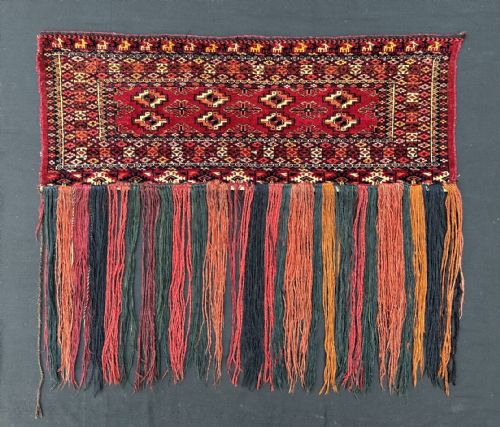
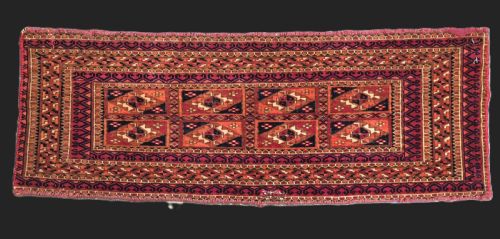
An oriental wool bag face represents the front panel of a nomadic storage sack or saddlebag, woven by tribal groups for practical domestic use.
Oriental Wool Bag Face
An oriental wool bag face is the surviving front panel of a larger tribal utility sack, such as a torba, chuval, or khorjin, which was originally used by nomadic peoples for household storage or transport on animals. These pieces originate predominantly from nineteenth-century Turkmen, Persian, and Kurdish tribal groups operating across Central Asia and the Middle East.
Buyers searching for an oriental wool bag face encounter fragments detached from their original utility contexts, often preserved precisely because the pile-woven face endured long after the plain-weave backs and sides deteriorated. The selection includes complete bag faces with original hanging loops or back panels intact, alongside pieces later adapted into cushions.
The designs derive from specific tribal traditions, displaying repeating guls, medallion layouts, or field patterns that identify the weaving group, such as Tekke, Yomut, Ersari, Qashqai, or Baluch. These textiles served both functional storage needs within the yurt or tent and functioned as statements of tribal identity and social standing.
How they were made
Weavers constructed these pieces using hand-spun wool for the foundation and pile, frequently incorporating cotton for whites or structural contrast and occasional highlights of silk. Natural dyes, including vegetable sources, produced the characteristic deep reds, indigos, ivory grounds, and secondary brown or yellow tones.
The execution relies on asymmetric or symmetric knotting on wool warp and weft threads, paired with flat-woven plain-weave backs or soumak techniques on related saddlebag sections. Edge finishes often include braided selvedges, supplementary weft-float work, or surviving pile loops designed for suspension poles.
Common structural forms on this page include torba faces, chuval fronts, and saddlebag fragments from regions such as Khorassan, Fars, and Turkmenistan.
What varies in quality
Quality rests upon the fineness of the knot count and the precision of the drawing, where denser pile execution yields crisper geometric definition within guls and borders. Superior examples maintain structural integrity with minimal restoration, retaining their original proportions and secure foundation warps.
Colour saturation and the depth achieved through natural or vegetable dye usage separate standard production from exceptional pieces, as variations in mordant and dye bath create shifting abrasach across the field. The handling of secondary design elements, such as minor borders, turreted guls, and elem panels, indicates the weaver's deliberate control over the spatial composition.
The Oriental Wool Bag Face Glossary
- Torba
- A small Turkmen storage bag used inside the tent for holding personal items or utensils. These wall-hanging sacks typically feature horizontal rows of guls.
- Chuval
- A large tent storage bag utilised for bedding and bulky possessions by nomadic tribes. They display primary medallion motifs known as guls across the face.
- Gul
- A primary medallion or repeating octagonal design motif used in Turkmen and Central Asian tribal weaving. Each pattern identifies the specific tribe or clan that produced the textile.
- Sumac
- A flat-weave technique where coloured weft threads wrap around warp threads in a continuous wrapping motion. This method creates a durable, structurally distinct surface texture.
- Khorjin
- A traditional double-sided saddlebag designed for transport on pack animals. The central connecting web often degraded over time, leaving separate bag faces.
Oriental Wool Bag Face: Frequently Asked Questions
What is an oriental wool bag face?
An oriental wool bag face is the decorative pile-woven front panel salvaged from a nomadic storage sack or saddlebag. These textiles were produced by tribal weavers for domestic storage and transport.
Over time, the plain-weave backs wore away or were cut off, leaving the dense front panels intact as decorative wall hangings or collectors' items.
How were these bags originally used?
Nomadic groups utilised these bags inside tents and yurts to store clothing, bedding, and smaller household possessions. Larger versions hung against tent walls or rode across the backs of camels and horses.
They formed an essential part of a family's moveable property and marriage dowries, combining practical utility with traditional tribal motifs.
How do I care for a textile bag face?
Keep these wool textiles out of direct sunlight to prevent natural dye fading and fibre degradation. Vacuum gently with low suction through a mesh screen if dusting is necessary.
Mount them securely along the top edge if hanging on a wall to distribute the weight evenly across the foundation warp threads.
How can I tell different tribal designs apart?
Tribal attribution relies on specific structural guls, colour palettes, and border configurations unique to groups like the Tekke, Yomut, or Qashqai. Turkmen pieces frequently employ repeating octagonal guls on red grounds, while Persian tribal weavings utilise asymmetric medallions and boteh motifs.
Examining the knot type, selvedge finish, and wool quality helps confirm the regional origin.