

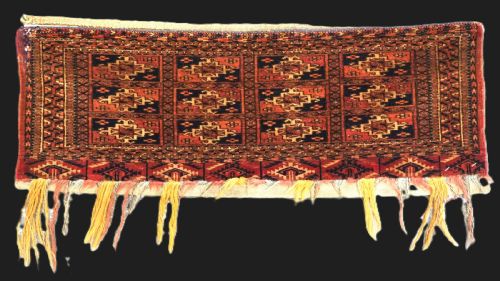


Tribal Rug Cushion Cover
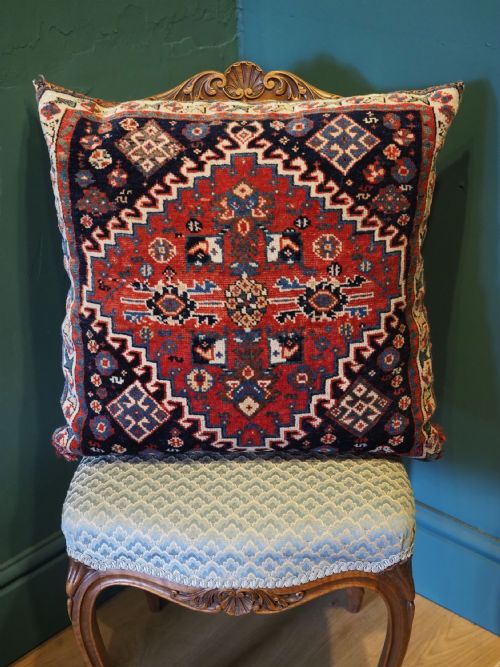
These tribal rug cushion cover examples bring nineteenth-century nomadic textiles into modern seating through repurposed saddlebags, grain sacks and bag faces.
Tribal Rug Cushion Cover
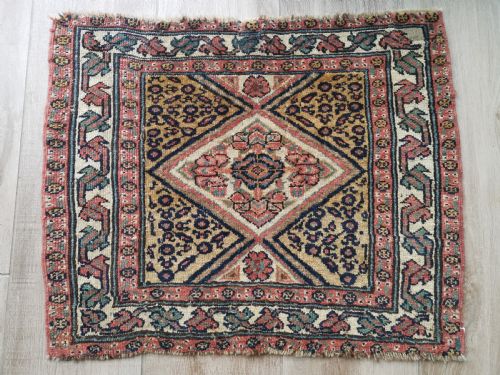
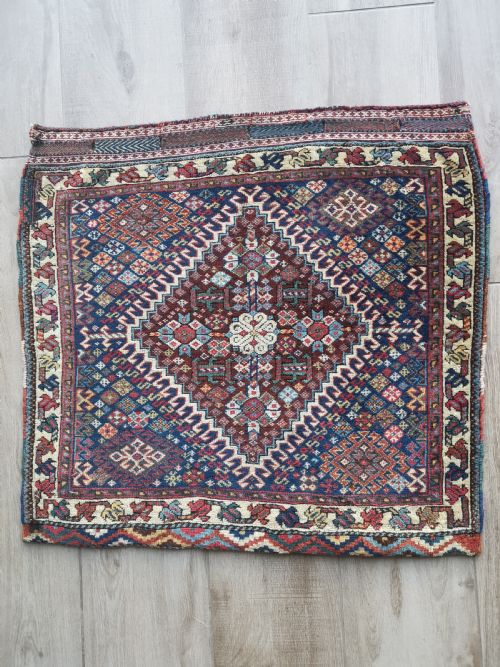
A tribal rug cushion cover repurposes authentic nomadic and village weaving fragments, predominantly nineteenth-century and early twentieth-century saddlebag faces, torbas, chuvals and kilims from Persia, Anatolia and Central Asia. These functional containers, originally used for nomadic storage and transport, are converted into decorative cushions by adding sturdy backs and enclosures.
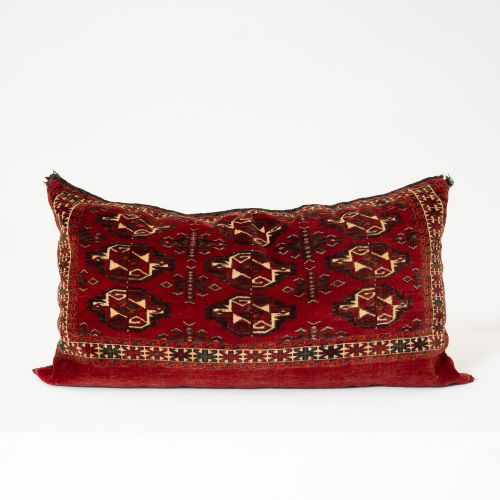
The most common formats on this page derive from Persian Qashqai, Baluch and Shahsevan tribes, alongside Turkmen tribal groups including Tekke, Yomut and Ersari weavers. Buyers encounter square and rectangular formats that preserve the original geometric medallions, boteh motifs and banded flatweave designs of the parent textiles.
Materials and construction
Makers utilised hand-spun wool and occasionally goat hair for the pile and foundation structures, ensuring durability through dense knotting and flatweave techniques. Natural dyes and vegetable colourants derived from local plants and minerals provide the deep reds, indigos and earthy tones that define these historical surfaces.
Nomadic weavers constructed these utility items on portable horizontal looms using pile knotting or soumac and kilim flatweave methods. Surviving fragments retain the structural integrity of utilitarian objects designed to withstand heavy daily use across harsh terrain.
Listings span production periods from the early nineteenth century through to the 1920s, constructed entirely from hand-spun wool, cotton and natural dyes.
Factors determining quality
Quality rests upon the fineness of the weave, the clarity and complexity of the tribal design, and the stability of the foundation. Pieces originating from specific regional confederations often display superior knot density and more intricate guls or medallion layouts.
Preservation of the original textile face dictates desirability, where minimal restoration and well-maintained natural dyes command greater interest. The character of the wool, from hand-spun irregularities to rich vegetable colour variation, separates standard utility bags from exceptional tribal art fragments.
The Tribal Rug Cushion Cover Glossary
- Bagface
- The decorative front panel of a nomadic storage bag, which is frequently salvaged to create decorative cushion covers after the utilitarian rear structure wears away.
- Chuval
- A large Turkmen tent storage bag used for bedding and household possessions, possessing a distinctive rectangular format adorned with tribal guls.
- Torba
- A smaller Turkmen storage bag traditionally hung inside a nomad tent for smaller personal items and utensils.
- Gul
- A primary octagonal or repeating medallion motif used by Turkmen and other tribal weavers to identify specific clans and lineages.
- Soumac
- A wrapping technique of flatweaving that produces a sturdy structure with raised pattern details resembling embroidery on the reverse.
- Boteh
- An ancient Persian pear-shaped motif representing a sprouting seed or sacred flame, frequently repeated across tribal fields.
Tribal Rug Cushion Cover: Frequently Asked Questions
What is a tribal rug cushion cover?
A tribal rug cushion cover is a decorative home accessory created by mounting an authentic antique nomadic weaving, such as a nineteenth-century saddlebag face or tent bag, onto a supportive fabric backing.
These pieces transform utilitarian tribal textiles into usable soft furnishings while preserving historic geometric designs and natural dyed wool.
How do I care for antique wool cushions?
Protect antique wool textiles by avoiding direct sunlight, which can fade natural vegetable dyes over extended periods. Regular gentle vacuuming with a low suction setting across a mesh screen helps remove dust without disturbing the historic fibres.
How can I tell different tribal designs apart?
Tribal designs vary by region, with Turkmen groups displaying repeating octagonal guls, while Persian Qashqai and Baluch weavers typically utilise stepped medallions, animal figures and boteh motifs. Colour palettes also offer clues, as specific tribes relied on distinct local plant and mineral dye baths.