




Handwoven Wool Saddlebag
A handwoven wool saddlebag is a tribal textile woven for utility and ornament, bringing rich nomadic colour and texture into a modern home.
Handwoven Wool Saddlebag
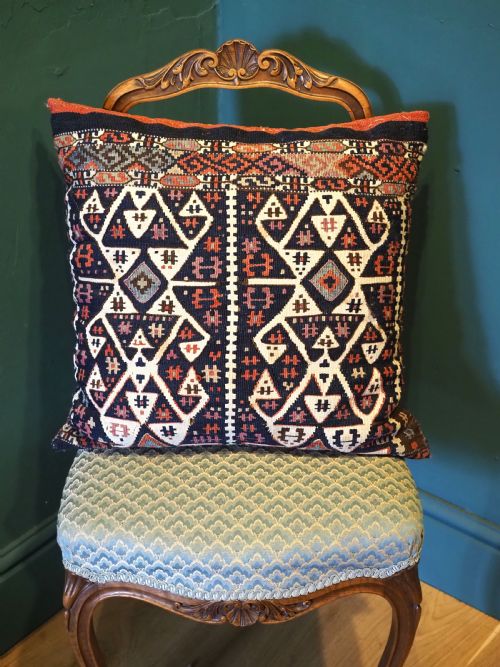
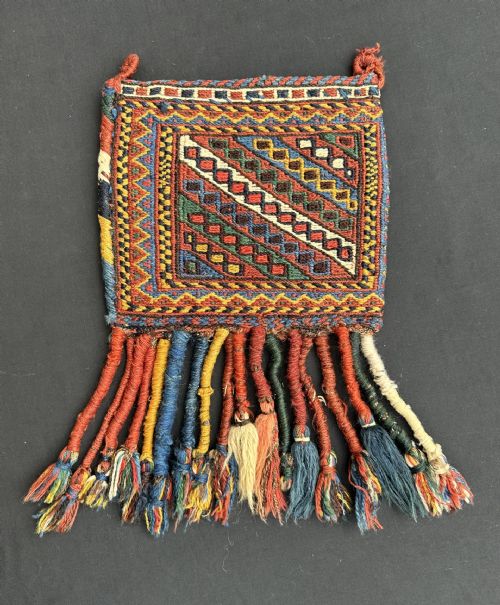
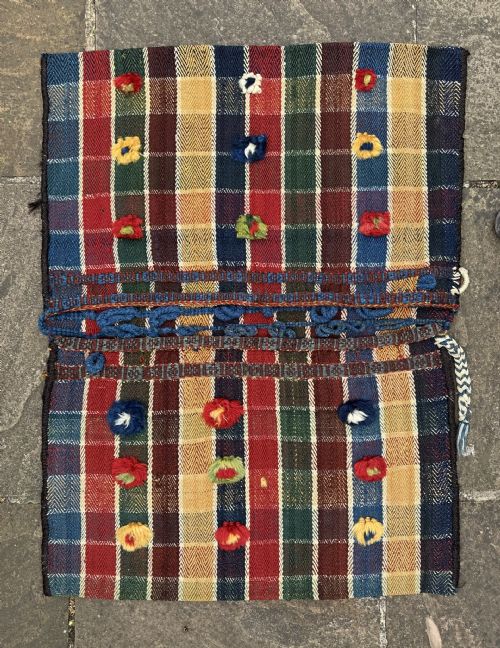
The pieces available span the late nineteenth century and the early twentieth century, encompassing various regional styles from Persian tribal to Anatolian tribal. You meet complete saddle bags featuring their original plain weave backs, as well as individual saddlebag faces that function well as cushions or wall-mounted textile art.
Evaluating quality and execution
Quality rests in the fineness of the weave, the clarity of the tribal motifs, and the depth of the natural dyes. Pieces with tight knots or precise flatweave structures demonstrate superior technical skill from the weaver.
Condition and completeness also separate examples, as surviving complete sets with original backs and minimal restoration hold distinct presence compared to isolated bag faces.
Nomadic weavers packed their entire worldly possessions in these very bags, meaning your wall art once bounced across mountains on the back of a mule.
The Handwoven Wool Saddlebag Glossary
- Bag face
- The decorative front panel of a saddle bag, which displays the primary motifs and is frequently preserved independently as a small hanging or cushion.
- Khorjin
- The traditional Persian term for a double-sided saddle bag designed to be slung over the back of a pack animal.
- Kilim
- A flatweave textile produced by tightly interweaving warp and weft strands without creating pile, resulting in a smooth, durable surface.
- Heybe
- The Turkish term for a saddle bag or utility pouch, commonly associated with Anatolian nomadic weaving.
- Weft
- The horizontal threads passed back and forth through the vertical warp threads to build the pattern and structure of the textile.
Handwoven Wool Saddlebag: Frequently Asked Questions
What is a handwoven wool saddlebag used for today?
Today, these textiles serve primarily as decorative accents in residential interiors. Many collectors display them as wall hangings or convert bag faces into small cushions and pillows.
Complete sets with backs also function as floor cushions or decorative storage items, bringing historic tribal craft into everyday living spaces.
How do I care for an antique saddle bag?
Gentle vacuuming with low suction, protected by a mesh screen, helps remove dust from wool surfaces. Professional textile cleaning is recommended for any deeper maintenance.
Keep these pieces out of direct sunlight to prevent natural dyes from fading over time.
How can I tell different tribal styles apart?
Tribal attribution relies on specific geometric motifs, colour palettes, and structural techniques characteristic of particular regions. For instance, Shahsavan pieces often display banded weft work or sharp geometric patterns, while Qashqai works frequently use rich reds and deep blues with intricate medallion layouts.
Examining the weave structure and secondary weft colours also offers strong clues to geographic origin.
Are these pieces complete or cut fragments?
The inventory includes both complete double-pouch examples with original plain weave backs and individual bag faces that were separated from their pairing halves long ago.
Listings specify whether a piece is a complete set or a single face, allowing you to choose the exact format you prefer.