


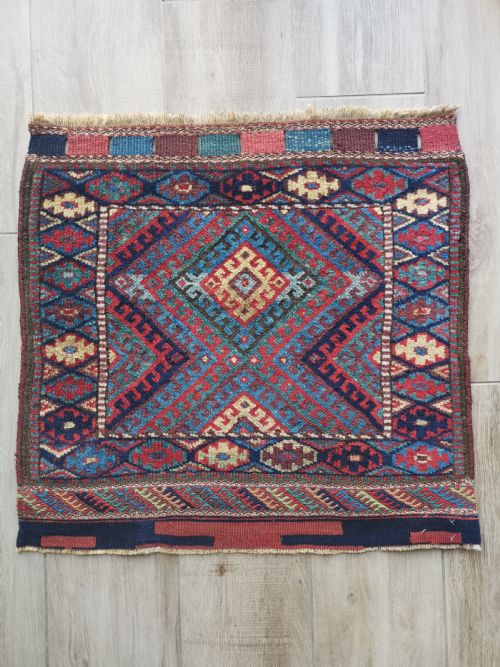


Antique Tribal Khorjin
An antique tribal khorjin brings tactile nomad heritage indoors as a vibrant textile piece designed for practical transport and storage.
Antique Tribal Khorjin
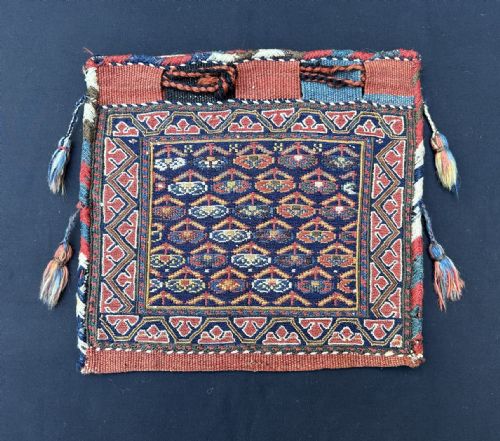
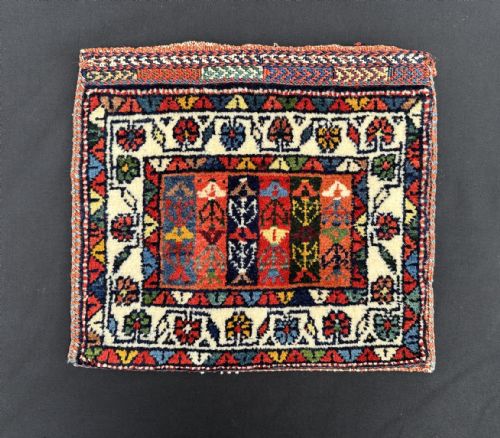
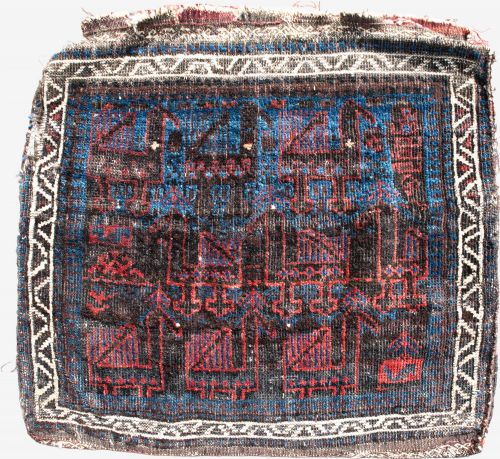
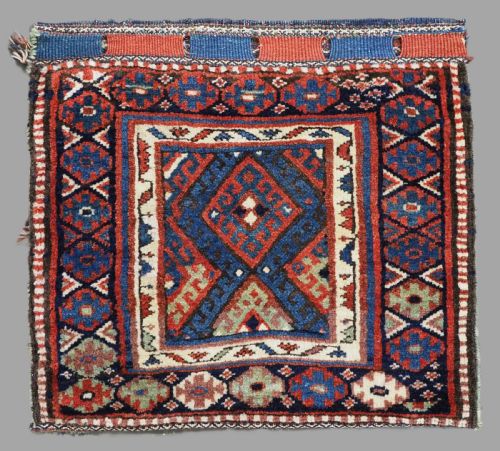
The pieces appearing on this page stem largely from late nineteenth and early twentieth century tribal confederations, including Qashqai, Afshar, Shahsavan, Baluch, and Jaf Kurd groups. Each regional weaver utilised distinct formats, ranging from diminutive personal vanity bags to large storage containers intended for animal transport.
How they were made
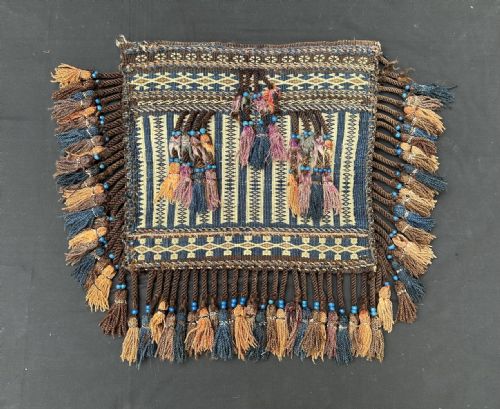
Nomadic weavers constructed these bags using hand-spun wool for durability, frequently incorporating goat hair along selvedges and plain weave backs for structural reinforcement. Natural dyes impart the rich polychrome palettes found across the pile surfaces and flat-woven sections.
Techniques alternate between pile knotting for intricate geometric bag faces and supplementary weft-wrapping methods such as soumac. Occasional decorative embellishments include glass beads and cowrie shells attached directly to the textile.
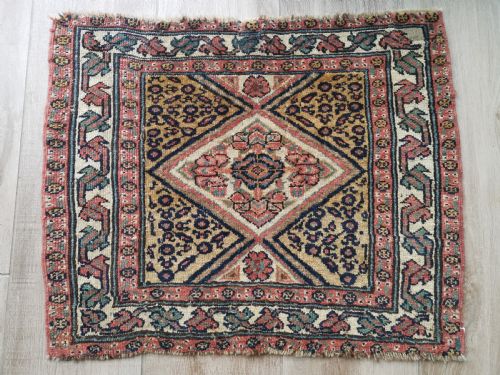
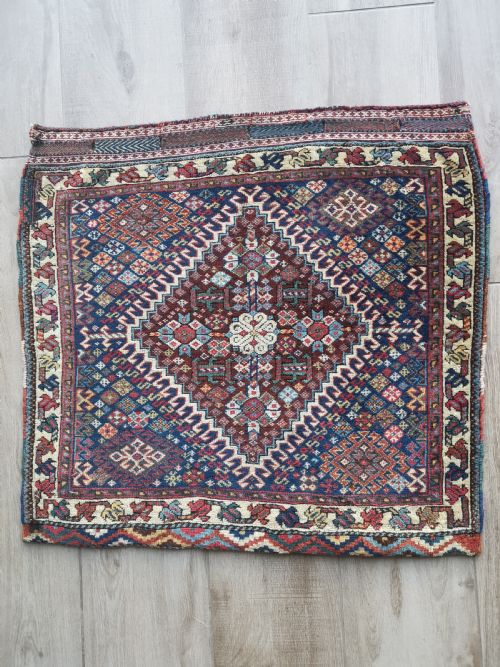
The listings show bag faces and storage containers originating from nineteenth and early twentieth century Persian and Caucasian nomadic groups.
What varies in quality
Quality rests upon the handled handle of materials, density of the knotting or crispness of the flat-weave structure, and the integrity of the natural dyes. Superior examples retain complete structural components like original plain weave backs and joining webs rather than surviving solely as isolated bag faces.
The precision of drawing within medallions, boteh motifs, or tile designs distinguishes standard pieces from exceptional artistic achievements. Well-preserved tribal provenance adds depth to the textile's historical narrative.
The Antique Tribal Khorjin Glossary
- Khorjin
- A traditional double-sided saddlebag or storage bag used by nomadic peoples for transport on pack animals. These items form the central focus of this collecting field.
- Bagface
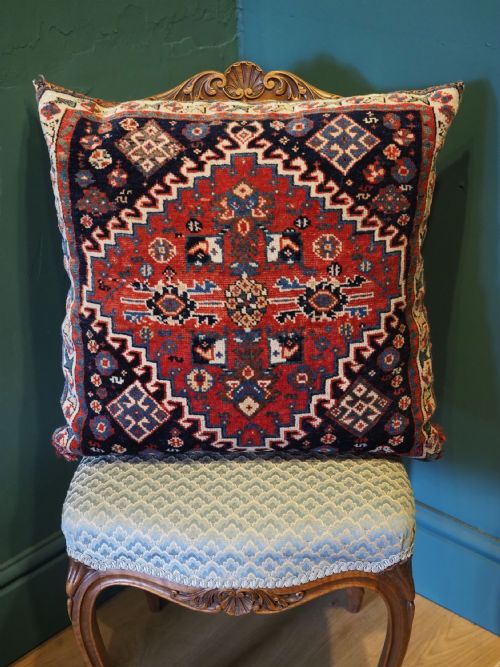
- The decorative front panel of a storage bag, frequently separated from its rear web and preserved as an independent rug or cushion. Collectors prize intact pairs above isolated fragments.
- Soumac
- A flat-weave technique where coloured weft threads wrap over and under warp threads to create a durable, textured surface. Shahsavan weavers frequently employed this method.
- Boteh
- An ancient teardrop-shaped motif with a curved upper end, commonly seen on Persian tribal weavings. This symbol appears repeatedly across Afshar and Qashqai designs.
- Chanteh
- A small personal bag or vanity case woven for individual use by nomads. These miniature pouches display fine knotting and dense geometric patterns.
Antique Tribal Khorjin: Frequently Asked Questions
What is a khorjin used for?
Nomadic tribes originally utilised these durable double bags to transport personal possessions, bedding, and provisions across rugged terrain on horses, camels, or donkeys.
Today, collectors mount these textiles on walls or adapt them into cushions and small floor rugs to integrate nomadic artistry into domestic interiors.
How do I identify tribal weaves?
Specific geometric motifs, colour palettes, and knotting structures point toward particular regional groups such as the Qashqai, Baluch, or Shahsavan.
Examining the materials, including hand-spun wool and natural dyes, helps establish the geographical origins and traditional methods of the maker.
Are complete saddlebags common?
Complete pairs joined by a central web or featuring original plain weave backs survive in smaller numbers than single cut bag faces.
Many bags were divided over time to create separate decorative panels, making surviving complete khorjins notable finds for textile enthusiasts.
How should I care for an antique bag face?
Gentle vacuuming without a rotating brush removes dust from the wool pile while protecting the delicate hand-spun fibres and structural foundations.
Keeping the textile away from direct sunlight preserves the stability of natural dyes over decades of display.