





Persian Saddle Bag
A genuine persian saddle bag brings the dense geometry and rich vegetable hues of nomadic tribal weaving directly into an interior.
Persian Saddle Bag
A persian saddle bag represents the utilitarian weaving of nomadic tribes produced across the regions of Persia and the Caucasus during the nineteenth and early twentieth centuries. These woven containers served practical functions for transport on horseback or camel before transitioning into decorative textile fragments collected today.
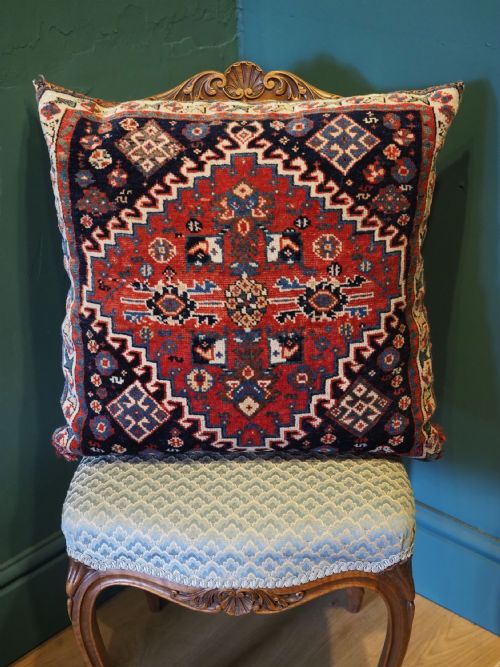
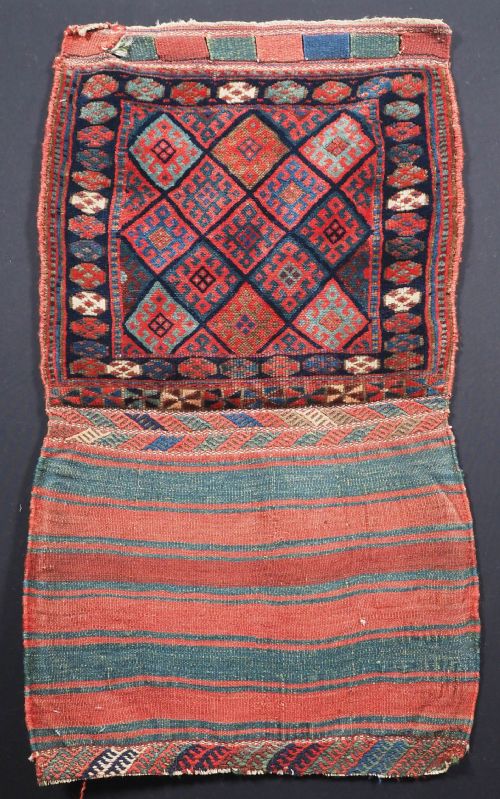
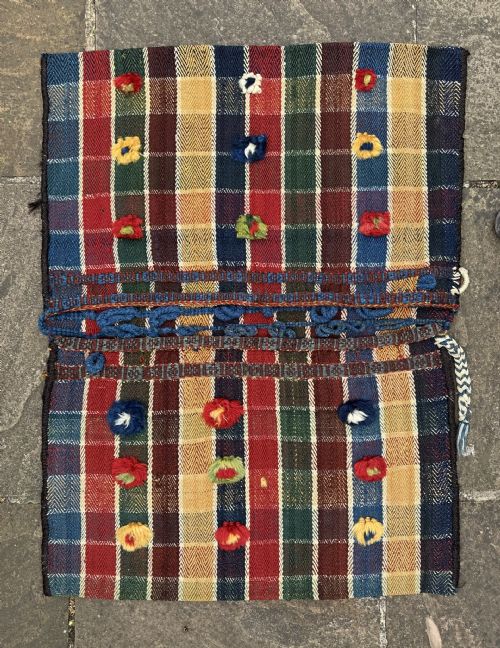
Buyers encounter single bag faces, complete pairs, and whole examples retaining their original plain weave backs or leather and metal elements. Formats range from square cushion sizes to elongated rectangular formats created by specific tribal groups.
Attributions connect these objects to distinct tribal confederations including the Qashqai, Shahsavan, Afshar, Khamseh, Luri, and Kurdish weavers. Each group utilised characteristic colour palettes and structural patterns unique to their ancestral territories.
Materials and construction
Weavers constructed these textiles using hand-spun wool for the pile and foundation, sometimes supported by cotton or augmented with leather and metal components. Natural dyes provided the saturated chromatic range visible across the surviving pieces.
Techniques varied between pile knotting and flatweave methods such as soumak and kilim construction. Complete pieces often combined durable plain weave backs with intricate face designs intended to withstand rigorous daily travel.
Persian Saddle Bag Retail Price Guide 2026
Typical asking prices for persian saddle bag among the pieces listed under this phrase on Sellingantiques today, from the lower quarter to the upper quarter. They describe what is for sale here now, not the wider market.
Nomadic weavers occasionally embedded small protective amulets directly into the pile to guard belongings during dusty travels.
Evaluating quality and condition
Quality rests in the handling of the wool and the depth of the natural colour palette, where lustrous pile and well-preserved dyestuffs elevate a textile. The precision and density of the tribal motifs also distinguish superior examples.
Structural completeness influences desirability, as surviving original backs, closure systems, and intact edges demonstrate the original functional state of the khorjin. Pieces retaining their full form offer greater insight into nomadic material culture.
The Persian Saddle Bag Glossary
- Khorjin
- The traditional Persian term for a double saddlebag used by nomadic tribes for transport and storage. These objects were woven as a connected pair designed to sling across the back of an animal.
- Soumak
- A flatweave technique involving wrapping supplementaryweft threads over the warp wires to create a textured, durable surface. This method produces a sturdier fabric than standard kilim weaving.
- Kilim
- A flatweave textile constructed without a pile by tightly interlacing warp and weft strands. Tribal groups utilised this method for the backing and structural parts of functional bags.
- Boteh
- A stylised almond or paisley motif representing a floral shoot or cypress tree. This ancient design appears frequently in tribal weaving across Persian provinces.
Persian Saddle Bag: Frequently Asked Questions
How were they used?
Nomadic tribes utilised these double bags to transport personal possessions, household goods, and provisions during seasonal migrations across Persia. Secured across pack animals, the paired compartments balanced loads while remaining accessible on the journey.
Over time, families also used smaller variants for vanity storage or domestic organisation inside tents. The sturdy construction protected contents from weather and rough handling on the trail.
How do I live with them?
Single bag faces and half portions mount easily onto walls as textile art or framing pieces for interior spaces. Complete pairs and whole bags with backs function well as floor accents or stuffed cushions.
Placement away from direct sunlight preserves the natural dyes and wool pile over decades of display. Gentle vacuuming through a mesh screen maintains the fabric without disturbing the historical fibres.
What is the difference between a face and a complete bag?
A bag face represents only the decorative front panel of the original double container, often separated from its backing through historical wear or purposeful cutting. These single panels function primarily as decorative wall hangings or small display rugs.
Complete pieces retain both faces alongside the connecting web and original plain weave backs. Surviving with all structural components intact provides a complete picture of the utilitarian object.