




Nomadic Woven Bag Face
Nomadic woven bag face textiles are vibrant tribal fragments repurposed from utilitarian storage sacks and saddlebags, prized by collectors for their rich designs.
Nomadic Woven Bag Face
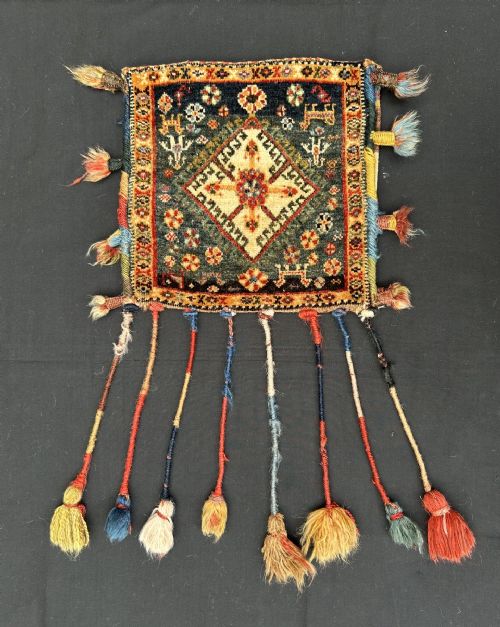
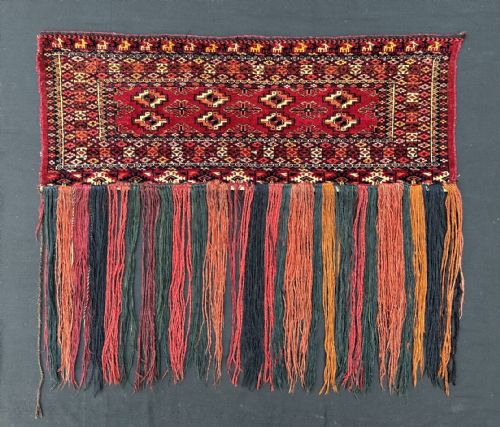
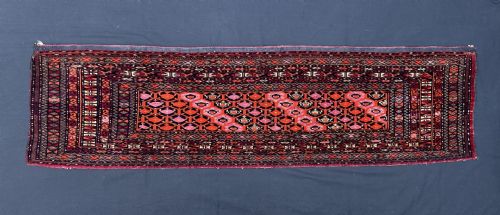
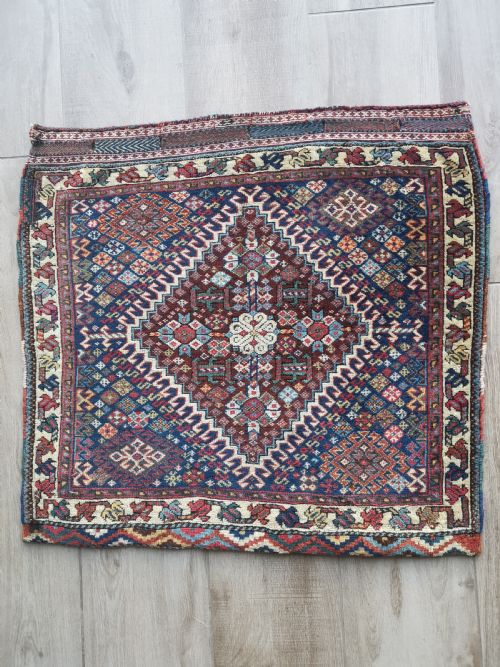
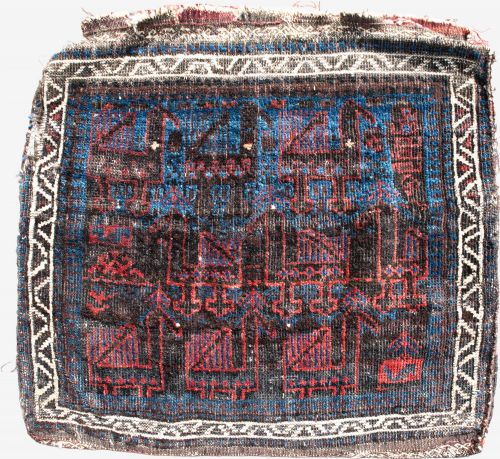
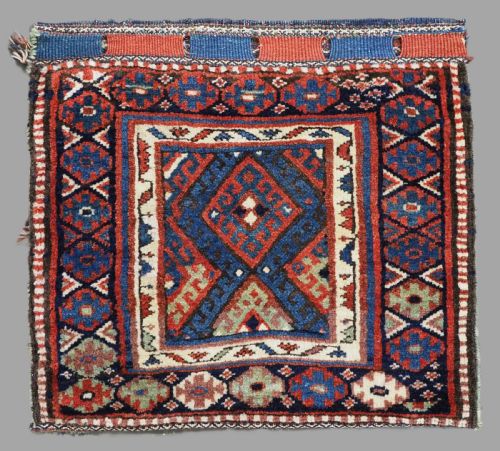
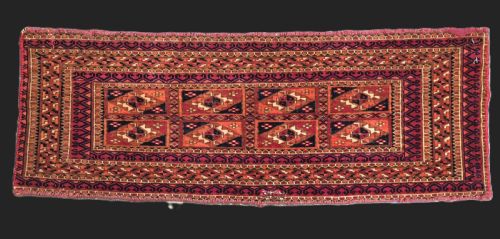
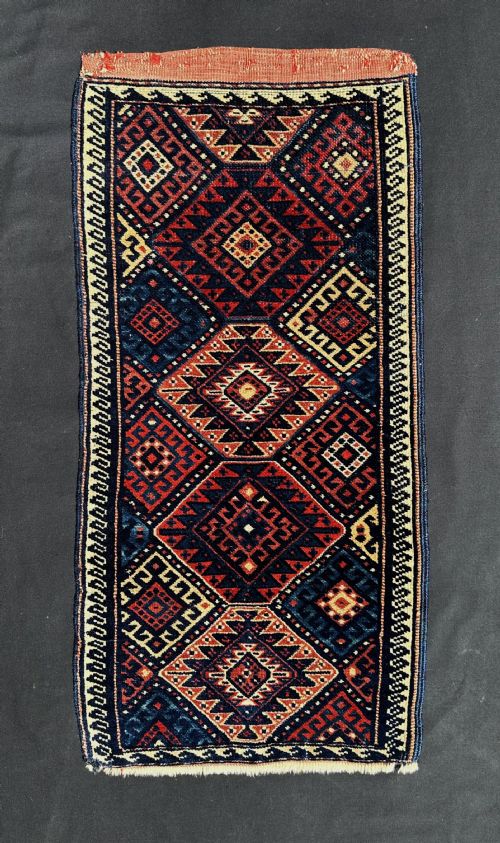
A nomadic woven bag face represents the front panel of a utilitarian container used by tribal groups for storage and transport across Persia, Afghanistan, and Central Asia. These items originated as functional pieces such as khorjin saddlebags, torba tent bags, and smaller vanity or spindle containers made by groups including the Yomut, Tekke, Ersari, and Baluch tribes.
Makers cut or preserved these panels from larger utilitarian pieces, leaving collectors with dense geometric compositions that reflect specific tribal identities and weaving traditions. The selection on this page spans from the mid-nineteenth century through the early twentieth century, offering authentic examples of regional weaving.
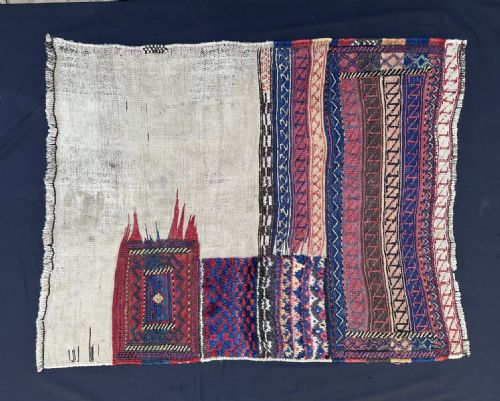
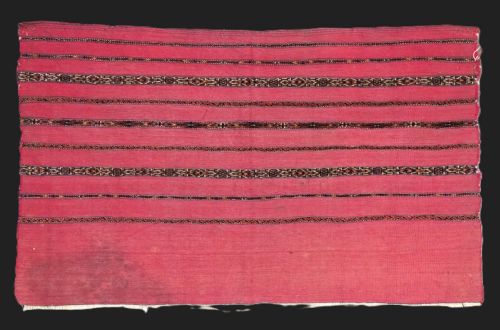
Most items survive as isolated panels rather than complete bags, retaining their original pile-woven or flatwoven structure on the front while often losing their plain-weave backs. Collectors display these panels as wall hangings or small textiles to appreciate the intricate tribal iconography.
How they were made
Weavers utilised hand-spun wool as the primary foundation and pile material, occasionally incorporating cotton for structural strength or silk highlights for specific decorative details. Natural dyes provided the deep reds, indigos, and ivories that define the palette of these nineteenth-century tribal works.
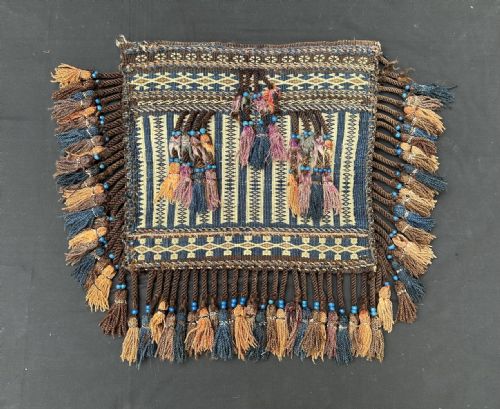
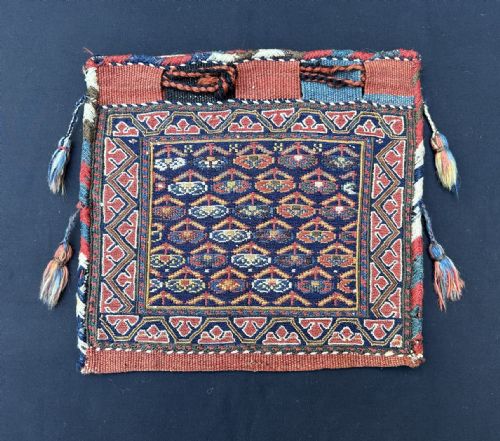
Makers employed various techniques depending on regional tradition, ranging from dense hand-knotted pile to precise flatweave structures like sumac and banded weaves. Artisans occasionally added glass beads or hanging loops to complete the functional design of the storage sacks.
Some storage bags retain their original hanging loops, ready to be hung back up after a mere century or two of rest.
What varies in quality
The density of the knotting or the tightness of the weave fundamentally separates standard utility pieces from exceptional tribal examples. Finer structures allow for crisper rendering of traditional guls and medallion motifs.
The clarity and saturation of the natural dye palette influence the visual impact of each piece. Surviving examples with well-preserved wool pile and minimal structural restoration hold greater appeal for traditional textile collectors.
The Nomadic Woven Bag Face Glossary
- Gul
- A primary medallion or octagonal motif repeated across Turkmen and tribal woven pieces. These distinct tribal emblems often identify the specific group or confederation that made the textile.
- Torba
- A small horizontal wall bag traditionally used in Turkmen tents for domestic storage. They frequently feature elaborate gül designs across the face.
- Chuval
- A large tent storage bag used for bedding and household goods by nomadic groups. Surviving chuval faces display intricate repeating patterns and expert knotting.
- Khorjin
- A traditional double saddlebag utilised by nomadic tribes for transport on animals. Many surviving examples are separated into individual bag faces.
- Sumac
- A warp-wrapping flatweave technique that creates a textured, durable surface without a cut pile. This method allows for sharp diagonal lines in tribal geometric patterns.
- Tacheh
- A large grain or storage bag made by nomadic groups in western Persia. These pieces often utilise distinctive flatweave or banded designs.
Nomadic Woven Bag Face: Frequently Asked Questions
What is a nomadic woven bag face?
A nomadic woven bag face is the decorative front panel cut or preserved from a tribal storage sack, saddlebag, or tent bag. These pieces were originally made by nomadic groups for practical transport and domestic storage.
Over time, collectors and dealers separated the durable front panels from worn backs to preserve the intricate tribal knotting and regional motifs as display pieces.
How were these bags used?
Nomadic tribes utilised these containers inside tents and on pack animals for storing grain, clothing, bedding, and personal belongings. Different sizes served specific domestic functions within the tribal household.
Larger sacks held heavy blankets, while smaller vanity or spindle bags kept personal items secure during seasonal migrations.
How do I display a bag face?
Collectors typically mount these textile panels on fabric backings for safe wall hanging, allowing the detailed geometric patterns and pile to remain visible. They also function well as small table mats or standalone textile studies.
Direct sunlight and heavy foot traffic should be avoided to protect the historic wool pile and natural dyes from fading or wear.
How can I tell different tribal designs apart?
Tribal attribution relies on identifying specific repeating motifs, such as the guls used by Tekke, Yomut, and Ersari Turkmen weavers. Colour palettes and structural techniques also point toward specific regions like Baluchistan, Fars, or Khorassan.
Consulting reference guides on oriental rugs and tribal textiles helps match particular design structures to their historical maker groups.