

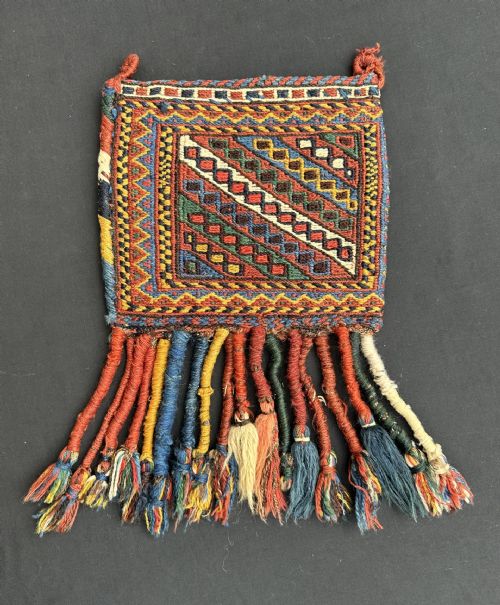


Persian Tribal Saddlebag
A persian tribal saddlebag brings the nomadic artistry of nineteenth-century weaving directly into your home.
Persian Tribal Saddlebag
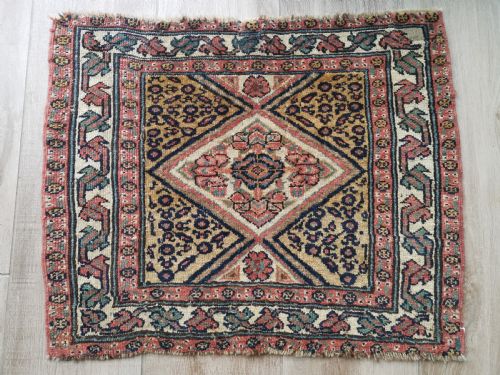
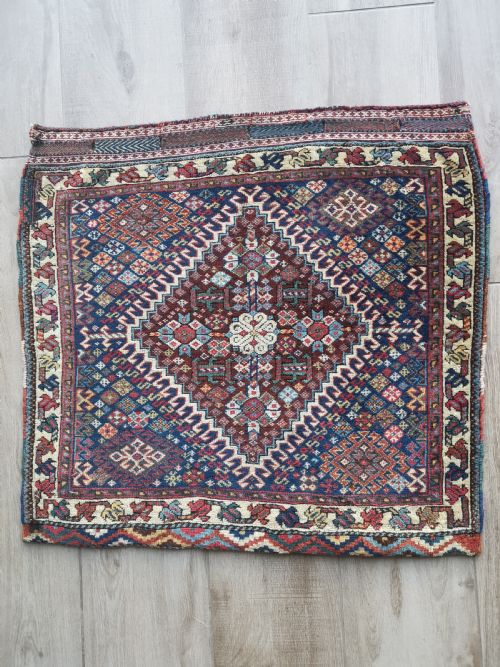
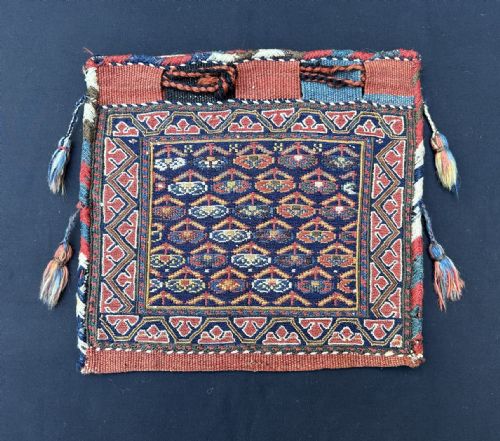
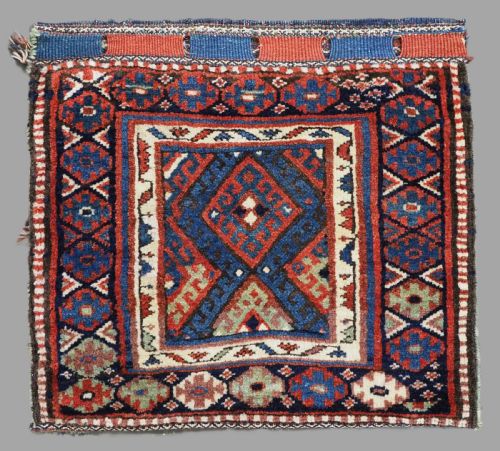
When you search for a persian tribal saddlebag, you encounter utilitarian weaving transformed into expressive portable art by nomadic groups across Persia. These pieces include complete double pouches, single bag faces, half-khorjins, and vanity bags created for practical transport on animals. You are most likely to meet surviving bag faces or halved sections displaying the distinct patterns of tribes such as the Qashqai, Shahsavan, Afshar, and Jaf Kurd. These textiles served daily nomadic life before finding preservation as decorative items due to their striking geometric and figurative designs.
The regional variety visible in these pieces reflects specific tribal identities, from the precise sumac weave of the Shahsavan in the northwest to the boteh motifs of the Afshar in the south. Many examples survive as single bag faces because the original pairing separated through decades of use or division by early collectors. Complete sets with their original plain weave backs or closure systems remain less common, offering a comprehensive look at how these textiles functioned in transit. Whether encountered as a small square panel or a longer storage bag, each piece carries the distinct structural choices of its maker.
How They Were Made
Weavers constructed these textiles primarily using hand-spun wool for the pile and structure, frequently combining it with cotton foundations and occasional leather or metal reinforcement on utilitarian edges. Natural dyes provided the deep palette, yielding saturated tones that aged gracefully over the nineteenth and early twentieth centuries. Artisans employed various techniques depending on tribal tradition, ranging from densely knotted pile surfaces to flat-woven sumac and kilim structures.
The construction of a khorjin required durable materials to withstand the friction of travel, leading to sturdy plain weave backs that contrasted with intricate face designs. Nomadic weavers utilised locally sourced wool containing natural lanolin, which contributed to the lustrous appearance and resilience of the surface over generations. This combination of resilient spinning, plant-based colour extraction, and diverse weaving methods ensured the survival of these functional objects.
Some surviving bags retain faint traces of trail dust, whispering of long-ago journeys across mountain passes on the flanks of pack mules.
What Varies in Quality
Quality in these textiles depends heavily on the fineness of the knotting or the tightness of the flat-weave structure, alongside the clarity of the design geometry. Pieces created with superior hand-spun wool exhibit a luminous, tactile quality that enhances the depth of the natural dyes. The precision of the drawing within medallions, botehs, or tribal motifs distinguishes standard utilitarian output from exceptional examples of nomadic expression.
The survival rate of original components also influences how these items are regarded by collectors, particularly when complete backs, kilim closures, or matching pairs remain intact. A well-preserved pile with minimal restoration retains the integrity of the original weaver's intent more effectively than heavily reworked surfaces. Ultimately, the visual impact stems from the harmony between proportion, colour saturation, and structural execution.
The Persian Tribal Saddlebag Glossary
- Khorjin
- The traditional Persian term for a double-sided saddlebag used by nomadic tribes for transport and storage. These bags were slung over pack animals and often separated into individual bag faces over time.
- Bag face
- The decorative front panel of a saddlebag that displayed the tribal pattern while the plain weave back remained against the animal. Many surviving examples consist of this single displayed section.
- Sumac
- A warp-wrapping flat-weave technique utilised by Shahsavan and other weavers to create durable, textured geometric surfaces without a pile. This method allows for crisp diagonal lines and intricate patterning.
- Boteh
- A recurring paisley-like motif representing a floral or cypress sprout, frequently rendered with stylised variations across Afshar and other southern tribal weaving traditions.
- Plain weave
- A simple interlacing of warp and weft threads creating a flat, un-knotted fabric, commonly used for the backs and structural closures of nomadic bags.
Persian Tribal Saddlebag: Frequently Asked Questions
How were saddlebags used?
Nomadic tribes utilised these double pouches across pack animals to transport personal belongings, household goods, and provisions during seasonal migrations.
Once pitched at camp, the bags served as domestic storage containers within tents before eventually entering the collector market as decorative textiles.
Are complete pairs common?
Complete pairs featuring both connected pouches and their original plain weave backs survive in smaller numbers than single detached bag faces.
Many sets were divided historically to facilitate easier display or to distribute pieces among multiple collectors.
How do I identify tribal origins?
Tribal attribution relies on specific structural traits, distinct colour palettes, and characteristic motif vocabularies associated with distinct regions like Fars or Azerbaijan.
For instance, Shahsavan weaving often employs sumac technique, while Afshar examples frequently display boteh designs within structured formats.
Where should I place these in my home?
These versatile textiles suit display as wall hangings or small floor accents in low-traffic areas where their structures can be appreciated up close.
Framing or mounting protects the fragile wool and cotton foundations from physical wear while highlighting the geometry of the design.